Solar Panel Microinverter: Complete 2026 Beginner’s Guide
As more homeowners switch to solar energy, choosing the right inverter has become just as important as selecting high-quality solar panels. While many traditional solar systems use a single string inverter, modern solar installations are increasingly adopting solar panel microinverters because of their higher efficiency, improved performance, and enhanced system monitoring.
A microinverter is a small electronic device installed beneath or directly behind each solar panel. Instead of sending direct current (DC) electricity from multiple panels to one central inverter, every panel has its own microinverter that converts DC electricity into alternating current (AC) right at the panel. This design allows each solar panel to operate independently, improving energy production even when one panel is shaded, dirty, or facing a different direction.
Unlike conventional string inverter systems, where the lowest-performing panel can reduce the output of the entire string, a microinverter ensures that each panel performs at its maximum potential. This makes microinverters especially beneficial for roofs with partial shading, multiple roof angles, or complex layouts.
Another major advantage is system monitoring. Most modern microinverters allow homeowners to track the performance of each individual solar panel through a mobile app or online monitoring platform. If one panel develops a fault, it can be identified quickly without affecting the rest of the system.
Although microinverters generally have a higher upfront cost than string inverters, many homeowners consider them a worthwhile investment because they can increase long-term energy production, improve reliability, and reduce the impact of panel-level issues.
In this complete guide, you’ll learn everything you need to know about solar panel microinverters, including how they work, their advantages and disadvantages, costs, installation process, maintenance requirements, and whether they are the best option for your home in 2026.
Table of Contents
- What Is a Solar Panel Microinverter?
- How Does a Solar Panel Microinverter Work?
- Main Components of a Microinverter System
- Benefits of Solar Panel Microinverters
- Drawbacks of Microinverters
- Microinverter vs String Inverter
- Cost of a Solar Panel Microinverter
- Installation Process
- Maintenance Tips
- Frequently Asked Questions
- Final thoughts
What Is a Solar Panel Microinverter?
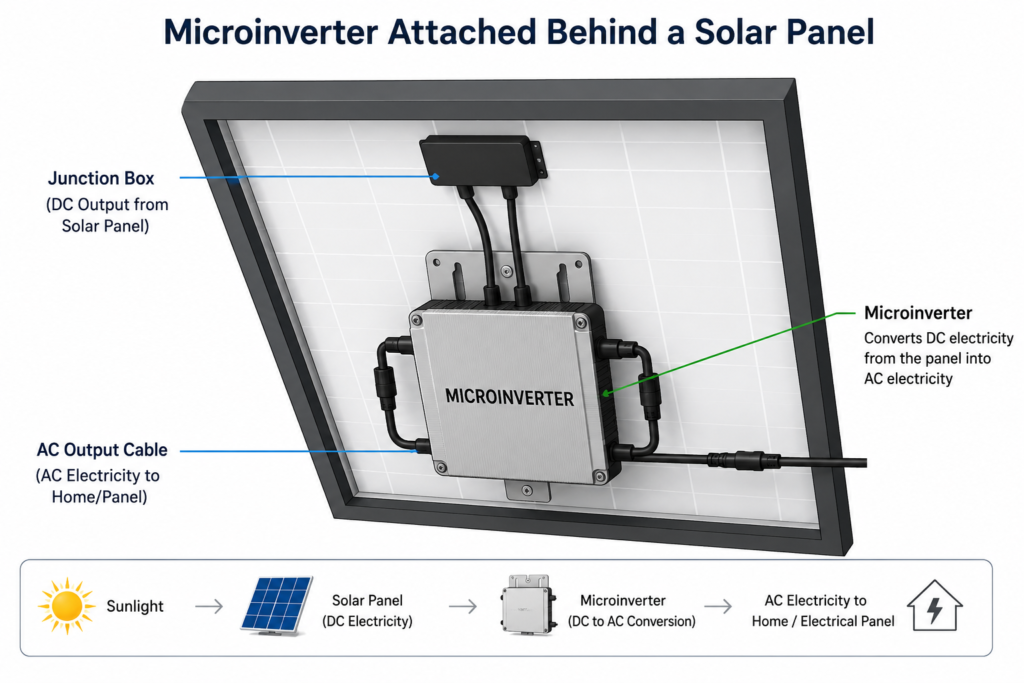
A solar panel microinverter is a compact inverter installed on each individual solar panel. Its primary function is to convert the direct current (DC) electricity produced by that panel into alternating current (AC) electricity that your home can use.
Unlike a traditional string inverter, which manages multiple solar panels together, a microinverter operates independently on each panel. This means every panel produces electricity at its maximum capability, regardless of how the other panels are performing.
Microinverters are widely used in residential solar systems because they improve energy efficiency, simplify system monitoring, and reduce power losses caused by shading or panel mismatch.
If you’re new to solar technology, you may also want to read our guide on What Is a Grid-Tied Solar Inverter? to understand how central inverters differ from microinverters.
How Does a Solar Panel Microinverter Work?
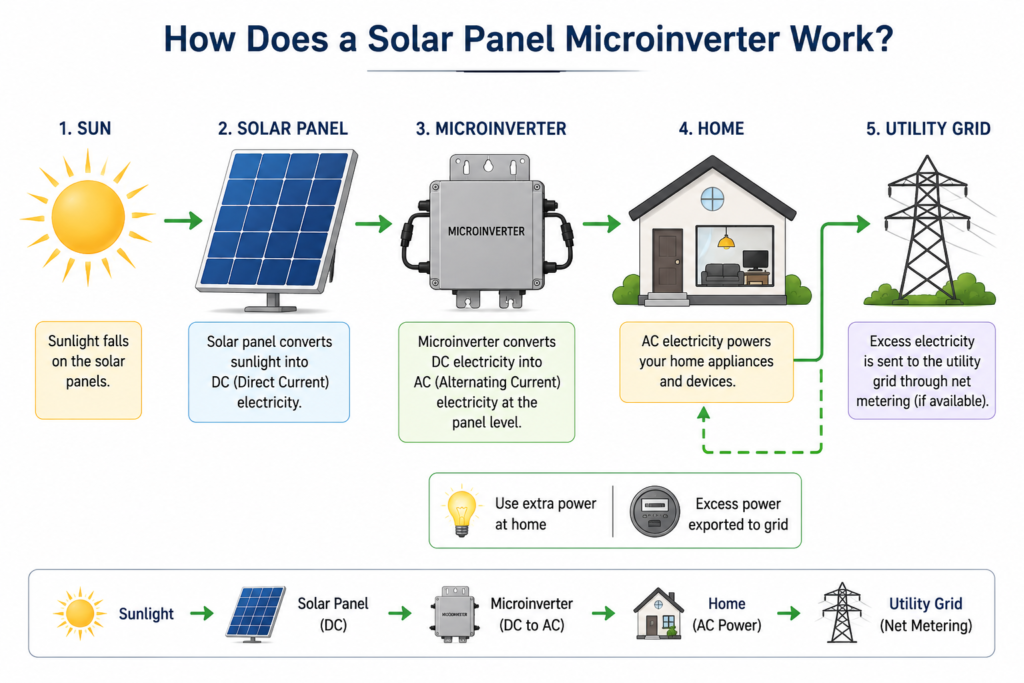
The working process is simple:
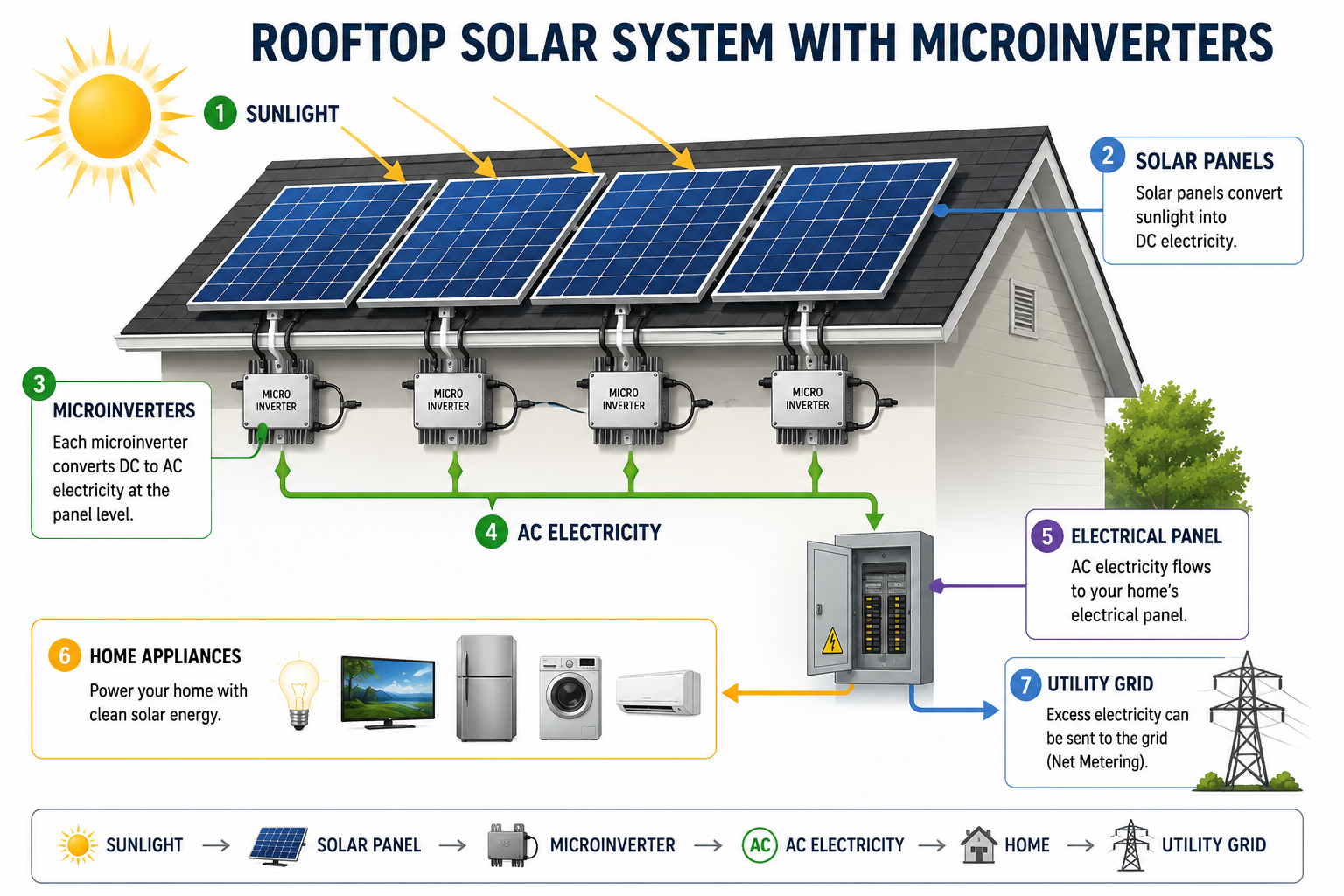
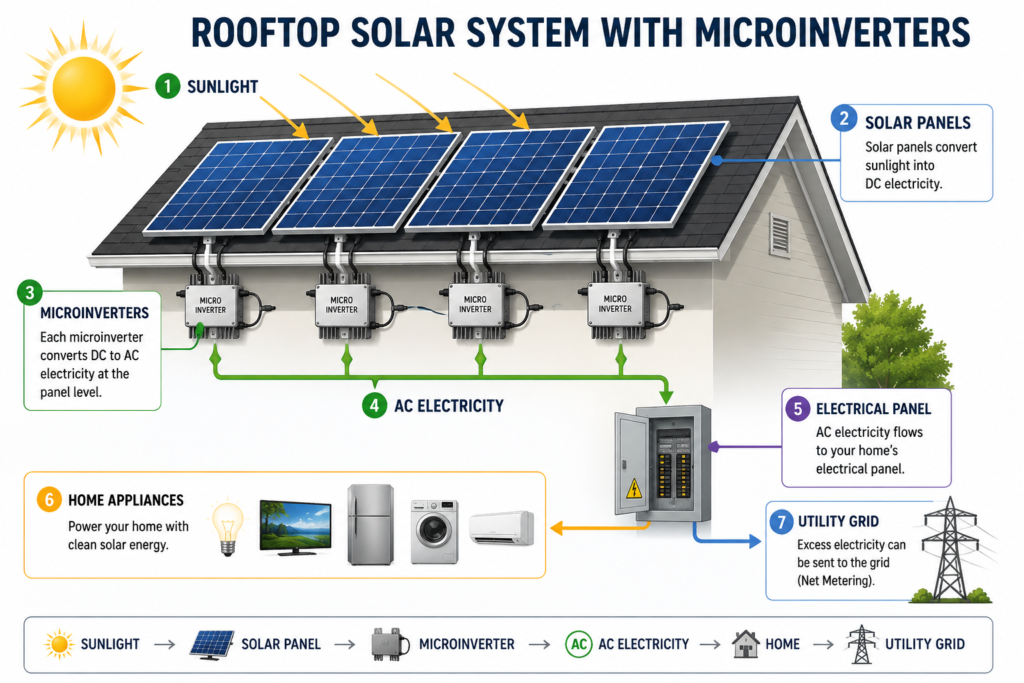
- Sunlight hits an individual solar panel.
- The panel generates DC (direct current) electricity.
- The microinverter attached to that panel immediately converts DC electricity into AC (alternating current).
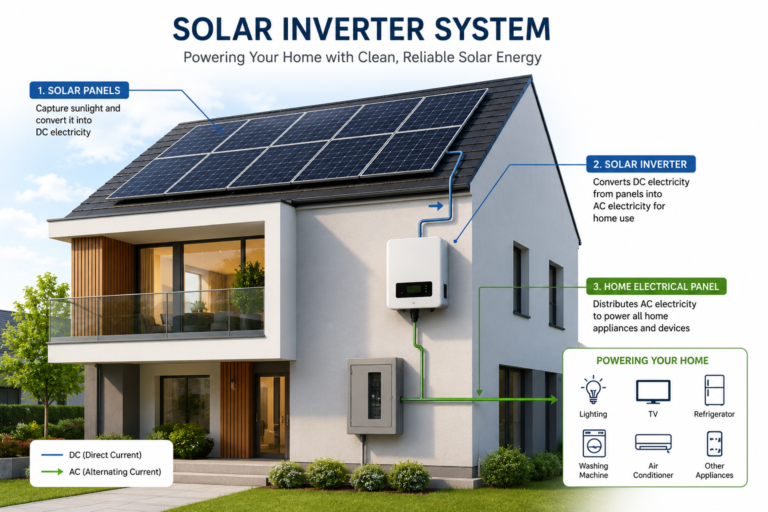
- The AC electricity flows to your home’s electrical panel and powers your appliances.
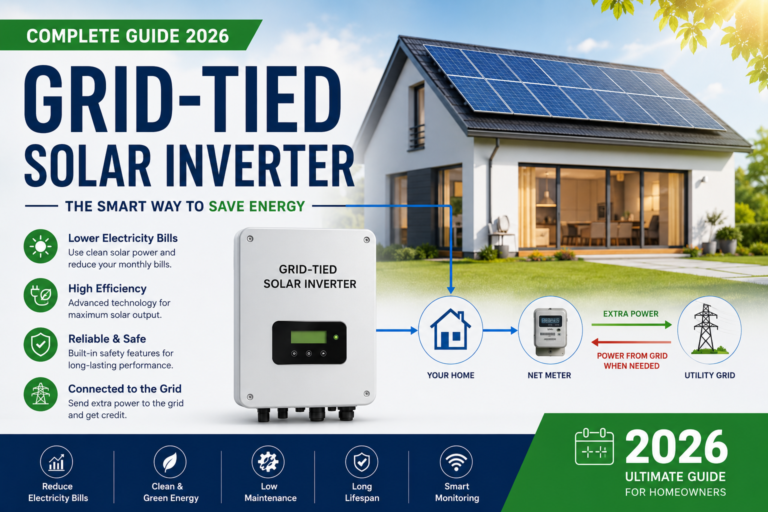
- If your system produces more electricity than your home uses, the excess power can be exported to the utility grid through net metering, where available.
Because each solar panel has its own microinverter, shading, dust, or reduced performance on one panel does not significantly affect the output of the other panels. This is one of the biggest reasons homeowners choose microinverter systems.
Main Components of a Solar Panel Microinverter System
A microinverter-based solar system consists of several essential components that work together to generate safe and efficient electricity for your home.
1. Solar Panels
Solar panels capture sunlight and convert it into direct current (DC) electricity. Each panel is paired with its own microinverter, allowing it to operate independently.
2. Microinverter
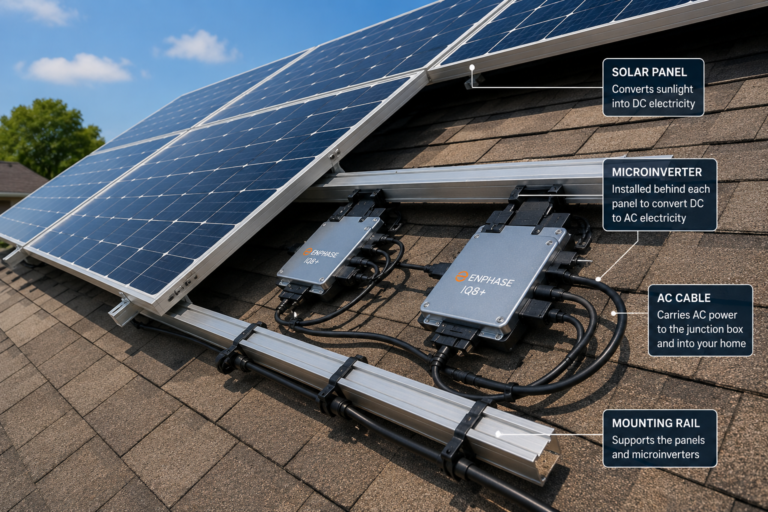
A microinverter is installed underneath or behind each solar panel. It converts DC electricity into alternating current (AC) at the panel level, improving overall system performance and reducing energy losses.
3. Mounting System
The mounting structure securely holds the solar panels in place on your roof or on the ground. A properly installed mounting system ensures maximum sunlight exposure and long-term durability.
4. AC Cabling
Unlike traditional string inverter systems that carry high-voltage DC electricity across the roof, microinverter systems use AC cabling after power conversion. This simplifies wiring and improves electrical safety.
5. Monitoring System
Most modern microinverters include a smart monitoring platform that allows homeowners to track the performance of each individual solar panel through a mobile app or web portal. This makes it easy to identify underperforming panels or maintenance needs.
Benefits of Solar Panel Microinverters
Microinverters have become increasingly popular because they offer several advantages over traditional inverter systems.
Higher Energy Production
Since each solar panel operates independently, every panel can produce electricity at its maximum capacity. If one panel is shaded or dirty, the remaining panels continue performing efficiently.
Better Performance in Partial Shade
Shading from trees, chimneys, or nearby buildings affects only the shaded panel rather than the entire solar array. This makes microinverters an excellent choice for roofs with partial shading.
Individual Panel Monitoring
Microinverters allow you to monitor each panel separately. If one panel experiences a fault or reduced performance, it can be detected quickly without affecting the rest of the system.
Improved Safety
Because DC electricity is converted to AC at each panel, the system carries lower-voltage DC wiring across the roof. This reduces electrical risks during installation, maintenance, and emergencies.
Easy System Expansion
Planning to add more solar panels in the future? With microinverters, expanding your system is usually much simpler because each new panel operates independently without major changes to the existing setup.
Long Service Life
Many high-quality microinverters are designed to last 20–25 years and often come with long manufacturer warranties, making them a reliable long-term investment.
Microinverters are commonly used in modern grid-connected homes. Learn how they fit into a complete system in our Home Solar System Without Battery guide.
Drawbacks of Solar Panel Microinverters
While microinverters offer many benefits, they also have a few disadvantages.
Higher Initial Cost
Microinverter systems generally cost more than traditional string inverter systems because each solar panel requires its own inverter.
More Components
Since every panel has a separate inverter, the total number of electronic components increases. Although these systems are highly reliable, there are more individual devices installed.
Roof-Level Maintenance
If a microinverter ever needs replacement, technicians usually need roof access because the inverter is mounted beneath the solar panel.
Microinverter vs. String Inverter
| Feature | Microinverter | String Inverter |
| Installation | One inverter per panel | One central inverter |
| Performance in Shade | Excellent | Reduced when one panel is shaded |
| Panel-Level Monitoring | Yes | Usually No |
| Initial Cost | Higher | Lower |
| System Expansion | Easy | More Limited |
| Energy Efficiency | Higher in complex roofs | Good for roofs with full sunlight |
| Reliability | High | High |
Which One Should You Choose?
A microinverter is usually the better option if:
- Your roof has partial shading.
- Panels face different directions.
- You want to monitor each solar panel individually.
- You plan to expand your solar system in the future.
- You want to maximize long-term energy production.
A string inverter may be suitable if:
- You have a limited installation budget.
- Your roof receives full sunlight throughout the day.
- All solar panels face the same direction.
Choosing the right inverter is only one part of designing an efficient solar system. You can also compare complete solar setups in our guide on On-Grid vs Off-Grid Solar System: Which One Is Better in 2026?
How Much Does a Solar Panel Microinverter Cost?
The total cost of a microinverter system depends on several factors, including:
- Number of solar panels
- Inverter brand and warranty
- System size
- Roof complexity
- Installation labor
- Local market prices
Although microinverter systems typically have a higher upfront cost than string inverter systems, many homeowners recover the additional investment through increased energy production over the lifetime of the system.
When comparing costs, it is important to consider the total lifetime value rather than only the initial purchase price. Better energy production, improved monitoring, and easier future expansion often make microinverters a smart long-term investment.
Installation Process of a Solar Panel Microinverter System
Installing a microinverter system should always be carried out by a qualified solar installer. A professional installation ensures maximum efficiency, electrical safety, and compliance with local regulations.
Step 1: Assess Your Energy Needs
Review your monthly electricity consumption to determine the appropriate solar system size.
Step 2: Inspect the Roof
Your installer will evaluate your roof’s condition, orientation, tilt, and shading to design the most efficient system layout.
Step 3: Install the Mounting Structure
A strong mounting system is secured to the roof before the solar panels are installed.
Step 4: Install a Microinverter Under Each Panel
Unlike traditional systems, each solar panel receives its own microinverter, which is mounted beneath or behind the panel.
Step 5: Connect the AC Wiring
The microinverters are connected using AC trunk cables, which carry electricity safely to your home’s electrical panel.
Step 6: Test and Activate the System
After installation, the entire system is tested to ensure proper operation. Once approved, it is connected to the utility grid (where applicable) and begins generating electricity.
Maintenance Tips
One of the biggest advantages of microinverters is their low maintenance requirements.
To keep your system operating efficiently:
- Clean the solar panels every few months to remove dust, leaves, and bird droppings.
- Check the monitoring app regularly to identify any performance issues.
- Inspect the system after severe weather.
- Trim nearby trees to reduce shading.
- Schedule a professional inspection every few years.
With proper maintenance, a high-quality microinverter system can provide reliable performance for decades.
Common Mistakes to Avoid
Avoid these common mistakes when choosing a microinverter system:
- Buying low-quality equipment from unknown brands.
- Ignoring roof shading during system design.
- Choosing the wrong system size.
- Hiring inexperienced installers.
- Failing to monitor system performance.
- Skipping routine maintenance.
Proper planning and quality installation can significantly improve your system’s efficiency and lifespan.
Frequently Asked Questions (FAQs)
What is a solar panel microinverter?
A solar panel microinverter is a small inverter installed on each individual solar panel. It converts DC electricity into AC electricity at the panel level, allowing each panel to operate independently.
Are microinverters better than string inverters?
It depends on your roof and energy needs. Microinverters generally perform better on roofs with partial shading, multiple roof angles, or future expansion plans, while string inverters can be a cost-effective choice for simple, unshaded roofs.
How long do microinverters last?
Most premium microinverters are designed to last 20–25 years and often include long manufacturer warranties.
Can I add more solar panels later?
Yes. One of the biggest advantages of microinverters is that expanding the system is usually easier because each panel operates independently.
Do microinverters increase electricity production?
Yes. Since each panel performs independently, overall energy production is often higher, especially when some panels experience shade or dirt.
Are microinverters worth the extra cost?
For many homeowners, yes. Although the initial investment is higher, improved energy production, enhanced monitoring, and greater flexibility often provide better long-term value.
If you’re exploring affordable solar options, don’t miss our detailed Solar System Without Battery guide to learn whether a battery-free setup is the right choice for your home.
Final Thoughts
A solar panel microinverter is an excellent choice for homeowners looking to maximize the performance of their solar energy system. By allowing each solar panel to work independently, microinverters improve energy production, enhance safety, simplify monitoring, and make future system expansion easier.
Although they cost more upfront than traditional string inverters, the long-term benefits often outweigh the higher initial investment—especially for homes with partial shading or complex roof designs. If you’re planning a residential solar installation in 2026, a microinverter system is well worth considering for its efficiency, reliability, and long-term value.