What Is Net Metering? How It Works, Benefits, Latest Rules in Pakistan & Worldwide (2026)
f you are thinking about installing solar panels, you have probably heard the term net metering. But what does net metering actually mean, and how can it affect your electricity bill?
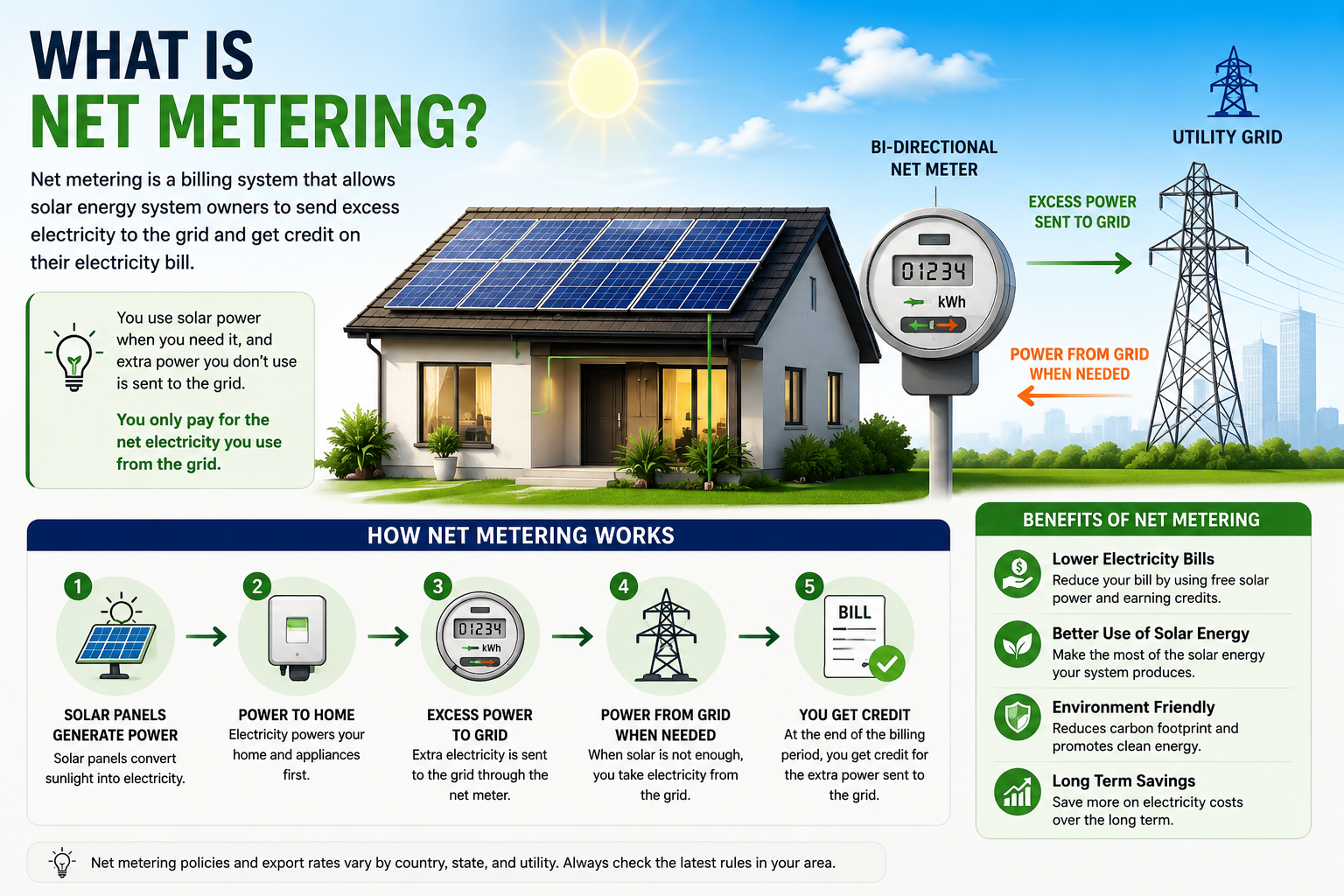
In simple words, net metering is a system that allows eligible solar energy users to send some of their unused electricity to the utility grid. When your solar panels produce more electricity than your home needs, the extra energy can flow back to the grid through a suitable bidirectional meter. Depending on the rules and compensation mechanism in your country, the exported electricity may be credited or compensated according to the applicable tariff.
This can make a grid-connected solar system much more useful because your home does not have to use every unit of solar electricity at the exact moment it is generated.
However, net metering rules are not the same everywhere. Eligibility, meter requirements, export compensation, application procedures, and contract terms depend on the country and utility. In Pakistan, the regulatory framework has also changed, so homeowners should check the latest NEPRA rules before making a purchase decision.
In this guide, we will explain what net metering is, how it works, how it can reduce electricity costs, what equipment is required, its advantages and disadvantages, and what solar homeowners in Pakistan and other countries should know.
Table of content
- What Is Net Metering?
- How Does Net Metering Work?
- What Is a Net Meter?
- Net Metering vs. Regular Electricity Meter
- Do You Need Batteries for Net Metering?
- What Is the Difference Between Net Metering and Net Billing?
- What Is Net Metering in Pakistan?
- What Is the Role of Net Metering Around the World?
- Why Countries Use Net Metering or Similar Solar Programs
- What Does This Mean for Solar Homeowners?
- Final Takeaway: The Global Role of Net Metering
- Why Is Net Metering Important for Solar Owners?
- Benefits of Net Metering
- Disadvantages and Limitations of Net Metering
- Can Net Metering Work During a Power Outage?
- How Much Solar Do You Need for Net Metering?
- Is Net Metering Worth It?
- Net Metering and Solar Inverters
- Net Metering and Microinverters
- How to Apply for Net Metering
- Common Net Metering Mistakes to Avoid
- Frequently Asked Questions About Net Metering
- Final Thoughts
What Is Net Metering?
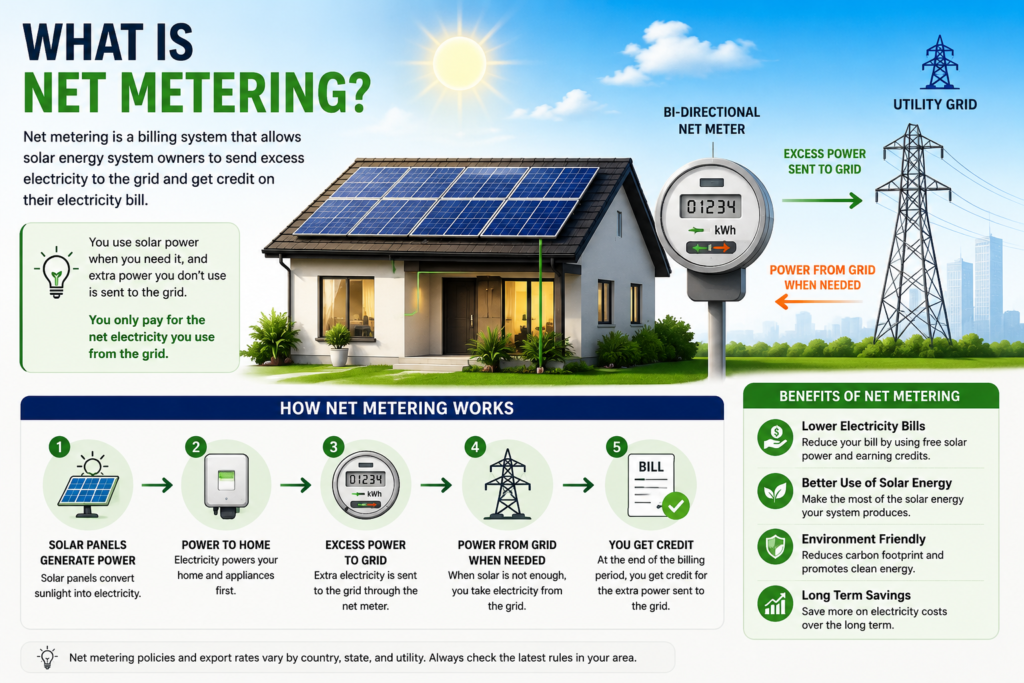
Net metering is a billing arrangement for grid-connected electricity consumers who generate electricity from an eligible renewable energy system, such as solar panels.
The basic idea is simple.
Your solar panels produce electricity during the day. Your home uses some of that electricity. If your solar system produces more electricity than your home is using at that moment, the excess can be exported to the utility grid through an approved connection.
When your solar system is producing less electricity than your home needs—for example, at night or during periods of low sunlight—you can draw electricity from the grid.
A bidirectional meter records electricity flowing in both directions.
A simple example
Imagine your solar panels produce 10 units of electricity during a particular period.
Your home uses 6 units at the same time.
That leaves:
10 − 6 = 4 units
Those 4 units may be exported to the grid, subject to the applicable rules.
Later, when your solar panels are not producing enough electricity, your home can draw power from the grid.
This is the basic concept behind grid-connected solar and net-metering arrangements.
How Does Net Metering Work?
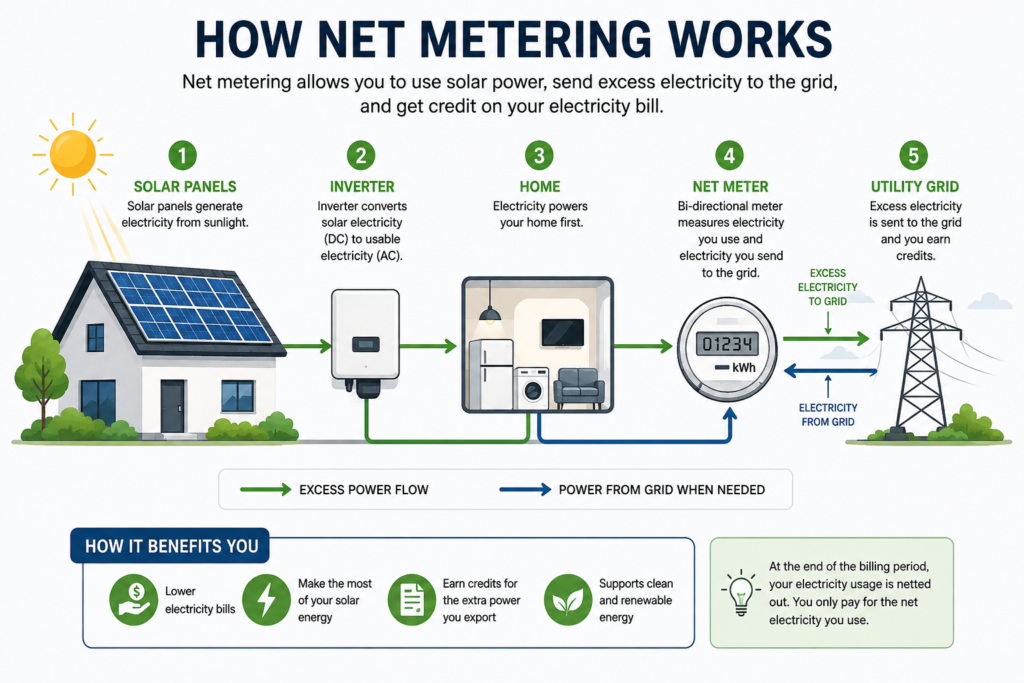
The process can be understood in four simple steps.
Step 1: Solar Panels Generate Electricity
Your solar panels absorb sunlight and generate DC electricity.
Step 2: The Inverter Converts Electricity
A solar inverter converts the electricity into AC power that can be used by your home and synchronized with the utility grid.
Step 3: Your Home Uses Solar Electricity First
When your solar system is generating electricity, your home can use that electricity to run appliances such as fans, lights, refrigerators, air conditioners, and other electrical equipment.
Step 4: Excess Electricity Goes to the Grid
If your solar system produces more electricity than your home is using at that moment, the surplus can flow to the utility grid through an approved grid connection.
A suitable bidirectional meter measures electricity moving into and out of the property.
Net Metering Example for a Home
Let’s make it even easier.
Suppose you have a solar system installed on your home’s rooftop.
During a sunny afternoon:
- Solar panels generate: 8 kWh
- Home consumes: 5 kWh
- Excess solar electricity: 3 kWh
The extra 3 kWh can be exported to the grid if your system is approved for the applicable export arrangement.
At night:
- Solar production: 0 kWh
- Home needs: 4 kWh
- Electricity comes from the grid or another available source, such as a battery.
This is why a grid-connected solar system does not necessarily need a large battery simply to use solar electricity after sunset.
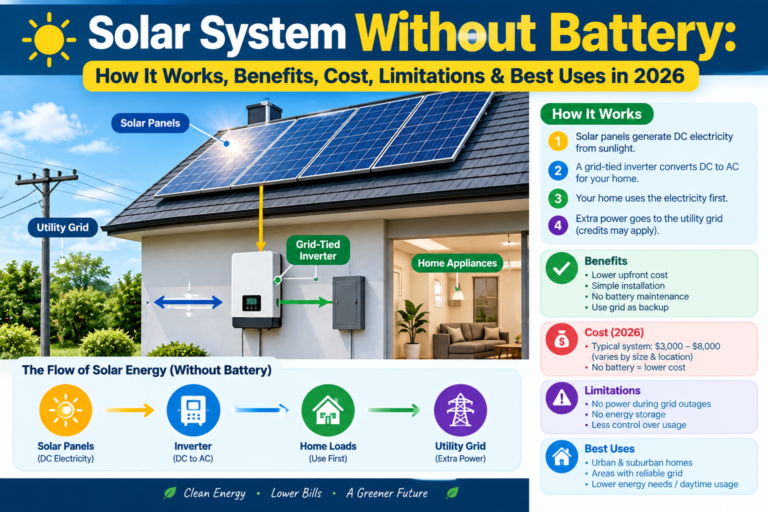
For homeowners planning a battery-free setup, learn more about how a home solar system without battery works and what you should consider before installation.
What Is a Net Meter?
A net meter is a meter designed to measure electricity flow in both directions.
A traditional electricity meter mainly records electricity coming from the utility grid into your home.
A bidirectional meter can record:
Grid → Home
and
Home/Solar → Grid
This allows the utility and consumer to measure imported and exported electricity according to the applicable billing arrangement.
The exact meter specifications and approval requirements depend on the utility and local regulations.
Net Metering vs. Regular Electricity Meter
The difference is straightforward.
| Feature | Regular Meter | Bidirectional Meter |
| Measures electricity from grid | Yes | Yes |
| Measures electricity exported to grid | Generally No | Yes |
| Used with grid-connected solar | Limited | Yes |
| Records two-way energy flow | No | Yes |
A bidirectional meter is therefore an important part of an approved grid-connected solar export arrangement.
Do You Need Batteries for Net Metering?
Not necessarily.
A grid-connected solar system can operate without battery storage.
During the day, solar panels generate electricity. Your home uses what it needs, while surplus electricity can be exported under the applicable arrangement.
At night, electricity can be imported from the grid.
However, batteries can still be useful if you want backup power during grid outages or want to store excess solar energy for later use.
This means:
Solar + Grid connection + approved export arrangement = possible without batteries
while:
Solar + Battery = energy storage and potential backup capability
If you are considering a solar system without battery storage, our guide to a solar system without battery explains how it works, its benefits, costs, and whether it is a good option for your home.
What Is the Difference Between Net Metering and Net Billing?
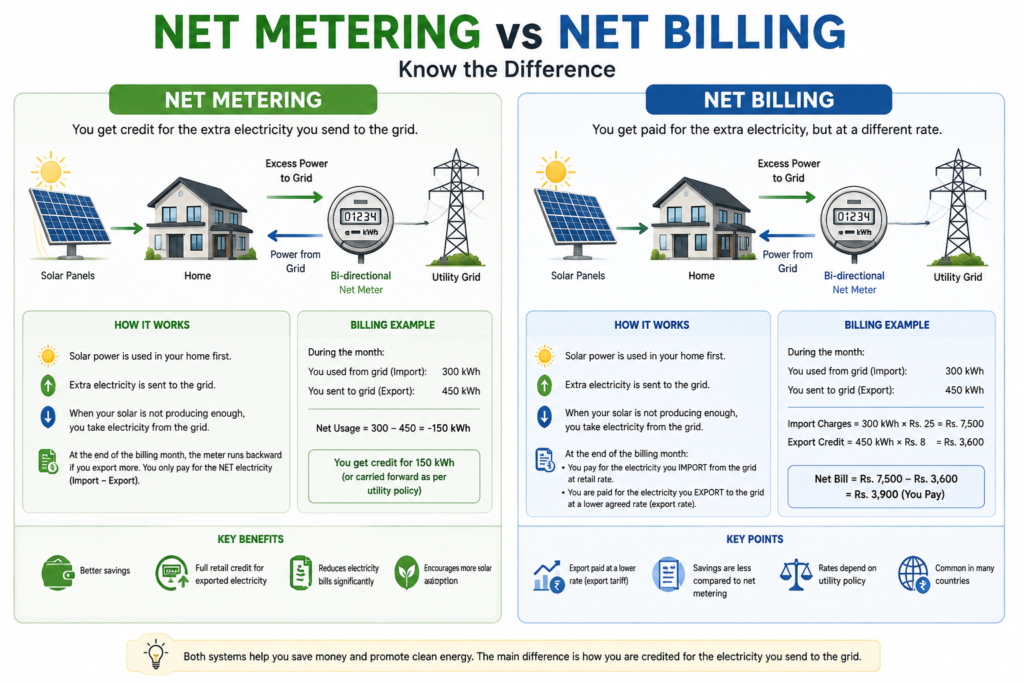
The two systems solve different problems.
These terms are sometimes used interchangeably, but they can describe different compensation mechanisms.
Net Metering
Under a traditional net-metering arrangement, exported electricity may be credited against imported electricity according to the applicable rules.
The exact calculation depends on the jurisdiction.
Net Billing
Under net billing, electricity consumed from the grid and electricity exported to the grid may be valued using different rates.
For example, electricity purchased from the grid may be billed at the applicable retail tariff, while electricity exported by the customer may receive a separate approved export or buyback rate.
This distinction is extremely important because the financial benefit of solar depends heavily on how exported electricity is valued.
Always check the current rules that apply to your location instead of assuming that an older net-metering arrangement still applies.
What Is Net Metering in Pakistan?
For Pakistani solar users, this question requires special attention because the regulatory framework has changed.
NEPRA notified the National Electric Power Regulatory Authority (Prosumer) Regulations, 2026 on February 9, 2026. These regulations introduced the current prosumer framework for eligible distributed-generation systems, and NEPRA subsequently published amendments to the 2026 regulations.
The 2026 regulations define a prosumer as an eligible consumer who applies to interconnect a distributed-generation facility with the distribution system. The regulations cover distributed generation using solar, wind, or biogas, subject to the applicable requirements.
This is important for anyone researching solar in Pakistan because many older websites still explain the previous net-metering system as though it is unchanged.
2026 Update: 25 kW Solar Systems
Under the latest amendment to Pakistan’s Prosumer Regulations 2026, a prosumer with a distributed generation facility of 25 kW or below does not need to seek concurrence from NEPRA. The concerned distribution licensee is responsible for granting approval, subject to the applicable requirements and procedures. For larger systems, the relevant regulatory, technical, and interconnection requirements still apply. Homeowners should confirm the latest requirements with their electricity distribution company before applying.
What about existing solar customers?
NEPRA’s published amendment states that approvals, licences, concurrences, and agreements issued under the repealed regulations before the new regulations came into force are treated differently from new arrangements, with valid existing agreements continuing under the applicable previous mechanism for their contractual term.
Therefore, new solar buyers and existing net-metering customers should not automatically assume they have the same billing arrangement.
For a current installation in Pakistan, check the latest NEPRA rules and your distribution company’s requirements before signing an agreement or calculating your expected solar savings.
What Is the Role of Net Metering Around the World?
Net metering is not limited to one country. It has played an important role in the growth of rooftop solar and distributed renewable energy in many parts of the world.
The basic idea is similar: homeowners and businesses generate electricity from solar panels, use some of it themselves, and send surplus electricity to the electricity grid when their system produces more than they need.
However, the way customers are compensated for exported electricity is different from country to country. Some markets use traditional net metering, while others use net billing, feed-in tariffs, or other export-credit arrangements.
This difference is important because the financial value of rooftop solar depends not only on how much electricity the panels generate, but also on how much value the customer receives for electricity exported to the grid.
Net Metering in the United States
The United States has been one of the important markets for distributed solar and net-metering policies.
Net-metering policies have historically allowed eligible solar customers to receive value for electricity their systems generate beyond their immediate consumption. Policies, however, are not identical across the country because electricity regulation is largely determined at the state and utility level.
The U.S. experience also shows how net-metering policies can evolve as rooftop solar becomes more widespread. Some states have modified traditional net-metering arrangements and introduced alternative compensation structures, including net billing and time-varying solar compensation.
For homeowners in the United States, this means that the value of exported solar electricity can depend heavily on the state, utility, tariff, and date of system approval.
Why Net Metering Matters in the United States
Net-metering and related solar-export policies have helped make rooftop solar more attractive by giving customers a way to receive value from electricity they do not immediately use.
However, as the number of solar installations has increased, some utilities and regulators have changed compensation rules to better reflect grid costs, electricity prices, and the increasing use of solar and battery storage.
This is why a homeowner should always check the current rules offered by their utility rather than assuming that an older net-metering policy still applies.
Net Metering and Rooftop Solar in India
India has also developed policies supporting grid-connected rooftop solar.
The Indian Ministry of New and Renewable Energy has supported grid-connected rooftop solar through national programs, and its official rooftop-solar framework includes provisions relating to net metering and even virtual net metering.
India’s approach is particularly important because rooftop solar can help households generate electricity closer to where it is consumed.
Under applicable programs and state regulations, residential consumers can install grid-connected rooftop solar and may receive government support subject to eligibility and program requirements.
However, India’s solar regulations are not necessarily identical in every state. Consumers need to check the applicable state electricity distribution company and current government requirements before installing a system.
Why Net Metering Matters in India
For Indian homeowners, grid-connected rooftop solar can reduce dependence on electricity purchased from the grid.
When solar production is higher than household consumption, the applicable export or metering mechanism determines how that excess generation is treated.
India also provides an interesting example of how solar policy can develop beyond traditional one-home/one-meter arrangements. Virtual net-metering frameworks can allow the benefits of renewable generation to be allocated across eligible consumers or arrangements under applicable rules.
Solar Export and Feed-In Tariffs in Australia
Australia is another major rooftop-solar market, but its current consumer guidance illustrates an important distinction between traditional net metering and feed-in tariffs.
Australian solar customers can export excess rooftop solar electricity to the grid, and electricity retailers may provide a feed-in tariff as a credit for exported electricity. The amount varies depending on the electricity plan, retailer, and location.
This means an Australian homeowner may receive a different rate for electricity exported to the grid than the rate they pay when purchasing electricity from the grid.
For example, if a household produces more solar electricity than it is using during the middle of the day, the excess may be exported. The customer can receive the applicable feed-in credit, while electricity used from the grid at another time may be charged at the applicable retail rate.
Why This Difference Matters
The Australian example demonstrates why homeowners should not assume that one unit exported = one unit purchased.
The financial value of solar depends on:
- How much solar electricity you use directly
- How much electricity you export
- The export rate
- The electricity purchase rate
- Your electricity tariff
- Any export limits
- Whether you have a battery
Australian government guidance specifically notes that feed-in tariffs are often lower than the retail price consumers pay for electricity from the grid. This can make using solar electricity directly in the home more valuable than exporting it.
Net Metering in Other Countries
Different countries have developed different approaches to connecting rooftop solar systems to their electricity grids.
Some markets use traditional net metering, where imported and exported electricity are offset according to defined rules.
Other markets use:
- Net billing
- Feed-in tariffs
- Export tariffs
- Time-of-use export rates
- Self-consumption incentives
- Virtual net metering
- Solar-plus-battery programs
The exact model depends on local electricity markets, government policy, grid conditions, and the level of rooftop solar adoption.
This is why net metering should be viewed as part of a larger global trend toward distributed energy, rather than as one identical system used everywhere.
Why Countries Use Net Metering or Similar Solar Programs
There are several reasons governments and utilities have supported rooftop solar and electricity-export programs.
Encouraging Renewable Energy
Solar-export programs can encourage households and businesses to invest in renewable energy systems.
Increasing Distributed Generation
Instead of producing all electricity in large centralized power plants, rooftop solar allows electricity to be generated closer to where it is consumed.
Reducing Daytime Grid Demand
Solar panels can produce significant electricity during daylight hours, helping reduce the amount of electricity some customers need to purchase from the grid at those times.
Giving Consumers More Energy Choices
Rooftop solar allows households and businesses to become partial electricity producers rather than only consumers.
Supporting the Growth of Solar Technology
Stable and predictable solar policies can encourage investment in solar panels, inverters, batteries, installation services, and other clean-energy technologies.
Is Net Metering the Same Everywhere?
No.
This is one of the most important things to understand.
The phrase “net metering” may sound like a universal system, but the actual rules can be very different.
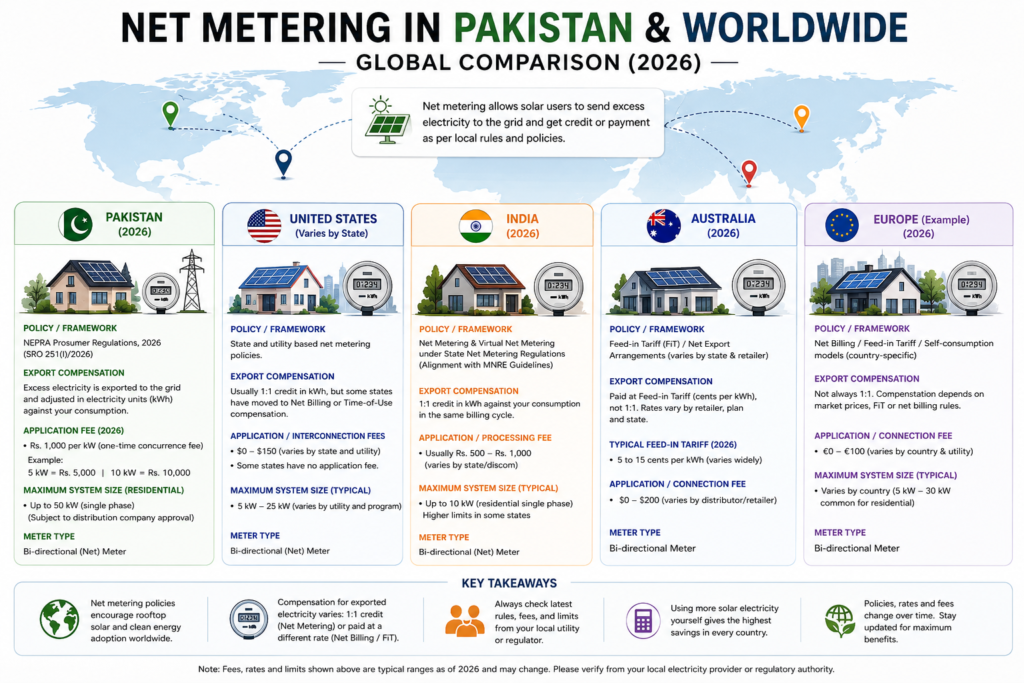
For example:
| Market | General approach |
| United States | State- and utility-specific solar compensation policies |
| India | Grid-connected rooftop solar with applicable net-metering frameworks and government programs |
| Australia | Feed-in tariffs and electricity export arrangements |
| Pakistan | Current prosumer/export framework under NEPRA’s 2026 regulations |
| Other countries | May use net metering, net billing, feed-in tariffs, or other export mechanisms |
These policies can also change over time.
Therefore, homeowners should always check the current regulations, utility rules, export rates, and eligibility requirements before calculating the expected savings from a solar system.
What Does This Mean for Solar Homeowners?
The worldwide trend shows that the future of rooftop solar is not simply about producing electricity.
It is increasingly about managing electricity intelligently.
A modern solar system may involve:
Solar panels → Home consumption → Battery storage → Grid export → Electricity credits or payments
The most financially beneficial setup depends on local electricity prices and export rules.
For some homeowners, using solar electricity directly during the day may provide the greatest value. For others, exporting excess electricity may still provide useful credits. In some markets, adding a battery can help shift solar energy from daytime to evening, when electricity may be more expensive.
This means homeowners should look at the complete energy picture rather than focusing only on the solar panel capacity.
The Future of Net Metering
As rooftop solar continues to grow, net-metering policies are likely to keep evolving.
The increasing adoption of batteries, smart meters, time-of-use electricity pricing, electric vehicles, and distributed energy resources is changing how electricity moves between homes and the grid.
Future solar programs may increasingly reward customers for:
- Using electricity when solar production is high
- Storing excess electricity in batteries
- Exporting electricity when the grid needs it most
- Reducing demand during peak periods
- Participating in virtual power plants or other distributed-energy programs
This does not mean traditional net metering will disappear everywhere. Instead, different countries and utilities may continue experimenting with compensation models that balance consumer benefits with the needs of the electricity grid.
Final Takeaway: The Global Role of Net Metering
Around the world, net metering and similar solar-export programs have helped connect rooftop solar systems with the wider electricity grid.
The basic concept is easy: generate solar electricity, use what you need, and send eligible surplus electricity to the grid.
But the financial value of that exported electricity is not universal.
The United States, India, Australia, Pakistan, and other countries use different policies and compensation mechanisms. Some rely on traditional net metering, while others use net billing, feed-in tariffs, or newer export arrangements.
For this reason, the smartest approach for a solar homeowner is to understand the local rules before buying the system.
The panels may be the same, but the economic value of the electricity they produce can be very different depending on where you live.
Why Is Net Metering Important for Solar Owners?
Solar panels produce electricity mainly when sunlight is available.
But household electricity consumption does not always match solar production.
For example, your solar panels may produce a lot of electricity around noon when nobody is using much power.
Without an approved way to export or store that excess electricity, some of that generation may not provide the same value to you.
A grid export arrangement can therefore help connect solar generation with the wider electricity system.
Benefits of Net Metering
1. Better Use of Excess Solar Energy
One of the biggest advantages is that excess solar electricity does not necessarily have to go unused.
It can be exported to the grid according to the applicable rules.
2. Potential Reduction in Electricity Costs
When exported electricity receives an applicable credit or compensation, it can reduce the customer’s overall electricity cost.
The actual financial benefit depends on consumption, solar production, tariffs, export rates, and local regulations.
3. No Need for a Large Battery Just to Export Power
A grid-connected solar system can export surplus electricity without storing all of it in batteries.
This can reduce the amount of battery storage needed for energy-balancing purposes.
4. Better Value From a Grid-Connected Solar System
Instead of designing a solar system only around your daytime electricity consumption, an approved export mechanism can allow surplus generation to be sent to the grid.
5. Renewable Energy Support
Grid-connected solar systems can increase the use of renewable electricity and reduce dependence on conventional electricity generation.
Disadvantages and Limitations of Net Metering
Net metering is useful, but it is not completely free of limitations.
Regulations Can Change
Solar policies and compensation mechanisms can change over time.
This is especially important in countries where governments and regulators regularly revise distributed-generation policies.
Approval May Be Required
You cannot simply install solar panels and start exporting electricity to the grid.
The system must meet the applicable technical and regulatory requirements.
Export Compensation May Differ From Retail Electricity Rates
In some jurisdictions, exported electricity is not valued at exactly the same rate that consumers pay when purchasing electricity from the grid.
This can significantly affect the financial return of a solar system.
Grid Outages
A normal grid-connected inverter generally shuts down during a grid outage unless the system has appropriate backup equipment designed to operate safely during outages.
This is an important point that many new solar buyers misunderstand.
Having solar panels does not automatically mean your home will have electricity during a grid outage.
Can Net Metering Work During a Power Outage?
Usually, a standard grid-connected solar inverter will shut down when the utility grid goes down.
This is an important safety feature.
It prevents a solar installation from continuing to send electricity onto a power line that utility workers may believe is de-energized.
If you want solar power during outages, you generally need a properly designed backup system that may include:
- Battery storage
- A compatible hybrid inverter
- Backup circuits
- Appropriate protection equipment
- An approved system design
The exact configuration depends on the equipment and local electrical requirements.
How Much Solar Do You Need for Net Metering?
There is no single solar-system size that is ideal for every household.
The right size depends on:
- Monthly electricity consumption
- Daytime electricity usage
- Roof space
- Solar resource
- Panel orientation
- Shading
- Inverter capacity
- Local utility rules
- Allowed system capacity
- Export arrangements
Instead of choosing a system only because it is popular, calculate your actual electricity consumption first.
A properly sized system can provide better financial value than simply installing the largest possible number of panels.
Is Net Metering Worth It?
For many grid-connected solar users, an approved export arrangement can significantly improve the usefulness and economics of rooftop solar.
But whether it is financially worthwhile depends on the current rules in your location.
Before investing, compare:
Solar system cost + installation cost
against
Expected solar generation + self-consumption + value of exported electricity + available incentives
Also consider:
- Inverter lifespan
- Panel degradation
- Maintenance
- Electricity tariff changes
- Export compensation
- Financing costs
- Battery requirements
- Future regulatory changes
A solar system should be evaluated using realistic assumptions rather than a simple promise of “zero electricity bills.”
Net Metering and Solar Inverters
The inverter is one of the most important components of a grid-connected solar system.
A grid-connected solar system typically relies on a suitable grid-tied solar inverter to convert solar electricity into usable AC power and connect the system safely to the utility grid.
Depending on the system design, you may encounter:
- String inverters
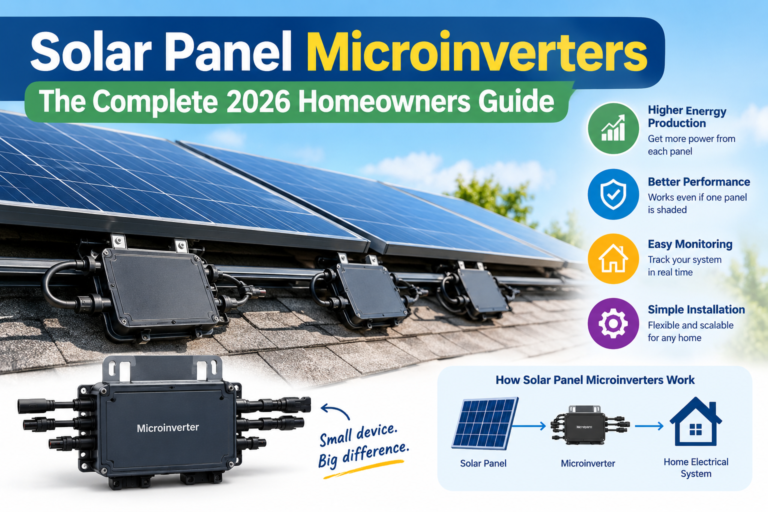
- Microinverters
- Hybrid inverters
For example, microinverters convert electricity at the individual panel level, while string inverters typically handle multiple panels connected together.
The inverter must meet the technical requirements applicable to the intended grid connection.
Net Metering and Microinverters
Microinverters can also be used in grid-connected solar systems.
With microinverters, each solar panel has its own inverter.
This can provide advantages such as:
- Panel-level monitoring
- Independent panel operation
- Better performance when some panels are shaded
- Flexible system design
However, whether a particular microinverter system can be connected under a local grid-export program depends on its technical specifications and the utility’s requirements.
For more information, read our complete guide to solar panel microinverters.
How to Apply for Net Metering
The application process varies by country and utility.
In general, the process may involve:
Step 1: Assess Your Electricity Consumption
Review your electricity bills and determine how much electricity your home uses.
Step 2: Design the Solar System
A qualified solar professional should design the system according to your energy requirements and local technical standards.
Step 3: Select Approved Equipment
The panels, inverter, protection equipment, meter, and other components must meet the applicable requirements.
Step 4: Submit the Application
The required documents are submitted to the relevant utility or regulatory authority.
Step 5: Technical Review
The utility reviews the proposed connection and technical details.
Step 6: Installation and Inspection
After approval, the solar system is installed and inspected according to the applicable process.
Step 7: Metering and Interconnection
Once the required approvals and technical checks are completed, the system can be connected under the applicable arrangement.
Important: The exact process, fees, documents, timelines, and eligibility requirements vary by location and can change. Always check the latest requirements with your utility or regulator.
Common Net Metering Mistakes to Avoid
Mistake 1: Assuming Solar Automatically Means Net Metering
Installing solar panels does not automatically give you the right to export electricity to the grid.
Mistake 2: Using an Incompatible Inverter
The inverter must meet the technical requirements for the intended grid connection.
Mistake 3: Ignoring Current Regulations
Don’t rely on a five-year-old article when making a major solar investment.
Mistake 4: Assuming Exported Electricity Has the Same Value as Imported Electricity
The compensation mechanism can be different depending on the country and current regulations.
Mistake 5: Expecting Solar Panels to Work During a Grid Outage
A standard grid-tied system normally shuts down during an outage unless it has suitable backup functionality.
Mistake 6: Oversizing the System Without Understanding Export Rules
Installing more solar capacity is not automatically better. The financial value depends on your consumption and the rules governing exported electricity.
Final Thoughts
So, what is net metering?
In simple terms, it is a way for eligible grid-connected renewable-energy users to send surplus electricity to the utility grid and receive the applicable credit or compensation.
For solar homeowners, the concept can make rooftop solar much more practical because electricity production and household electricity consumption rarely occur at exactly the same time.
However, the most important lesson is this: net metering is not one universal system. The rules, export rates, eligibility requirements, meter specifications, and application process vary by location and can change over time.
If you are planning solar in Pakistan, pay particular attention to the current NEPRA framework. The Prosumer Regulations, 2026 replaced the previous regulatory framework, while NEPRA has also published subsequent amendments.
Before purchasing a solar system, check the latest requirements with the relevant regulator and electricity distribution company. This can help you choose the right system size, inverter, and overall setup based on the rules that actually apply to you.
A well-designed solar system is not just about installing panels. It is about understanding how your electricity is generated, consumed, stored, imported, and exported—and how the current regulations affect the value of each part of that system.
What is net metering in simple words?
Net metering is a grid-connected solar arrangement that allows eligible solar customers to export surplus electricity to the utility grid and receive the applicable credit or compensation under local rules.
Does net metering reduce the electricity bill?
It can reduce electricity costs by allowing surplus solar electricity to receive an applicable credit or compensation. The actual savings depend on the local billing and export mechanism.
Do I need batteries for net metering?
No. A grid-connected solar system can operate without batteries. Batteries are mainly useful when you want energy storage or backup power.
Can I use net metering with solar panels?
Yes, eligible grid-connected solar systems can participate where the local regulations and utility rules allow it.
Does net metering work at night?
Solar panels generally do not generate electricity at night. Your home can draw electricity from the grid or from battery storage, depending on your system.
What happens to extra solar electricity?
If your system is approved for grid export, excess electricity can flow to the utility grid and be measured by the appropriate meter. The financial treatment depends on the applicable rules.
Can I get solar power during a grid outage?
A standard grid-tied solar system normally shuts down during a grid outage. A properly designed backup system with compatible equipment may provide power to selected loads.
Is net metering available everywhere?
No. Net-metering or similar solar-export programs depend on local laws, regulations, utility policies, and technical requirements.
Is net metering still available in Pakistan?
Pakistan’s regulatory framework changed in 2026. NEPRA notified the Prosumer Regulations, 2026, and subsequent amendments have been issued. Therefore, anyone installing a new system should check the current applicable rules rather than relying on older net-metering information.
What is the difference between net metering and net billing?
The main difference is how electricity imported from the grid and electricity exported to the grid are valued. Under some net-billing arrangements, exported electricity receives a separate rate rather than the same retail value applied to electricity purchased from the grid.
How does net metering work in solar energy systems?
Solar panels generate electricity during the day. When generation is higher than household consumption, excess electricity can be exported to the grid if the system is approved for export. A bidirectional meter records the electricity flow for billing purposes.
Is net metering available for every solar system?
No. Eligibility depends on the applicable regulations, system requirements, utility rules, and approval process. A solar system can operate without net metering, but exporting electricity to the grid generally requires the appropriate approval and equipment.