Solar Installation in Pakistan: Cost, Process, Requirements, and How to Choose an Installer
Installing a solar system in Pakistan can help homes and businesses reduce their dependence on grid electricity. However, the right system size, equipment, installation method, and installer can make a major difference in cost, performance, and long-term reliability.
Below is a complete, easy-to-scan guide covering the process, requirements, costs, and the key factors to consider before choosing a solar installer.
Table of Content
- Quick Answer: A solar installation in Pakistan usually involves:
- What Is Solar Installation?
- How Much Does Solar Installation Cost in Pakistan?
- What Should Be Included in Your Quote?
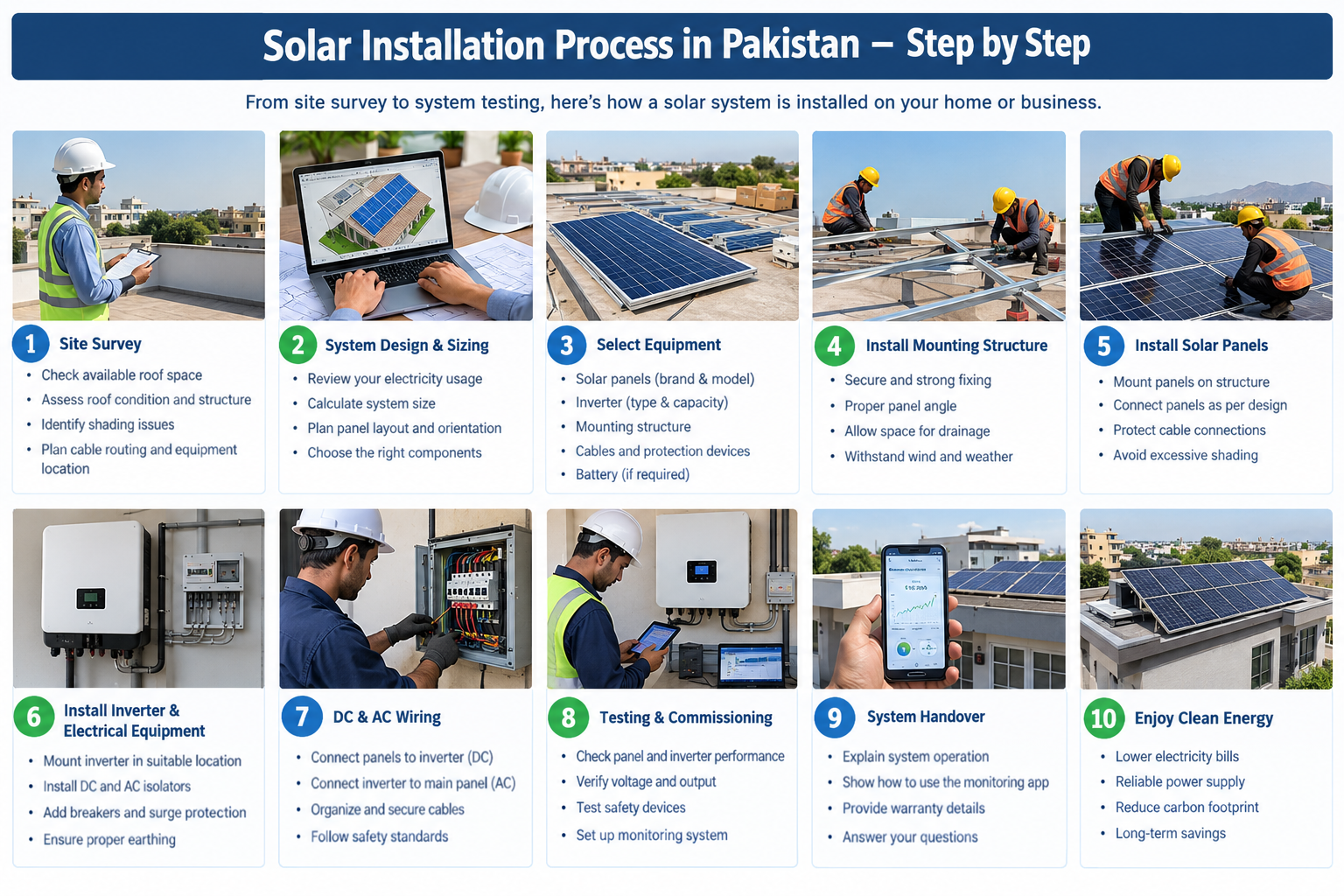
- Solar Installation Process in Pakistan: Step by Step
- Requirements for Solar Installation in Pakistan
- How to Choose the Best Solar Installer in Pakistan
- Questions to Ask Before Hiring a Solar Installer
- Common Solar Installation Mistakes to Avoid
- On-Grid vs Hybrid Installation: Which Is Better?
- Solar Installation Checklist
- Frequently Asked Questions
- Final Thoughts
Quick Answer: A solar installation in Pakistan usually involves:
- Checking your electricity usage.
- Choosing the right solar system size.
- Inspecting your roof or installation area.
- Selecting solar panels, an inverter, and batteries if required.
- Installing mounting structures and solar panels.
- Completing electrical wiring and safety protection.
- Testing and commissioning the system.
- Applying for grid interconnection or net metering where applicable.
The total cost depends on the system size, equipment quality, system type, battery storage, roof conditions, and installation complexity. For this reason, it is better to compare complete quotations instead of choosing an installer based only on the lowest price.
What Is Solar Installation?
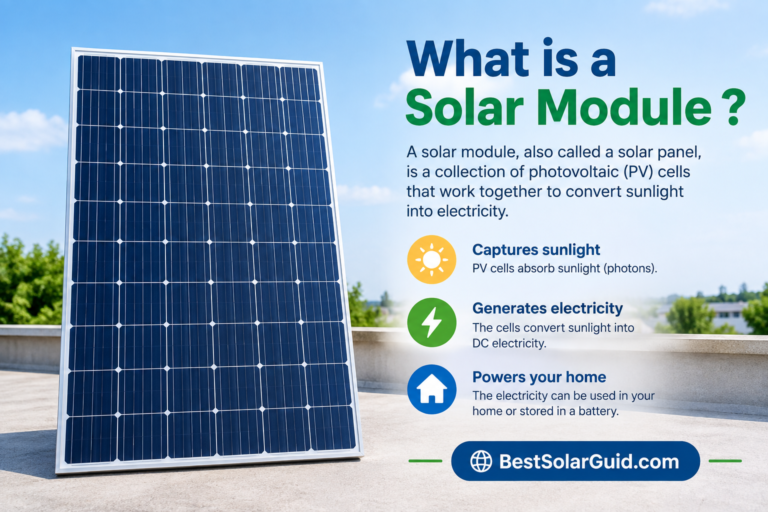
Solar installation is the process of setting up a solar power system so that sunlight can be converted into electricity for a home, business, farm, or other property.
A typical solar system may include:
- Solar panels
- A solar inverter
- Mounting structures
- DC and AC cables
- Protection devices
- Earthing and safety equipment
- Monitoring equipment
- Batteries, if required
The exact components depend on whether you choose an on-grid, off-grid, or hybrid solar system.
How Much Does Solar Installation Cost in Pakistan?
There is no single fixed price for solar installation in Pakistan.
Your total cost can vary based on several factors:
| Factor | How It Affects Cost |
|---|---|
| System size | Larger systems usually cost more overall |
| Solar panel brand | Premium panels may cost more |
| Inverter type | On-grid, hybrid, and off-grid inverters have different costs |
| Battery storage | Adding batteries can significantly increase the budget |
| Roof condition | Structural work may be required for some roofs |
| Installation complexity | Difficult wiring or mounting can increase labour costs |
| Protection equipment | Quality breakers, surge protection, and earthing add to the total cost |
What Should Be Included in Your Quote?
When comparing solar installation quotes, ask for a complete breakdown.
A good quotation should clearly show:
- Number and wattage of solar panels
- Panel brand and model
- Inverter brand and model
- Battery details, if included
- Mounting structure specifications
- Wiring and protection equipment
- Earthing system
- Installation charges
- Monitoring system
- Warranty details
- Taxes or additional charges
- Any grid interconnection or documentation services
Important: A cheaper quotation is not always a better deal. Two installers may quote the same system size but use completely different equipment.
Step 1: Check Your Electricity Consumption
Before installing solar panels, review your electricity bills.
Look at:
- Monthly electricity units consumed
- Peak electricity usage
- Seasonal changes
- Appliances that use the most electricity
- Daytime versus nighttime consumption
This information helps determine the approximate solar system size you may need.
For example, a home with high daytime electricity use may benefit differently from solar than a home that uses most of its electricity at night.
Do not choose a system size only because someone recommends a specific number of kilowatts. The system should be based on your actual electricity needs, available space, budget, and future plans.
Step 2: Choose the Right Type of Solar System
There are three common solar system types.
On-Grid Solar System
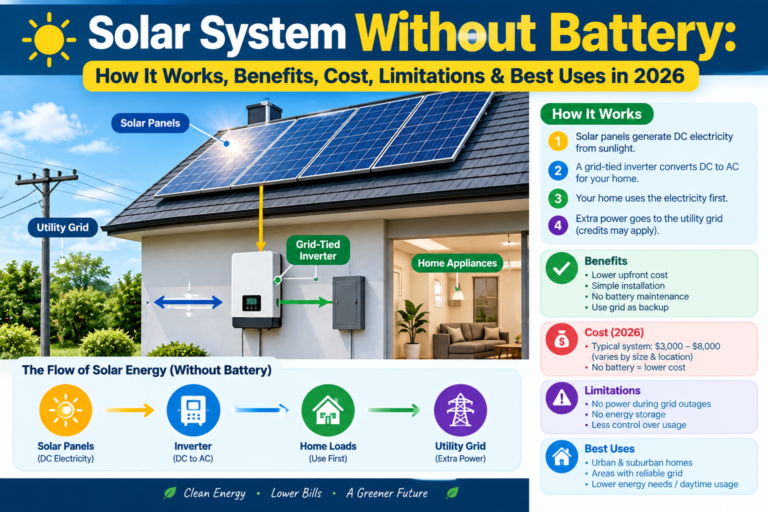
An on-grid system works with the electricity grid and usually does not include battery backup.
It may be suitable for users who:
- Have a reliable grid connection
- Use significant electricity during the daytime
- Want to reduce battery costs
- Are considering grid export arrangements
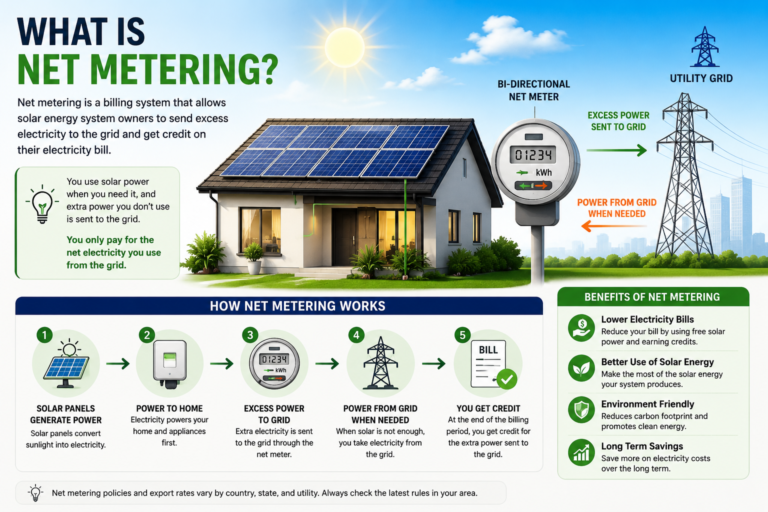
Current grid-export and distributed-generation requirements are regulated and can change. Pakistan’s Power Division explains that eligible distributed-generation consumers can export excess solar energy under the applicable framework, while requirements such as connection type and sanctioned load may apply. Always confirm the latest rules with your DISCO and the relevant regulator before making a purchase decision.
Hybrid Solar System
A hybrid system combines solar power with the grid and can also use battery storage.
It may be suitable for people who:
- Want backup during power outages
- Want to use solar energy during the day
- Need greater flexibility
- Are willing to spend more on batteries
Off-Grid Solar System
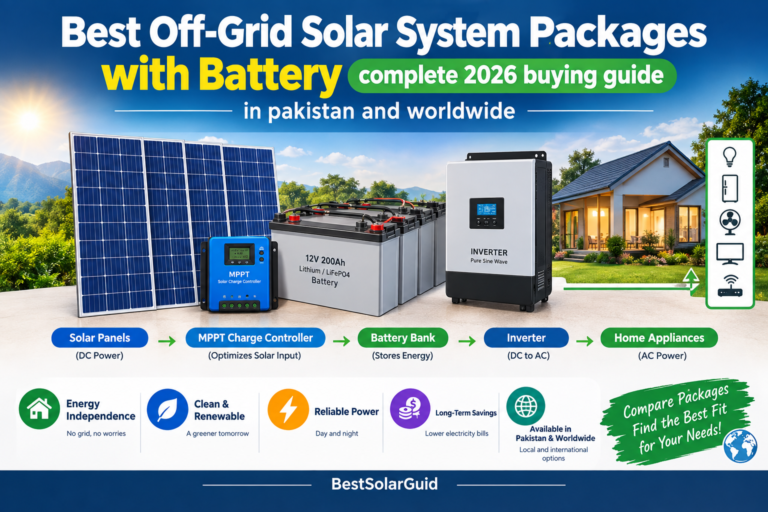
An off-grid system operates independently from the electricity grid and normally requires batteries or another method of energy storage.
It may be suitable for:
- Remote locations
- Areas with limited grid access
- Properties that need an independent power supply
Before choosing a system, understand the difference between on-grid, hybrid, and off-grid solar systems because the equipment, installation requirements, and costs can vary significantly.
An off-grid solar system is a complete setup that can include solar panels, batteries, an inverter, and other components. An off-grid solar inverter is just one component of this system. Learn more about the differences between an off-grid solar system and an off-grid solar inverter in our detailed guide.
Solar Installation Process in Pakistan: Step by Step
1. Site Survey
A professional installation should begin with a site survey.
The installer should examine:
- Available roof space
- Roof material and condition
- Shading from trees or nearby buildings
- Roof orientation
- Electrical connection
- Available space for the inverter and batteries
- Cable routing
This step is important because poor site planning can reduce the system’s performance.
2. System Design and Sizing
After the site survey, the installer should recommend a system based on your needs.
The design should consider:
- Your electricity consumption
- Available installation area
- Solar panel capacity
- Expected daytime production
- Backup requirements
- Future electricity needs
For example, if you plan to add an electric vehicle, air conditioners, or other high-power appliances later, discuss this with the installer before finalizing the system size.
3. Selecting Solar Panels and Other Equipment
The installer should specify the exact equipment being used.
Do not accept a quotation that simply says:
“Solar panels and inverter included.”
Ask for:
- Brand
- Model number
- Capacity
- Warranty
- Technical specifications
The main equipment should include suitable solar panels, an inverter, mounting structures, cables, protection devices, and proper earthing.
If you are installing a hybrid or off-grid system, the battery specifications should also be clearly mentioned.
4. Installing the Mounting Structure
The mounting structure holds the solar panels securely.
A good installation should consider:
- Structural strength
- Secure fixing
- Proper spacing
- Suitable panel angle
- Drainage and water flow
- Resistance to wind and weather
The structure should be appropriate for your specific roof or installation location.
5. Installing the Solar Panels
The solar panels are mounted on the structure and connected according to the approved system design.
The installer should ensure that:
- Panels are securely fixed
- Cable connections are protected
- Excessive shading is avoided where possible
- The layout allows reasonable access for inspection and maintenance
6. Installing the Inverter and Electrical Equipment
The inverter converts the DC electricity produced by solar panels into usable AC electricity.
The installation may also include:
- DC isolators
- AC breakers
- Surge protection
- Distribution equipment
- Monitoring devices
- Earthing equipment
The exact configuration depends on the system design.
Safety equipment should never be ignored simply to reduce the installation price.
7. Testing and Commissioning
Before handing over the system, the installer should test the installation.
This may include checking:
- Panel connections
- Inverter operation
- Voltage and system performance
- Safety equipment
- Monitoring system
- Battery operation, if applicable
You should also be shown how to:
- Monitor the system
- Read the inverter information
- Identify basic warnings
- Shut down the system safely if required
Requirements for Solar Installation in Pakistan
Before installing a solar system, check the following requirements.
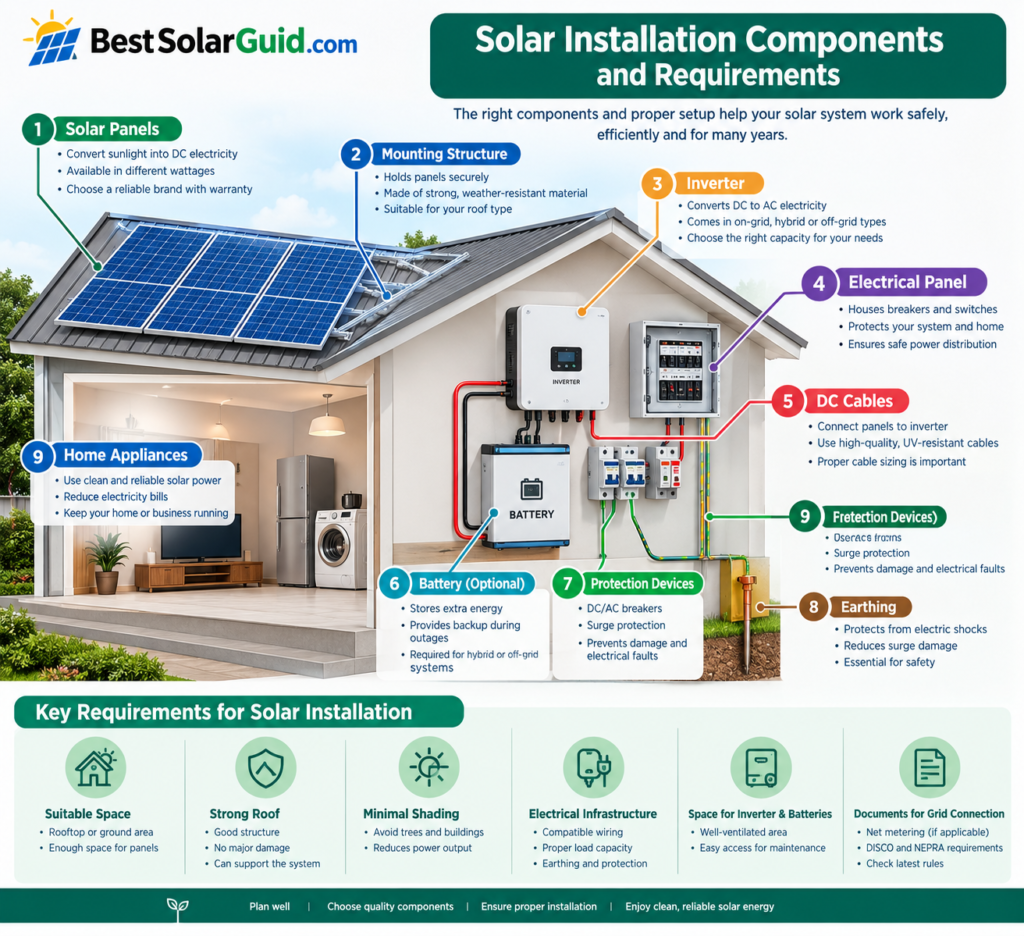
1. Suitable Installation Space
You need enough suitable space for the solar panels.
This could be:
- A rooftop
- A ground-mounted area
- Another structurally suitable location
The available space affects how many panels can be installed.
2. A Structurally Suitable Roof
The roof should be capable of supporting the solar installation.
Older or damaged roofs may need inspection or repairs before installation.
Do not install an expensive solar system on a roof that may require major repairs soon.
3. Minimal Shading
Shading from:
- Trees
- Nearby buildings
- Water tanks
- Walls
- Other structures
can reduce solar production.
A proper site survey should identify major shading issues before the installation begins.
4. Suitable Electrical Infrastructure
Your existing electrical system should be checked to ensure that it is compatible with the planned solar system.
The installer may need to assess:
- Main distribution board
- Wiring
- Load capacity
- Earthing
- Protection equipment
- Connection type
5. Space for the Inverter and Batteries
The inverter should be installed in an appropriate location.
If you are using batteries, you also need suitable space based on the battery manufacturer’s installation requirements.
The area should allow reasonable access for inspection and maintenance.
6. Documents for Grid Connection or Export Arrangements
If you plan to connect your solar system to the electricity grid or export excess electricity, additional technical and administrative requirements may apply.
Pakistan’s Power Division states that distributed-generation and net-metering eligibility is subject to specific conditions, including applicable connection and sanctioned-load requirements. NEPRA continues to publish distributed-generation licences and concurrences, and its regulations have also been amended over time. Because these rules can change, verify the latest requirements directly with your DISCO and NEPRA before installation.
How to Choose the Best Solar Installer in Pakistan
Choosing the right installer is just as important as choosing the right solar panels.
Here are the most important factors to consider.
1. Ask for a Proper Site Survey
Be careful if an installer recommends a complete system without asking about:
- Your electricity bills
- Your roof
- Your electricity usage
- Your backup requirements
A reliable recommendation should be based on your actual needs.
2. Compare Equipment, Not Just Total Price
Suppose one installer offers a 10 kW system for a lower price than another.
That does not automatically mean it is the better option.
Compare:
- Panel models
- Inverter models
- Mounting structure quality
- Protection devices
- Cable specifications
- Warranty
- Installation scope
Always compare like for like.
3. Ask for Exact Brands and Model Numbers
Your quotation should clearly mention the equipment.
For example:
- Solar panel brand and model
- Inverter brand and model
- Battery brand and capacity
- Monitoring system
- Protection equipment
Avoid vague quotations.
4. Check Previous Installation Experience
Ask the installer for examples of previous work.
You can ask for:
- Project photos
- References
- System sizes previously installed
- Experience with residential or commercial projects
Where possible, independently verify reviews and references.
5. Understand the Warranty
Ask separate questions about:
- Solar panel product warranty
- Performance warranty
- Inverter warranty
- Battery warranty
- Installation workmanship warranty
Do not assume that every part of the system has the same warranty period.
6. Ask What Happens After Installation
A good installer should explain:
- Who handles technical problems
- How warranty claims work
- Whether monitoring support is provided
- Response time for faults
- Whether maintenance services are available
After-sales support can be extremely important, especially for larger systems.
7. Get Everything in Writing
Before paying, request a written quotation or agreement that clearly covers:
- Equipment
- Installation scope
- Total cost
- Payment schedule
- Delivery timeline
- Warranty
- Responsibilities of both parties
This can help prevent misunderstandings later.
Questions to Ask Before Hiring a Solar Installer
Before making a final decision, ask these questions:
- What system size do you recommend and why?
- Which solar panel models will you use?
- Which inverter model will you install?
- Is the mounting structure included?
- Which safety and protection devices are included?
- Is proper earthing included?
- What is covered by the installation warranty?
- Who handles equipment warranty claims?
- Is system monitoring included?
- Are there any additional charges?
- Will you provide system testing and commissioning?
- Can you provide a complete itemized quotation?
Common Solar Installation Mistakes to Avoid
Choosing a System That Is Too Large or Too Small
An oversized or undersized system may not match your actual needs.
Start with electricity usage and realistic future demand.
Choosing Only the Cheapest Installer
A very low price may sometimes mean lower-quality components or missing safety equipment.
Compare the complete scope of work.
Ignoring Roof Condition
Fix major roof problems before installing solar panels.
Ignoring Shading
Even partial shading can affect performance.
A site assessment should identify major obstacles.
Not Checking Warranty Terms
Always understand who provides the warranty and what it covers.
Ignoring Safety Equipment
Protection devices and proper earthing are essential parts of a solar installation.
Not Planning for Future Electricity Use
If you expect your electricity consumption to increase, discuss expansion options with the installer.
On-Grid vs Hybrid Installation: Which Is Better?
The best choice depends on your priorities.
| Feature | On-Grid | Hybrid |
| Uses solar panels | Yes | Yes |
| Connected to the grid | Yes | Yes |
| Battery backup | Usually no | Yes, if batteries are included |
| Backup during outages | Depends on system design | Usually available with suitable backup configuration |
| Initial cost | Generally lower | Generally higher |
| Best for | Reducing daytime grid use | Solar savings plus backup needs |
An on-grid system may suit users who mainly want to reduce electricity costs.
A hybrid system may be a better option for people who also want backup power during outages.
You can also read our detailed guide on on-grid vs off-grid solar systems to understand which setup may better suit your needs.
Solar Installation Checklist
Before approving a solar installation, make sure you have checked:
- My electricity usage has been reviewed.
- The recommended system size is explained.
- My roof or installation area has been inspected.
- Major shading issues have been identified.
- The panel brand and model are specified.
- The inverter brand and model are specified.
- Battery details are included, if required.
- Mounting structure details are included.
- Protection and earthing are included.
- Warranty terms are clear.
- The quotation shows all major costs.
- After-sales support has been discussed.
- Grid interconnection requirements have been verified, if applicable.
Final Thoughts
Solar installation in Pakistan is not simply about buying solar panels and placing them on a roof. A good system starts with understanding your electricity usage, selecting the right system type, checking the installation site, using suitable equipment, and choosing a reliable installer.
Before making a decision, get multiple detailed quotations and compare the equipment, system design, safety features, warranty, and after-sales support—not just the final price.
A well-planned solar installation can provide reliable long-term value, while a poorly designed or poorly installed system can create unnecessary costs and performance problems.
Before finalizing any purchase, verify current prices, equipment availability, and applicable grid or net-metering requirements, as these can change over time.
RELATED READINGS
How much does solar installation cost in Pakistan?
The cost depends on the system size, equipment brands, inverter type, battery storage, installation complexity, and other factors. Always request an itemized quotation before comparing installers.
How long does it take to install a solar system?
The physical installation time depends on the system size and complexity. Additional time may be required for site assessment, equipment availability, testing, and any applicable grid-connection procedures.
Do I need batteries for a solar system?
Not always. On-grid systems generally operate without batteries, while hybrid and off-grid systems may use batteries depending on the required level of backup and system design.
Can I install solar panels on any roof?
Not every roof is automatically suitable. The roof condition, available space, shading, structure, and installation method should be assessed first.
How do I choose a solar installer?
Compare complete quotations, check previous work, request exact equipment specifications, understand warranty terms, and make sure safety equipment and after-sales support are clearly included.
Can I export excess solar electricity to the grid?
Grid export is subject to the applicable distributed-generation framework and technical requirements. Pakistan’s official authorities continue to administer licences and concurrences under the relevant regulations, so you should confirm the latest rules with your DISCO and NEPRA before making a system decision.