Best Off-Grid Solar System Packages with Battery (Complete 2026 Buying Guide)
Living without a dependable power supply is stressful. Load-shedding, high electricity bills, and sudden blackouts push many homeowners to look for a way out — and that’s where off-grid solar system packages with battery come in. These packages give you everything you need in one bundle: solar panels, an inverter, and a battery bank, so you can generate, store, and use your own electricity without relying on the grid at all.
In this guide, we’ll explain what these packages include, how to pick the right one for your home, and which options are considered the best on the market today. Everything is explained in simple language, so even if you’re new to solar, you’ll be able to follow along easily.
Table of Contents
- What Is an Off-Grid Solar System Package?
- Why Choose an Off-Grid System with Battery?
- Main Components of a Complete Package
- Types of Batteries Used in Off-Grid Packages
- How to Choose the Right Package Size
- Best Off-Grid Solar System Packages (By Home Size)
- Average Cost of Off-Grid Solar Packages
- Installation Tips for Beginners
- Common Mistakes to Avoid
- Conclusion
- Frequently Asked Questions
What Is an Off-Grid Solar System Package?
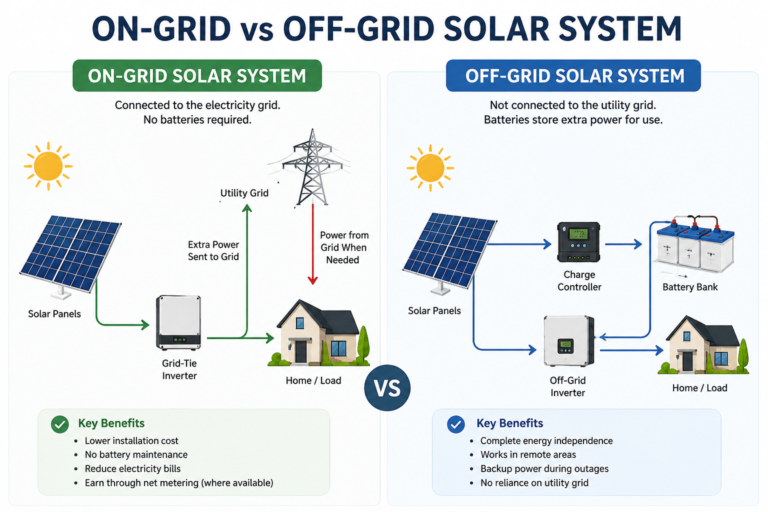
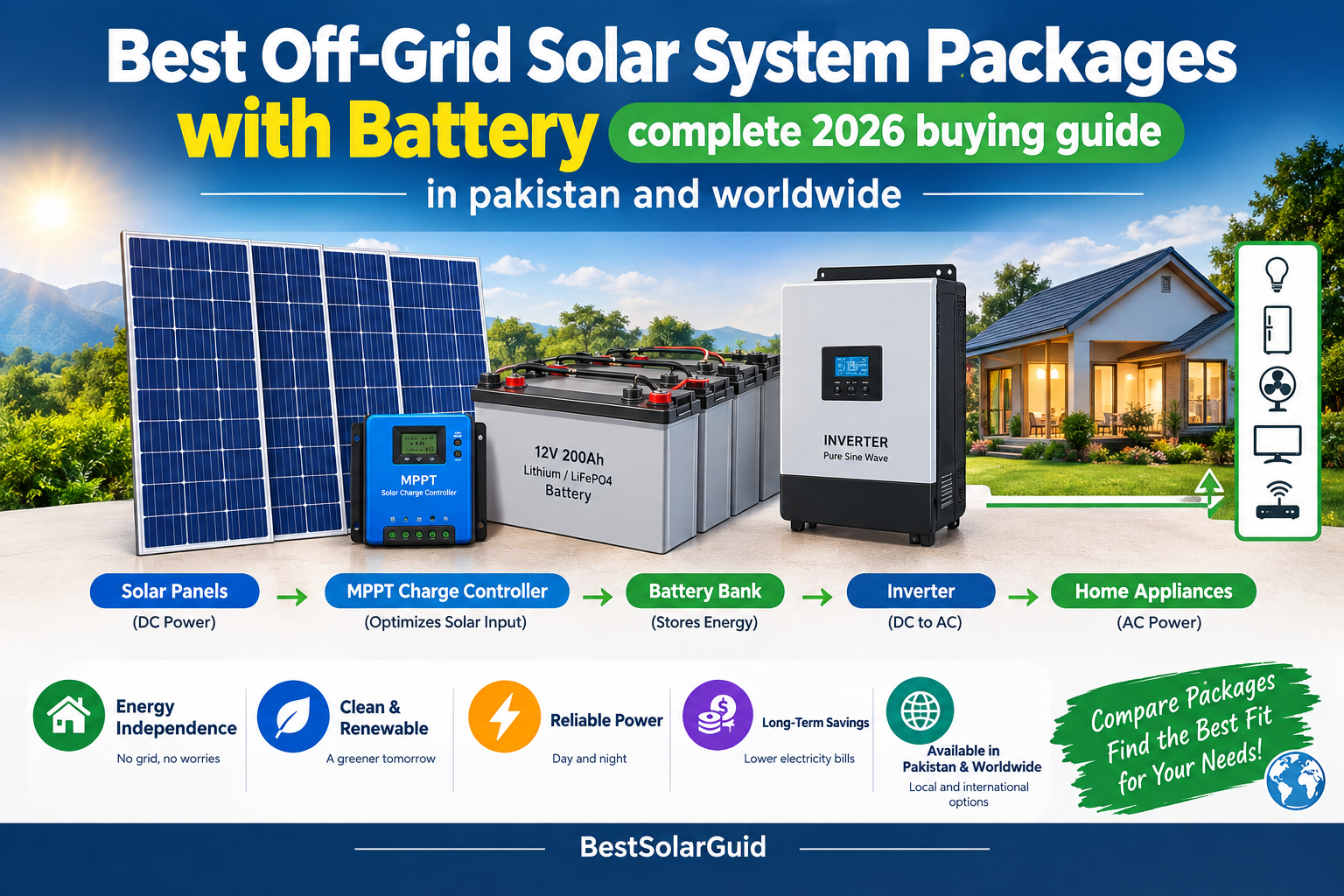
An off-grid solar system package is a ready-made bundle of solar equipment that lets your home run completely independently from the utility grid. Unlike a single solar panel or inverter bought separately, a package is designed so that every part — panels, batteries, inverter, and wiring — works together smoothly.
This is different from a grid-tie system, which stays connected to the grid and shuts down during a power outage. An off-grid package has no such limitation, because the battery bank keeps supplying power even when there’s no sunlight and no grid at all.
Why Choose an Off-Grid System with Battery?
A battery is the heart of any off-grid setup. Without it, your solar panels would only produce power during daylight hours, leaving you without electricity at night or on cloudy days. Here’s why adding a battery to your package makes such a big difference:
- 24/7 power supply – Your home stays powered day and night.
- No dependence on the grid – Ideal for remote areas, farmhouses, or regions with frequent load-shedding.
- Protection from outages – Batteries automatically kick in the moment the sun goes down or the weather turns cloudy.
- Long-term savings – Once installed, your ongoing electricity costs drop dramatically.
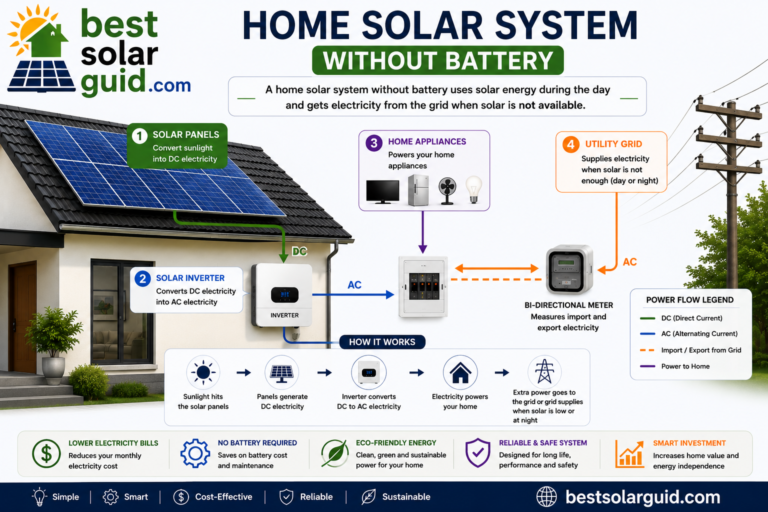
If you’re still deciding whether battery storage is necessary, our guide to a home solar system without a battery explains how these systems work and what you give up without energy storage.
Main Components of a Complete Package
Every good off-grid solar package includes the same core parts. Understanding each one will help you choose a package that actually fits your needs.
Solar Panels
These convert sunlight into electricity. Most modern packages use monocrystalline panels because they’re more efficient and last longer.
Inverter
The inverter converts the DC electricity from your panels and battery into the AC power your household appliances use. A pure sine wave inverter is recommended since it runs sensitive electronics safely.
Battery Bank
This stores extra electricity generated during the day so it can be used at night. The size of your battery bank determines how many hours (or days) you can run on stored power alone.
If you’re trying to understand how much energy a battery can store, our guide to 5 kWh batteries explains battery capacity, typical uses, and what you can expect from a 5 kWh storage system.
Charge Controller
This regulates how much power flows from the panels into the battery, protecting the battery from overcharging.
Mounting Structure and Wiring
These hold the panels in place and safely connect every part of the system together.
Types of Batteries Used in Off-Grid Packages
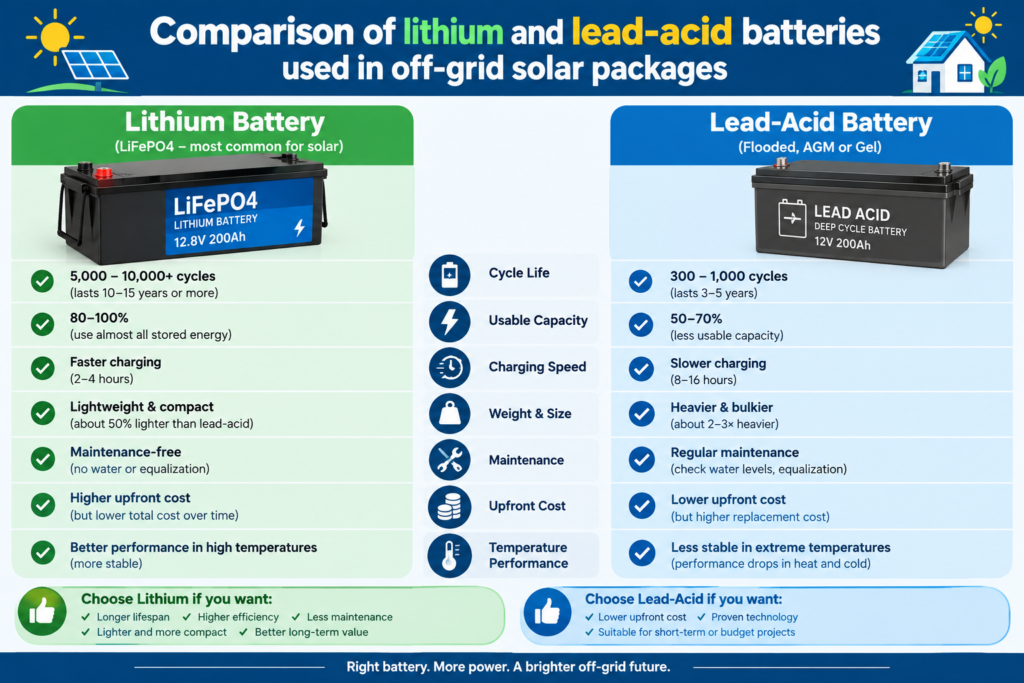
Choosing the right battery type affects both performance and cost. Here are the two most common options.
Lead-Acid Batteries
These are the more affordable, traditional choice. They typically last around 3–5 years and need regular maintenance, such as checking water levels.
Lithium (LiFePO4) Batteries
These are now the most popular choice for off-grid packages. They last much longer (often 8–10+ years), need almost no maintenance, and can be discharged more deeply without damage — making them a better long-term investment even though the upfront price is higher.
How to Choose the Right Package Size
Picking the right size package depends on how much electricity your home actually uses. Here’s a simple way to work it out:
- List your appliances – Fans, lights, fridge, TV, water pump, etc.
- Add up daily usage – Check the wattage of each appliance and how many hours you run it.
- Decide your backup time – Do you need power for a few hours at night, or full days without sun?
- Match it to a package – Smaller packages (1–3 kW) suit a few lights and fans, while larger ones (5–10 kW and above) can run a fridge, AC, and other heavier loads.
Best Off-Grid Solar System Packages (By Home Size)
Here’s a general breakdown of common package sizes and what they’re typically used for.
Small Package (1–2 kW with Battery)
Good for a small home, single room, or shop running a few fans, lights, and a TV.
Medium Package (3–5 kW with Battery)
Suitable for an average household running a fridge, fans, lights, and a water pump, with a battery bank that can carry the home through the night.
Large Package (6–10 kW with Battery)
Designed for bigger homes or those wanting to run an AC unit, washing machine, and other heavy appliances, with enough battery storage for extended backup.
Whole-Home Package (10 kW+ with Battery)
Meant for large houses or full off-grid living, where every appliance in the home needs to run without any interruption, even for multiple cloudy days in a row.
Average Cost of Off-Grid Solar Packages
Pricing depends heavily on battery type, system size, and brand quality. As a general guide:
- Small packages are the most budget-friendly and a good starting point for basic needs.
- Medium packages cost more but offer a solid balance between price and daily comfort.
- Large and whole-home packages cost significantly more upfront but reduce or eliminate your electricity bill entirely over time.
Lithium battery packages usually cost more initially than lead-acid packages, but they save money over the years thanks to their longer lifespan and lower maintenance needs.
Off-Grid Solar Package Prices in Pakistan
If you’re buying in Pakistan, prices vary based on system size and battery type. Here’s a rough idea of what to expect:
- Small package (1–2 kW with battery): Around Rs. 150,000 – Rs. 300,000, enough for a few fans, lights, and a TV during load-shedding.
- Medium package (3–5 kW with battery): Around Rs. 400,000 – Rs. 800,000, suitable for a fridge, fans, lights, and a water pump running through the night.
- Large package (6–10 kW with battery): Around Rs. 900,000 – Rs. 1,800,000, able to handle an AC unit and other heavy appliances.
- Whole-home package (10 kW+ with battery): Rs. 2,000,000 and above, for complete off-grid living with multiple days of backup.
Lithium battery packages sit at the higher end of each range compared to lead-acid, but they end up cheaper over time since they don’t need frequent battery replacement. Prices also shift with import duties and dollar exchange rates, so it’s a good idea to check with local suppliers for the latest rates before buying.
Off-Grid Solar Package Prices Worldwide (USD)
For readers outside Pakistan, here’s a general idea of pricing in US dollars, which most global suppliers use as a reference:
- Small package (1–2 kW with battery): Around $1,500 – $3,000, good for basic backup like fans, lights, and a TV.
- Medium package (3–5 kW with battery): Around $4,000 – $8,000, enough to run a fridge, water pump, and lighting through the night.
- Large package (6–10 kW with battery): Around $9,000 – $18,000, capable of handling an AC unit and other heavier loads.
- Whole-home package (10 kW+ with battery): $20,000 and above, built for full off-grid living with multi-day backup.
These figures can shift depending on your country, local taxes, shipping costs, and the brand you choose. Lithium-based packages generally cost more upfront worldwide too, but the longer battery life makes them the more cost-effective option over a 10-year period.
Installation Tips for Beginners
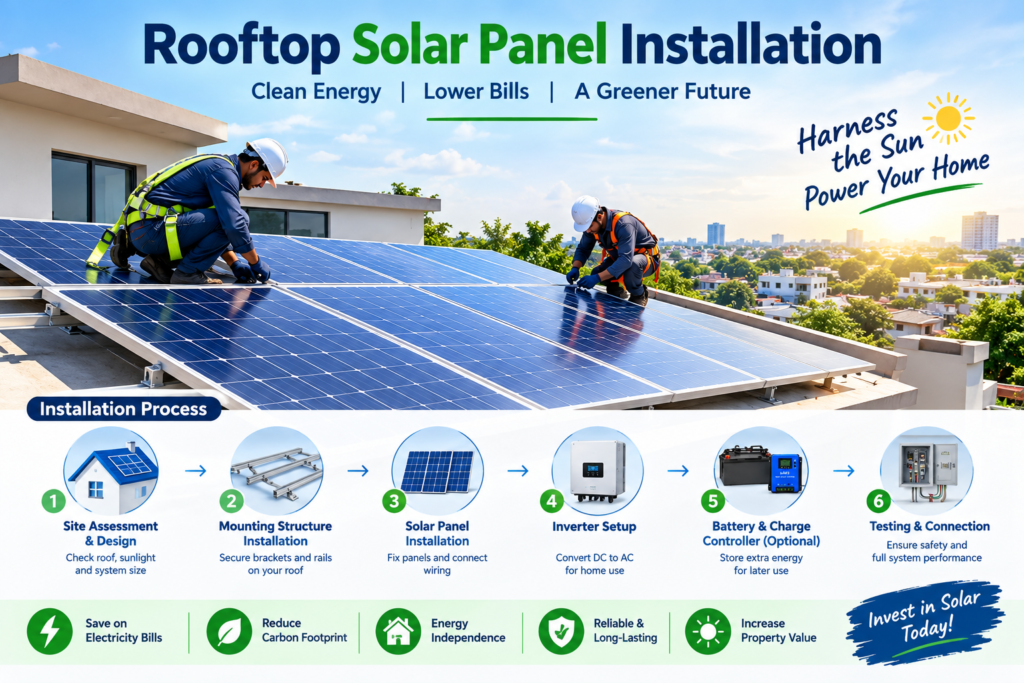
- Always get your daily electricity usage calculated correctly before buying a package — undersizing is the most common regret.
- Choose a reputable brand with a proper warranty on both the inverter and battery.
- Make sure the mounting area gets maximum sunlight throughout the day, with no shade from trees or buildings.
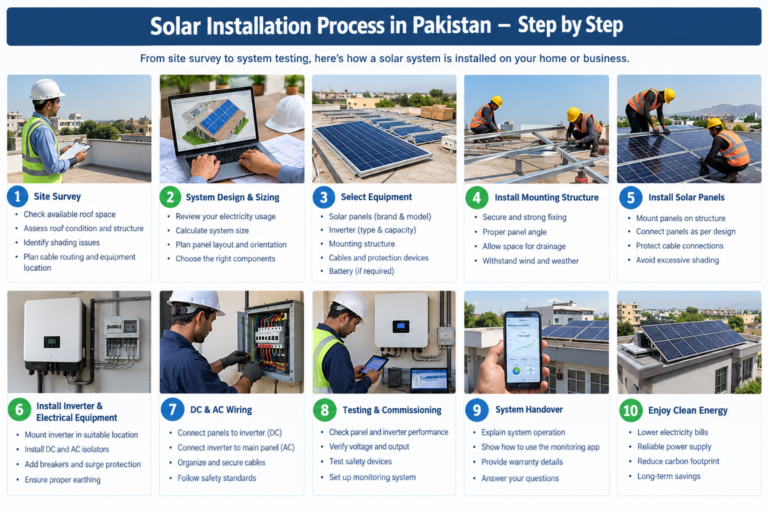
- Hire a certified installer, even if the package is marketed as “easy DIY install,” to avoid wiring mistakes.
- Ask about after-sales support and battery replacement policies before purchasing.
Common Mistakes to Avoid
- Buying based on price alone – A cheaper package with a weak battery often costs more in replacements later.
- Ignoring future needs – If you plan to add more appliances later, choose a package that can be expanded.
- Skipping proper sizing – An undersized battery bank leads to frequent power cuts at night.
- Choosing an inverter that’s too small – This can damage appliances or fail to start heavy loads like motors and ACs.
Conclusion
Choosing the best off-grid solar system package with battery really comes down to your home’s actual power needs and your budget. If you only need to run a few fans and lights during outages, a small 1–2 kW package is enough. But if you want your fridge, water pump, and other essentials running smoothly day and night, a medium or large package with a lithium battery bank is worth the extra investment. Lithium batteries cost more upfront, but their long life and low maintenance make them the smarter choice for most homes in the long run. Whatever size you go with, get your daily usage calculated properly and buy from a trusted supplier — that’s the real key to picking a package you won’t regret.
Frequently Asked Questions
1. What size off-grid solar package do I need for a small home?
For a small home with a few fans, lights, and a TV, a 1–3 kW package with battery is usually enough.
2. Which battery is better for off-grid systems: lithium or lead-acid?
Lithium batteries cost more upfront but last much longer and need far less maintenance, making them the better long-term choice for most homes.
3. Can an off-grid solar package run an air conditioner?
Yes, but you’ll need a larger package (usually 6 kW or more) with a properly sized inverter and battery bank to handle the extra load.
4. How long do off-grid solar batteries last?
Lead-acid batteries typically last 3–5 years, while lithium batteries can last 8–10 years or more with proper care.
5. Is it expensive to maintain an off-grid solar system?
Lithium-based packages need very little maintenance. Lead-acid systems require more regular upkeep, like checking water levels every few weeks.
6. Can I expand my off-grid package later?
Yes, most quality packages are designed to be expandable — you can add more panels or batteries as your energy needs grow.