Myths About Solar: 18 Common Solar Myths Debunked (2026 Guide)
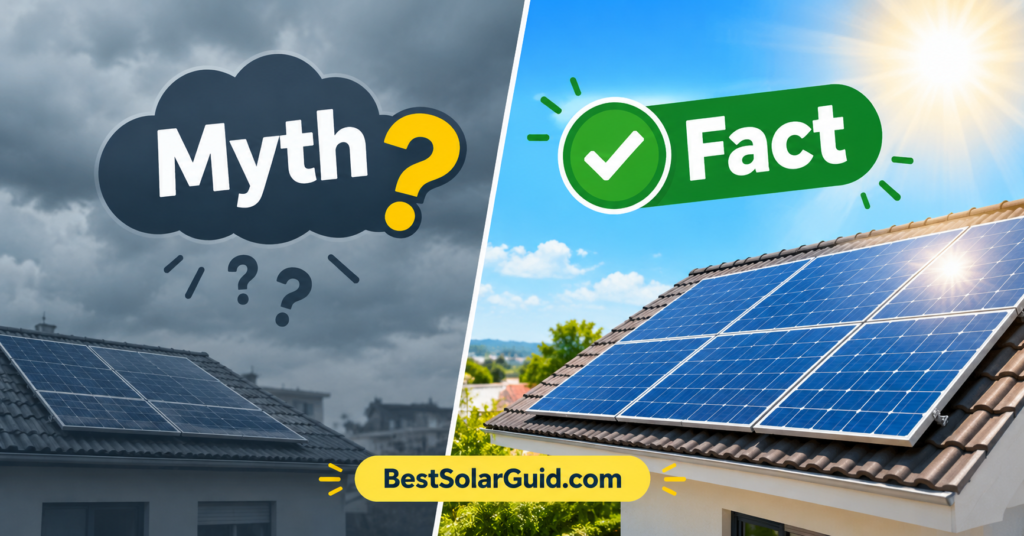
Solar power has gone from a rooftop luxury to an everyday answer to rising electricity bills, especially in Pakistan, where load shedding and tariff hikes pushed millions of households and businesses to look at panels. But more interest has also meant more rumours. Some are repeated by neighbours, some by social media videos, and some by salespeople who either oversell or undersell the technology.
This guide sorts the myths about solar from the facts. We cover what people in Pakistan keep asking first, then the questions that matter just as much to homeowners and businesses in the USA and the rest of the world. Everything here is written to help you decide with clear information, not hype.
Table of Contents
- Myth 1: Solar panels only work in hot, sunny weather
- Myth 2: Solar is too expensive
- Myth 3: Solar panels stop working at night
- Myth 4: Solar needs huge maintenance
- Myth 5: Solar panels only last a few years
- Myth 6: Solar means you will never get a bill again
- Myth 7: Hail, storms and monsoon rain destroy panels
- Myth 8: Heat makes solar panels more productive
- Myth 9: Solar panels are bad for the environment
- Myth 10: Batteries are always required
- Myth 11: Solar is only for homeowners
- Myth 12: Solar will damage your roof or does not add value
- Myth 13: On-grid solar keeps lights on during load shedding
- Myth 14: Any roof direction and angle will do
- Myth 15: Solar panels attract lightning and cause fires
- Myth 16: Low efficiency means solar is not worth it
- Myth 17: Solar cannot run heavy appliances
- Myth 18: Solar never pays back
- Solar myths vs facts at a glance
- Solar myths in Pakistan: what is different locally
- Solar myths in the USA: incentives and policy
- How to spot a solar myth
- How to size a solar system without falling for myths
- FAQs
- Conclusion
Myth 1: Solar panels only work in hot, sunny weather
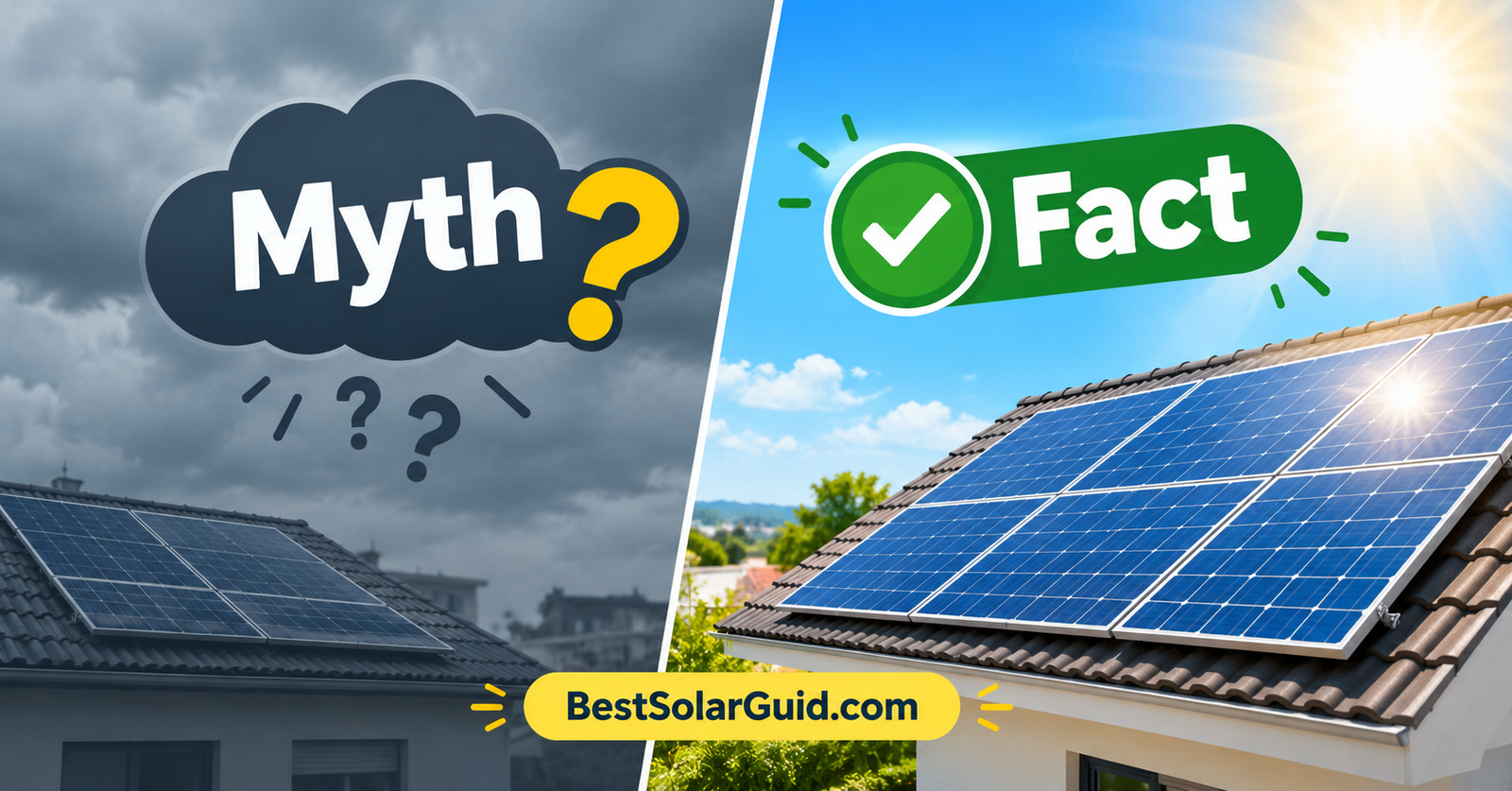
The fact: Panels run on light, not heat. They keep producing on cloudy days, just at a lower level, often somewhere between a tenth and a third of their rated output depending on how thick the cloud is. Germany is a good proof point: it gets far less sun than Pakistan or the southern USA, yet it has been one of the largest solar adopters in the world.
For Pakistan this myth is almost reversed. Most of the country receives strong sunshine for large parts of the year, so the real question is not whether solar works but how to size and install it properly.
Myth 2: Solar is too expensive
The fact: This was truer a decade ago. Panel prices have fallen sharply worldwide, and in Pakistan many households now recover the cost of a system in a few years through lower grid bills and less fuel spent on generators or UPS systems.
That said, “cheap” depends on the system. A basic on-grid setup costs much less than a hybrid system with batteries. Always compare the full price: panels, inverter, mounting structure, cabling, installation and warranty, not just the per-watt panel rate. Prices also move with currency rates and taxes, so check current local quotes before budgeting.
Myth 3: Solar panels stop working at night
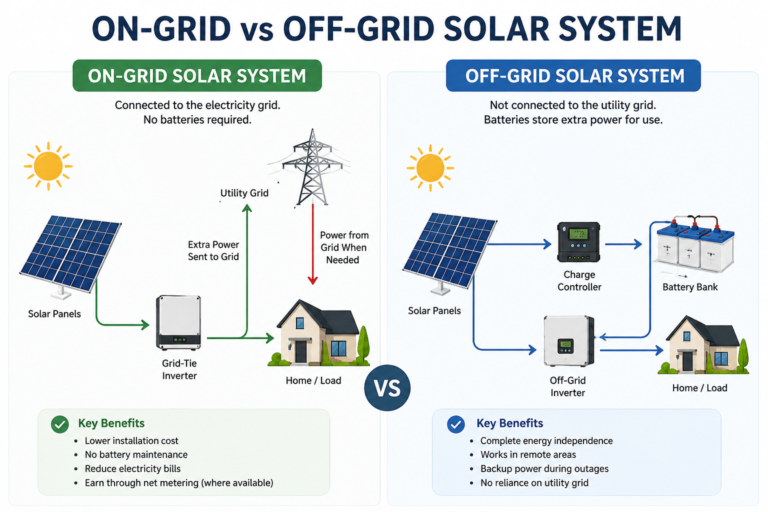
The fact: True, panels do not generate at night. But that does not mean you have no power at night. There are three common ways to handle it:
- On-grid systems draw from the grid after sunset.
- Hybrid systems store daytime energy in batteries for evening use.
- Off-grid systems rely fully on batteries and sometimes a generator backup.
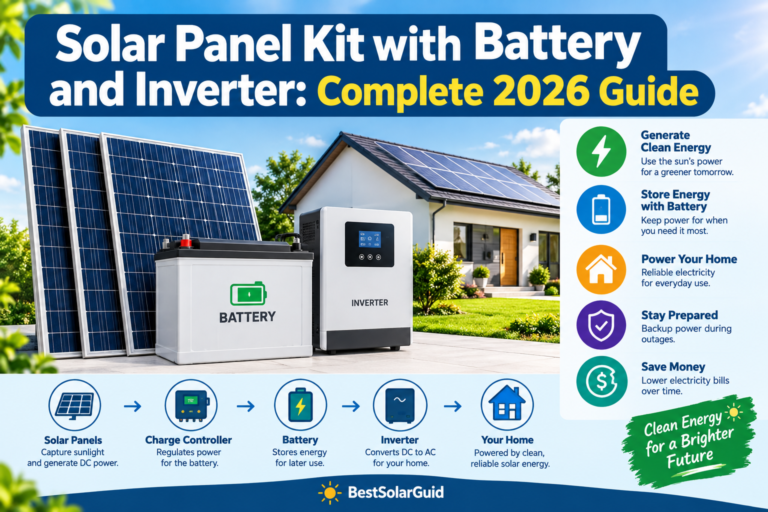
“For homes that need backup after sunset, a solar panel kit with battery and inverter can provide a more complete solution.”
So the myth confuses generation with availability. The right system design decides whether your lights stay on after dark.
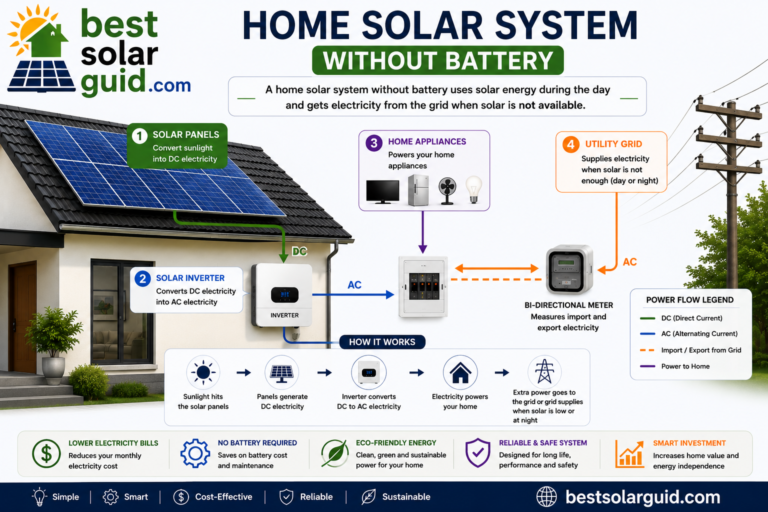
If you are comparing different system types, see our guide to a home solar system without a battery to understand how battery-free solar works
Myth 4: Solar needs huge maintenance
The fact: Panels have no moving parts, so upkeep is light. In practice it comes down to periodic cleaning, a visual check of wiring and mounts, and monitoring the inverter.
One honest exception: dust. In Pakistan, dust, bird droppings and pollution can noticeably cut output if panels are left dirty for weeks. Regular cleaning with water and a soft brush, ideally early morning or evening when panels are cool, keeps production steady. Inverters usually need replacement once or twice over a system’s lifetime, so budget for that.
Myth 5: Solar panels only last a few years
The fact: Quality panels commonly carry performance warranties of 25 to 30 years, and many keep producing beyond that. They lose a small amount of output each year, typically around half a percent or less, which means they still deliver most of their original power after two decades.
What does wear out sooner are other parts. Inverters generally last around 10 to 15 years, and batteries depend on chemistry: modern lithium iron phosphate (LiFePO4) batteries often last for thousands of charge cycles, while cheaper lead-acid batteries need replacing much earlier. Lifespan comes down to buying from reputable brands and having the system installed correctly.
“The inverter often needs replacement earlier than the panels, so choosing one with good reliability and support is important. See our guide to the best solar inverters.”
Myth 6: Solar means you will never get a bill again
The fact: Solar can cut a bill dramatically, but zero is not guaranteed. If your system is smaller than your usage, if you use heavy loads at night, or if your utility charges fixed fees, you will still see a bill. In Pakistan, rules for exporting extra electricity to the grid have been changing, with buyback rates reduced compared with earlier net metering arrangements, so the value of exported units may be lower than you heard a couple of years ago. Always confirm the current NEPRA and DISCO rules before you rely on export income in your payback calculation.
The smart approach is to size your system for self-consumption: run your biggest loads, such as AC, water pump and washing machine, during daylight hours.
Myth 7: Hail, storms and monsoon rain destroy panels
The fact: Panels are tested to survive harsh conditions. Standard certification testing includes simulated hail impact, heavy wind and snow loads, and humidity and temperature cycling. Rain is actually helpful because it washes dust off the surface.
Problems usually come from poor mounting rather than weather. Weak structures, loose clamps and cheap galvanised steel in a windy or coastal area are the real risks. In storm-prone or high-wind areas, insist on a proper mounting design and check that your installer follows it.
Myth 8: Heat makes solar panels more productive
The fact: Many people assume hotter means better. In reality, panel efficiency drops as temperature rises, by roughly a third of a percent for each degree Celsius above 25 °C, depending on the panel type. A bright, cool, clear day can produce more than a scorching one.
This matters in Pakistan’s summer. Leave air space under the panels so heat can escape, choose panels with a better temperature coefficient if available, and keep expectations realistic when roofs hit extreme temperatures.
Myth 9: Solar panels are bad for the environment
The fact: Making panels takes energy and materials, but the energy used is typically earned back within a few years of operation, and a panel then produces clean electricity for decades. Compared with coal, gas or diesel generators, solar emits no carbon dioxide or local air pollution while operating.
Disposal is a fair concern, and it is improving. Glass, aluminium and silicon are recyclable, and recycling programmes are growing in Europe and the USA. In Pakistan, recycling infrastructure is still limited, so the practical step is to buy durable panels and hand end-of-life ones to responsible scrap and recycling channels.
Myth 10: Batteries are always required
The fact: Not at all. Many homes and businesses run on-grid systems with no batteries, using the grid as backup. Batteries make sense when outages are frequent, when export prices are poor, or when you want backup during load shedding. They also raise the system cost considerably.
A reasonable path for many households is to start with an on-grid or hybrid-ready inverter and add batteries later when the budget allows.
Myth 11: Solar is only for homeowners
The fact: Solar suits factories, farms, schools, shops, offices and housing societies too. Tube wells powered by solar have become common among farmers in Pakistan, and businesses use it to cut daytime operating costs. Renters and apartment residents can still benefit through portable and balcony systems, community solar programmes (in some US states and other countries) or by agreeing on an arrangement with the landlord.
Myth 12: Solar will damage your roof or does not add value
The fact: A properly installed system protects the roof area it covers and should not cause leaks when the installer seals the mounting points correctly. Problems come from rushed installation, so choose experienced teams and ask about roof waterproofing.
On value, studies in the USA have repeatedly found that owned solar systems tend to increase home value, though the amount varies by market. In Pakistan the effect is less documented, but lower running costs make a property more attractive to buyers and tenants.
Myth 13: An on-grid solar system will keep my lights on during load shedding
The fact: This is one of the most expensive misunderstandings in Pakistan. A standard on-grid inverter shuts itself down when the grid goes out. This is a safety feature (called anti-islanding) that protects utility workers repairing the lines. So with a plain on-grid system, you lose power during a blackout even on a sunny afternoon.
To keep power during outages you need a hybrid or off-grid inverter, normally paired with batteries, or a hybrid inverter with an emergency backup output. Ask your installer this question directly before you buy: “Will my system run when the grid is down?”
Myth 14: Any roof direction and angle will do
The fact: Direction and tilt change how much energy you collect. In Pakistan and the rest of the northern hemisphere, panels facing south generally produce the most over a year. A tilt close to your latitude (roughly 25 to 33 degrees across most of Pakistan, and similar to the middle of the USA) is a good starting point.
East- and west-facing roofs still work, often losing only a modest share of yearly output, and sometimes suit people who use more power in the morning or evening. Shade is the bigger enemy. Even a small shadow from a water tank, wall or tree can drag down a whole string of panels, so ask for a shade check or use optimisers or microinverters where shading cannot be avoided.
Myth 15: Solar panels attract lightning and cause fires
The fact: Panels do not attract lightning more than any other roof object. Fire incidents linked to solar are rare and usually trace back to poor workmanship: loose connectors, undersized or low-quality cables, missing DC isolators, or no proper earthing and surge protection.
A safe installation includes correct earthing, surge protection devices on the DC and AC sides, properly rated breakers and fuses, UV-resistant cables and MC4 connectors that match the panel brand. These parts add modest cost but matter a great deal, especially in a country with heavy thunderstorms and unstable grid voltage.
Myth 16: Low panel efficiency means solar is not worth it
The fact: Efficiency tells you how much of the sunlight hitting a panel becomes electricity. It does not decide whether solar pays off. Mainstream panels today are commonly in the low-to-mid 20 percent range, and the sunlight falling on your roof is free and large in quantity.
What matters for you is total output per rupee or dollar and the space you have. A higher-efficiency panel helps mostly when your roof is small. If you have plenty of space, a well-priced standard panel can give a better return.
Myth 17: Solar cannot run heavy appliances like an AC, water pump or tube well
The fact: It can, as long as the system is designed for the load. The key is the starting current. Motors, compressors and pumps draw a large surge when they switch on, so the inverter must be rated to handle it. Inverter air conditioners and soft starters make this much easier, and solar water pumps with dedicated drives are widely used on farms.
What fails is an undersized inverter or battery bank, not solar itself. List every appliance you want to run at the same time, check its starting and running wattage, and give your installer that list.
Myth 18: Solar never pays back, or the payback is always the same
The fact: Payback varies a lot. It depends on your electricity tariff, how much you use during the day, system cost, whether you add batteries, and the export rules in your area. A household on a high tariff slab with heavy daytime use, such as air conditioning, typically recovers the cost sooner than a low-usage home. Adding batteries lengthens payback, though it buys backup.
Be cautious of any salesperson who quotes a fixed payback figure without looking at your bills. Ask them to show the calculation using your last 6 to 12 months of electricity units, and to state clearly what they assume about export rates and tariff changes.
Solar myths vs facts at a glance
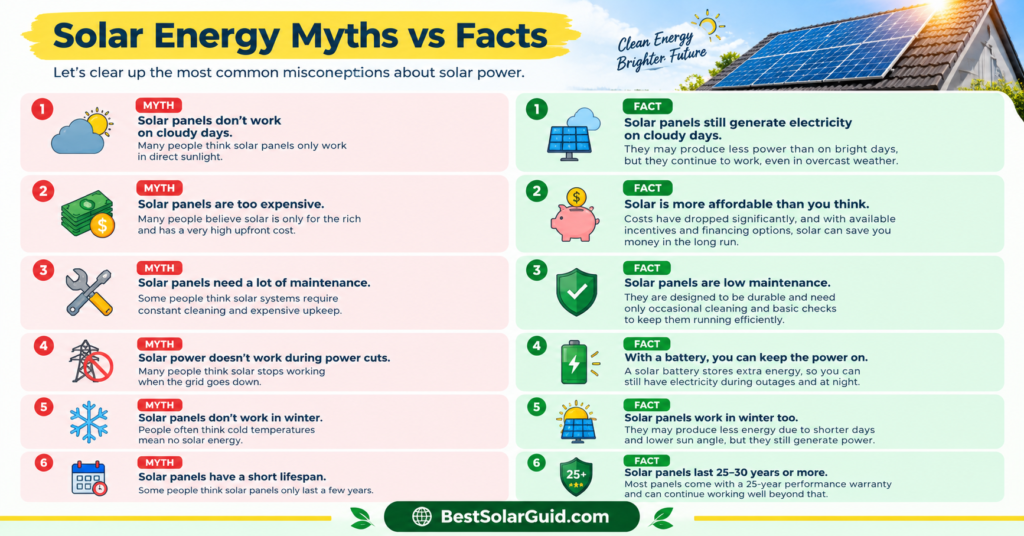
| Myth | Reality | What to do |
|---|---|---|
| Solar needs hot, sunny weather | Panels run on light; output drops in cloud but does not stop | Size for your lowest-sun months |
| Solar is too expensive | Prices have fallen; payback depends on tariff and usage | Compare full-system quotes |
| No power at night | Depends on design: on-grid, hybrid or off-grid | Decide your night-time plan first |
| On-grid runs during load shedding | Standard on-grid inverters shut off in an outage | Choose hybrid if backup matters |
| Panels last only a few years | 25 to 30 year performance warranties are common | Check warranty terms and brand support |
| Heat boosts output | Efficiency falls as panels get hotter | Leave airflow under panels |
| Maintenance is heavy | Mostly cleaning and periodic checks | Clean panels regularly, especially in dust |
| Batteries are compulsory | Optional; only needed for backup or night use | Add later if budget is tight |
| Any roof angle works | South-facing with latitude tilt is best; shade hurts most | Request a shade check |
| Solar always means zero bill | Often a big cut, not always zero | Size for self-consumption |
Solar myths in Pakistan: what is different locally
Pakistani buyers face a few myths that are less common elsewhere:
- “The biggest system is always best.” Oversizing wastes money, especially now that export rates are lower. Size to your real usage.
- “Any inverter will do.” Inverter quality, protection features and local service support matter. A good panel with a poor inverter will disappoint.
- “Cheapest installer, cheapest system.” Low quotes often hide thin cables, weak structures, missing earthing and no warranty support.
- “Net metering will pay me for everything.” Policy has shifted, so check the current rules rather than old advice.
- “Used panels are as good as new.” Second-hand panels can carry hidden degradation, so ask for test reports and a clear warranty.
Solar myths in the USA: incentives and policy
In the USA, the biggest confusion is about incentives. The federal residential solar tax credit that homeowners relied on was changed by the 2025 federal tax law, and for homeowner-purchased systems it is no longer available for spending after 2025. Business incentives follow different timelines and conditions. State rebates, net metering rules and utility programmes also differ widely. Before signing, check current federal, state and utility rules, and be cautious of anyone promising incentives that sound too good to verify.
How to spot a solar myth
A few habits will protect you from bad information:
- Be suspicious of claims with no numbers, no source and no conditions.
- Ask whether the claim applies to your country, roof and usage.
- Get at least three quotes and compare specifications, not only prices.
- Check warranties for both product and performance, and see who actually services them locally.
- Treat outdated advice, especially about prices and policies, as a red flag.
How to size a solar system without falling for myths
Most bad decisions come from guessing the system size. Here is a simple method you can use to check any quote.
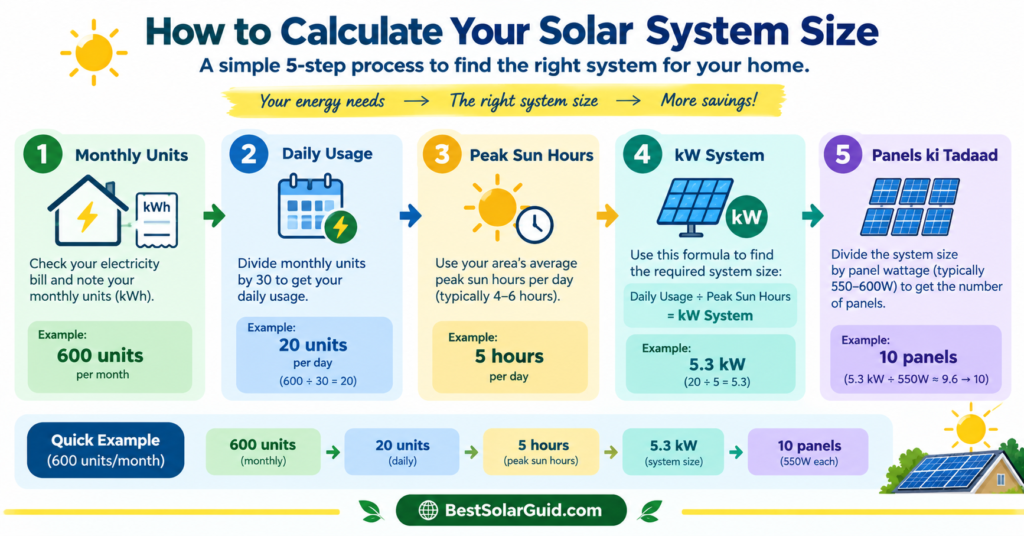
- Find your daily usage. Take the units (kWh) from your last 6 to 12 electricity bills and divide the monthly figure by 30. Example: 600 units a month is about 20 units a day.
- Estimate peak sun hours. Many parts of Pakistan get roughly 5 to 6 usable peak sun hours a day over the year, less in winter and monsoon. Use a conservative 5.
- Allow for losses. Cables, inverter, heat and dust typically cost 20 to 25 percent, so multiply sun hours by about 0.75.
- Divide. 20 units ÷ (5 hours × 0.75) is about 5.3 kW of panels.
- Convert to panels. With 550 W panels, 5.3 kW is about 10 panels.
This is a rough check, not a design. A proper installer should confirm it with roof space, shading and your appliance list. If a quote is far above or below this figure, ask why.
Buyer checklist for Pakistan
- Ask for the panel brand, model, wattage and datasheet, plus the performance warranty in writing.
- Confirm the inverter type (on-grid, hybrid, off-grid) and whether it runs during outages.
- Check the mounting structure material and wind rating, especially on open rooftops.
- Make sure the quote includes earthing, surge protection, DC and AC breakers and cable sizes.
- Ask who handles warranty claims locally, and for how long the installer has been in business.
- Verify the current net metering or net billing and DISCO approval process before relying on export income.
- Request the commissioning report and monitoring app access after installation.
- Compare at least three quotes using the same system size and specifications.
Maintenance routine that protects output
- Clean panels with clean water and a soft brush or cloth, early morning or evening.
- Check for shading from new construction, trees or water tanks.
- Inspect cables, connectors and mounts every few months, and after storms.
- Watch your monitoring app for sudden drops in daily production.
- Never use harsh chemicals or high-pressure jets that can damage the glass or seals.
FAQs
Is solar energy really worth it in 2026?
For most sunny regions, including much of Pakistan, yes, if the system is sized properly and bought from reliable suppliers. The payback depends on your electricity rates, usage pattern and system cost.
Do solar panels work in winter and on cloudy days?
Yes, with reduced output. Short winter days and thick cloud lower production, but panels still generate electricity from diffused light.
How long do solar panels last?
Quality panels often carry 25 to 30 year performance warranties. Inverters and batteries usually need replacing earlier.
Can solar run my AC in Pakistan?
Yes, if the system is sized for it. Inverter ACs and a well planned array make this practical, but heavy loads need enough panel capacity and, if you want night use, large battery storage.
Are solar panels safe during storms or heavy rain?
Certified panels are built to withstand rain, wind and hail within their rated limits. Secure mounting is the key factor.
Do I need a battery with solar?
No. Batteries are optional and mainly useful for backup and night-time use.
Does solar increase property value?
In many markets, especially in the USA, owned systems tend to add value. In Pakistan it mainly helps through lower running costs.
What is the biggest mistake buyers make?
Choosing on price alone. Equipment quality, installation standards and after-sales support decide how the system performs over the next 10 to 20 years.
Will solar work during load shedding?
Only if you have a hybrid or off-grid system. A standard on-grid inverter switches off when the grid goes down, even in bright sun.
How many solar panels do I need for a 5 kW system?
With 550 W panels you need about 9 to 10 panels. The exact number depends on panel wattage, roof space and shading.
How much does it cost to maintain a solar system?
Running costs are low: mainly cleaning and occasional inspection. The bigger future expense is replacing the inverter, and batteries if you have them.
Do solar panels work during the monsoon season in Pakistan?
Yes, but output is lower on heavy cloud days. Rain also cleans dust off the panels, which helps production when the sun returns.
Is net metering still available in Pakistan?
Export rules have been changing, and buyback rates have come down compared with earlier years. Check the latest NEPRA and DISCO rules before you include export income in your calculation.
Is on-grid, off-grid or hybrid solar better?
On-grid is cheapest and works well if outages are rare. Hybrid suits areas with frequent load shedding. Off-grid fits places with no reliable grid, but needs a larger battery bank.
Are cheap solar panels worth buying?
Not always. Very low prices can mean weaker warranties, faster degradation or poor after-sales support. Compare brand reputation, datasheets and warranty terms, not just price.
How do I know if a solar installer is trustworthy?
Look for a track record of completed projects, written warranties, clear quotes with brand names and specifications, and references you can visit or call.
Can I add more panels or batteries later?
Often yes, but plan ahead. Choose an inverter with room to expand and ask the installer how many extra panels or batteries it can support.
Do solar panels work in the USA in cold or snowy states?
Yes. Cold temperatures actually help panel efficiency, though snow cover blocks production until it slides off or melts. Shorter winter days reduce total output.
Conclusion
Most myths about solar come from old prices, old policies or half-understood technology. The reality in 2026 is simpler: solar works in more places than people think, costs less than it used to, needs modest maintenance, and rewards careful sizing and good installation. It is not magic, since night-time use, dust, heat and changing grid rules all deserve attention, but it is a proven way to cut bills and gain more control over your power.
Whether you are in Lahore, Karachi, Texas or anywhere else, the best step is the same: check current local rules and prices, compare quotes, and choose quality over the cheapest offer.