The 120 Rule for Solar: What It Is, How to Calculate It, and Where It Applies (US and Pakistan, 2026)
You get a solar quote, and then the installer says, “Your panel might fail the 120 rule.” In the US that can mean a panel upgrade costing thousands of dollars. In Pakistan, buyers hear the same term from installers and wonder if it applies to them at all.
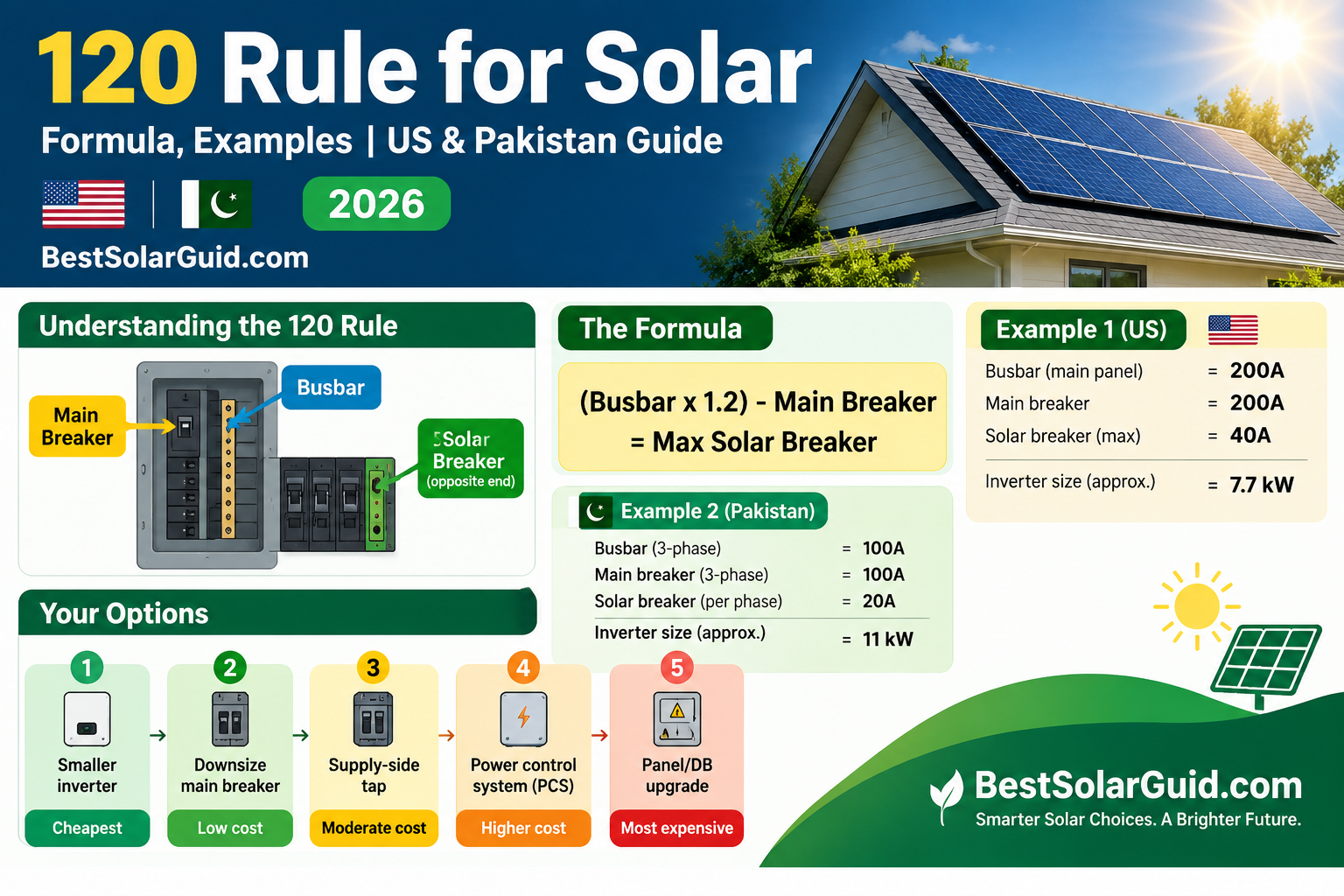
The 120 rule for solar (also called the 120% rule) limits how much solar you can connect to your main electrical panel through a regular breaker. In simple words: your main breaker plus your solar breaker cannot add up to more than 120% of the panel’s busbar rating. This guide explains the rule, the math, real examples, the fixes, and how it works in both countries.
Table of Contents
- What Is the 120 Rule for Solar?
- Why the Rule Exists
- The 120 Rule Formula
- Worked Examples: US Panels
- Worked Examples: Pakistani DB Boards
- The “Opposite End of the Busbar” Requirement
- What Counts Toward the 120% Limit
- What If Your Panel Fails?
- Supply-Side Connection: Bypassing the Rule
- The 120 Rule in the United States (NEC 705.12, 2023 and 2026)
- The 120 Rule in Pakistan (NEPRA, DISCOs and Net Billing)
- Common Mistakes
- FAQs
- Final Thoughts
What Is the 120 Rule for Solar?
Inside your main panel (called a distribution board, or DB, in Pakistan) is a metal busbar. Every breaker connects to it, and it has a maximum current rating such as 63A, 100A, 125A, 200A or 225A.
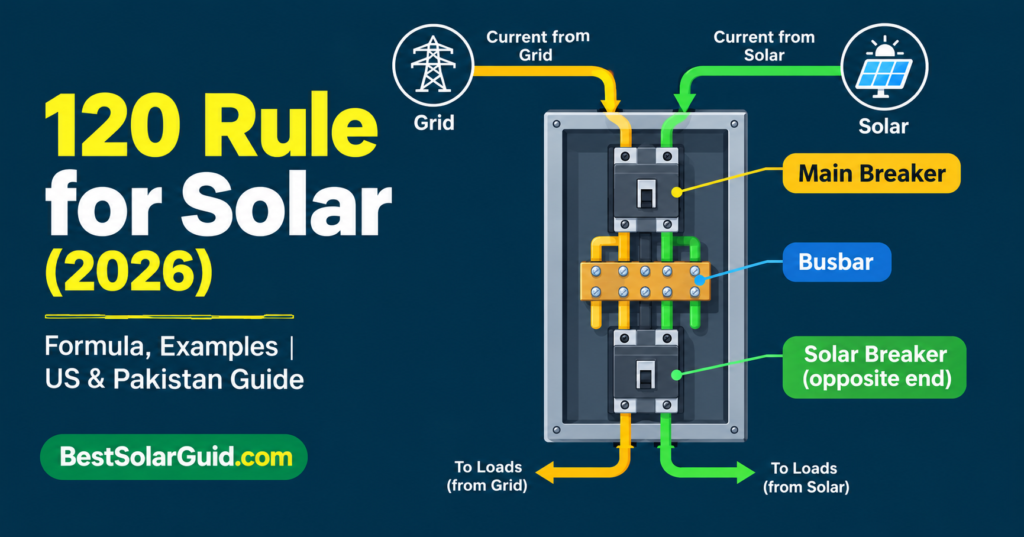
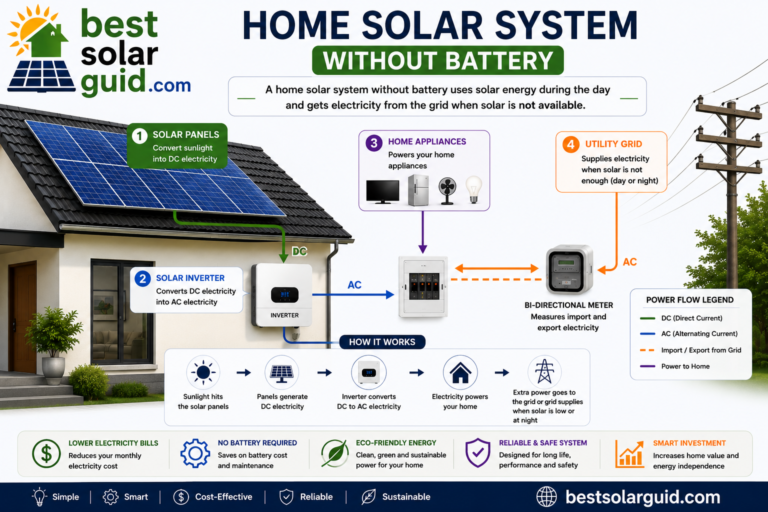
Normally only the utility feeds that busbar. With a load-side solar connection, a second source feeds it too. The 120 rule allows the main breaker rating plus the solar breaker rating to reach 120% of the busbar rating, and no more.
Two clarifications:
- It is not a limit on how much power your panels produce.
- It limits the breaker connecting the inverter to the panel, which in turn caps your inverter output.
Why the Rule Exists
A busbar is designed assuming power flows in from one direction. With solar, current can enter from both ends. In a worst case (full grid draw plus full inverter output), the bar could carry more than its rating and overheat.
The 120% allowance is a compromise: it lets homeowners add solar without replacing the panel, while keeping a safety margin.
The 120 Rule Formula
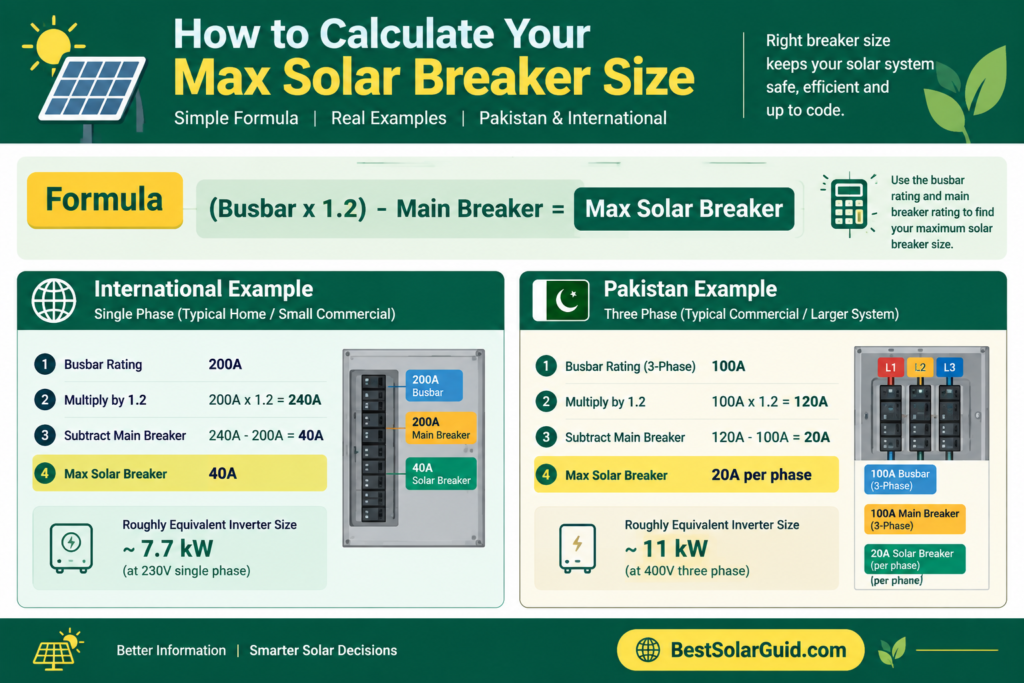
Maximum solar breaker = (Busbar rating × 1.2) − Main breaker rating
Then convert to inverter size:
Maximum inverter output current = Solar breaker ÷ 1.25
The 1.25 factor exists because solar is treated as a continuous load. Always round the breaker down to a standard size.
Worked Examples: US Panels (240V)
| Busbar | Main breaker | Max solar breaker | Max inverter output | Approx. inverter size |
|---|---|---|---|---|
| 100A | 100A | 20A | 16A | ~3.8 kW |
| 125A | 125A | 25A | 20A | ~4.8 kW |
| 200A | 200A | 40A | 32A | ~7.7 kW |
| 200A | 150A | 90A | 72A | ~17 kW |
| 225A | 200A | 70A | 56A | ~13.4 kW |
A 200A panel with a 200A main takes a 40A solar breaker, which fits many homes. Swapping a 200A main for a 150A main opens up far more room, as the fourth row shows.
Worked Examples: Pakistani DB Boards
Pakistan uses 230V single-phase and 400V three-phase supply. These are guideline calculations, not legal limits.
Single-phase (230V):
| Busbar | Main breaker | Max solar breaker | Max inverter current | Approx. inverter size |
|---|---|---|---|---|
| 63A | 63A | 10A | 8A | ~1.8 kW |
| 100A | 100A | 20A | 16A | ~3.7 kW |
| 125A | 125A | 25A | 20A | ~4.6 kW |
Three-phase (400V), calculated per phase:
| Busbar | Main breaker | Max solar breaker (per phase) | Max inverter current (per phase) | Approx. inverter size |
|---|---|---|---|---|
| 63A | 63A | 10A | 8A | ~5.5 kW |
| 100A | 100A | 20A | 16A | ~11 kW |
| 125A | 125A | 25A | 20A | ~13.8 kW |
A small single-phase board leaves very little room. A three-phase 100A board comfortably supports a typical 10 kW system.
The “Opposite End of the Busbar” Requirement
The 120% method applies only when the solar breaker sits at the opposite end of the busbar from the main breaker. In a standard panel, that is the bottom slot if the main is at the top. If that slot is taken, breakers must be rearranged or another method used. Center-fed panels have special conditions and need an electrician’s review.
What Counts Toward the 120% Limit
Anything that can feed power back into the busbar counts: a second solar array, AC-coupled batteries, generators connected through the panel, and other inverter-based sources. Adding a battery to a panel that already has solar is a common reason an “easy” upgrade suddenly needs panel work.
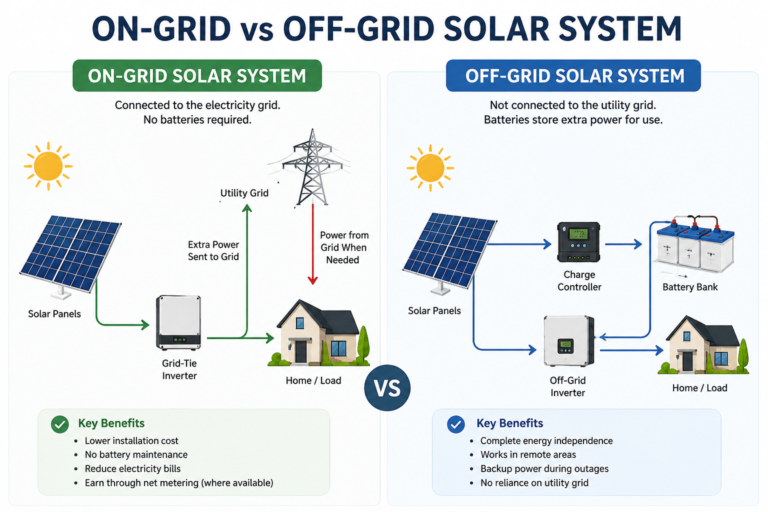
If you are comparing options, our breakdown of off-grid solar system packages with battery shows what size battery and inverter combinations are available, so you can plan your panel capacity before you buy.
The rule also applies to every busbar in the path. If solar connects at a subpanel, that subpanel and its feeder must be checked too.
What If Your Panel Fails?
Failing doesn’t end the project. Options, roughly from cheapest to most expensive:
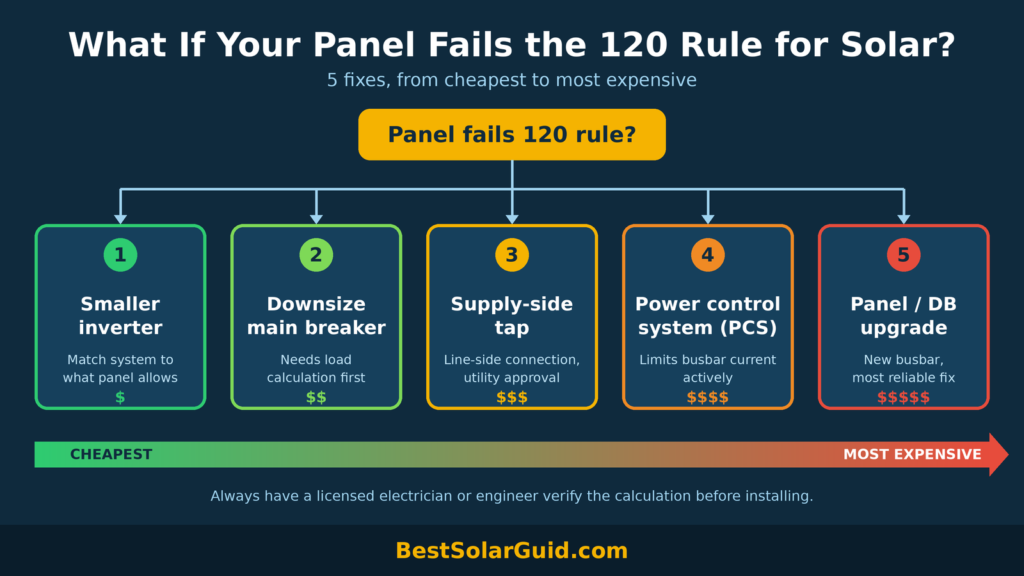
- Downsize the main breaker (after a load calculation confirms it’s safe).
- Choose a smaller inverter so the breaker fits.
- Use the “sum of all breakers” method, an alternative NEC route for lightly loaded panels.
- Use a power control system (PCS) that actively limits busbar current.
- Make a supply-side connection (see below).
- Upgrade the panel or busbar. In the US this commonly runs from about $2,000 to $5,000 or more depending on location and extra work.
If you are planning to add storage later, a hybrid inverter can also help you manage how much power flows through your panel. Before you choose one, take a look at our guide to the best off-grid solar system to see which setups work best with batteries.
Never simply fit a larger breaker or bypass protection to “make it fit.”
Supply-Side Connection: Bypassing the Rule
A supply-side (line-side) tap connects solar between the utility meter and the main disconnect. Because solar current doesn’t flow through the load-center busbar, the 120% calculation doesn’t apply. It needs proper service-entrance equipment, correct conductor sizing, and approval from the utility and local authority, so it’s a job for an experienced installer.
The 120 Rule in the United States (NEC 705.12, 2023 and 2026)
In the US, this is a code requirement. It sits in NEC 705.12, which governs load-side connections of solar and other sources to a panelboard. Many sources cite it as 705.12(B)(3)(2) in the 2020 and 2023 NEC era, while others show different paragraph numbers, because numbering shifts between editions. The edition adopted by your local authority having jurisdiction (AHJ) and in force when you file the permit is the one that governs your job.
On the 2026 NEC, the power control terminology was restored in place of the “energy management systems” wording used in 2023, and related provisions were reorganized. The practical point: PCS-based designs are becoming a more accepted way to avoid panel upgrades. State adoption of new NEC editions lags behind publication, so confirm the edition with your local building department.
The 120 Rule in Pakistan (NEPRA, DISCOs and Net Billing)
In Pakistan, the 120% rule is not a named legal requirement. NEPRA’s net-metering framework focuses on other things: grid-tied inverters must meet standards such as UL 1741 and relevant IEC standards, and anti-islanding protection is mandatory. Your DISCO (LESCO, IESCO, MEPCO, K-Electric and others) runs its own technical evaluation before approving a connection.
Even so, the 120% calculation is a smart safety check. Older DBs, loose connections and heat make busbar overload a real risk, and a good installer will confirm your board can carry utility current plus solar current. Treat your DB manufacturer’s rating and your engineer’s judgment as final.
Net billing in 2026 makes sizing even more important. NEPRA notified the Prosumer Regulations on February 9, 2026, replacing net metering with net billing for new consumers. Imports are billed at the full tariff, while exports are bought back at a much lower rate. Reports on the new buyback rate vary from roughly Rs 8 to Rs 11 per unit, compared with about Rs 25 to Rs 27 earlier, and existing agreements keep their old terms. Confirm the current figure on NEPRA’s website or with your DISCO before signing.
The result: oversizing is now a bad idea. A system sized for your own daytime use is cheaper, earns more value per unit, and usually fits within a safe DB limit anyway.
Common Mistakes
- Placing the solar breaker at the wrong end of the busbar (the top cause of plan rejections in the US)
- Forgetting existing sources like batteries or generators
- Not rounding down to a standard breaker size
- Ignoring subpanels in the feeder path
- Applying the wrong code edition for the permit date
- Assuming the rule is law in Pakistan, or ignoring the condition of an old DB
- Oversizing for exports under Pakistan’s net billing
- Skipping protection gear such as DC breakers, AC breakers and surge protection
FAQs
What is the 120 rule for solar?
It limits the main breaker plus the solar breaker to 120% of the panel’s busbar rating, when the solar breaker is at the opposite end of the bus from the main.
How do I calculate it?
Busbar × 1.2, minus main breaker, gives the maximum solar breaker. Divide by 1.25 to get the maximum inverter output current.
How much solar can a 200A panel take?
With a 200A main, a 40A solar breaker, which supports about 7.7 kW at 240V.
Do I always need a panel upgrade if I fail?
No. Downsizing the main, a smaller inverter, a PCS or a supply-side tap can all work.
Does the rule apply to batteries and subpanels?
Yes to both. AC-coupled batteries count, and every busbar in the path must be checked.
Is the 120 rule mandatory in Pakistan?
No. It is a US NEC rule, but it works as a useful safety benchmark for DB sizing in Pakistan.
What size solar system fits a 100A three-phase board in Pakistan?
By this guideline, roughly 11 kW of inverter output. Have an engineer confirm it.
Where do I confirm current rules?
In the US, with your local AHJ and utility. In Pakistan, with NEPRA and your DISCO.
Final Thoughts
The 120 rule for solar is a screening test, not a roadblock. Know your busbar rating, main breaker size and open breaker slot, and you can predict the result before your installer does. In the US it’s code you must satisfy. In Pakistan it’s a smart benchmark that protects your board, and with net billing now in place, right-sizing matters more than ever.
Disclaimer: This article is for general information. Electrical work should be designed and verified by a licensed electrician or engineer. Codes, tariffs and regulations change, so confirm with your local authority.