When Is the Best Time to Install Solar Panels? Best Season, Weather & Savings Guide
Installing solar panels is a major investment, so choosing the right time can help you avoid unnecessary delays, reduce installation costs, and start saving on electricity bills sooner. But when is the best time to install solar panels?
In most cases, there is no single season that is best for every location. Solar panels can be installed throughout the year, but the ideal time depends on local weather, installer availability, electricity demand, solar incentives, and how quickly you want your system to start producing power.
For many homeowners, installing solar panels before the season of highest electricity consumption can be a smart strategy. In areas with hot summers and high air-conditioning use, for example, completing installation before summer allows the system to generate electricity when energy demand is high.
This guide explains the best season to install solar panels, whether summer or winter installation is suitable, the best time of day for installation, and what homeowners should consider before scheduling a solar installation.
Table of Contents
- When Is the Best Time to Install Solar Panels?
- What Is the Best Season to Install Solar Panels?
- Is Fall the Best Time to Install Solar Panels?
- Is Summer a Good Time to Install Solar Panels?
- Can Solar Panels Be Installed in Winter?
- Is Spring a Good Time for Solar Installation?
- What Weather Conditions Are Best for Solar Installation?
- What Is the Best Time of Day to Install Solar Panels?
- Best Time to Install Solar Panels in Pakistan
- Factors to Consider Before Installing Solar Panels
- Should You Wait for the Best Season to Install Solar Panels?
- How Long Does Solar Panel Installation Take?
- Final Verdict
- Frequently Asked Questions
When Is the Best Time to Install Solar Panels?
The best time to install solar panels is generally before your highest electricity-use season, provided that the weather is suitable and a qualified installer is available.
For example, if your electricity consumption increases significantly during summer because of air conditioners, fans, or other cooling appliances, installing your solar system before summer can help you start producing solar electricity when your bills are highest.
However, waiting for a particular month is not always necessary. A properly designed solar system can produce electricity year-round, so delaying installation for several months may mean missing out on potential energy savings.
The best installation period can therefore vary from one location to another.
Why Timing Matters
The installation date can affect several practical factors, including:
- Installer availability
- Installation and labor costs
- Weather conditions
- Electricity consumption
- Solar incentives or policy deadlines
- Equipment availability
- Time required for permits or approvals
- Your expected return on investment
The most important goal is not simply to choose a particular season. It is to install the system at a time when the equipment, installer, roof, and local conditions are ready.
What Is the Best Season to Install Solar Panels?
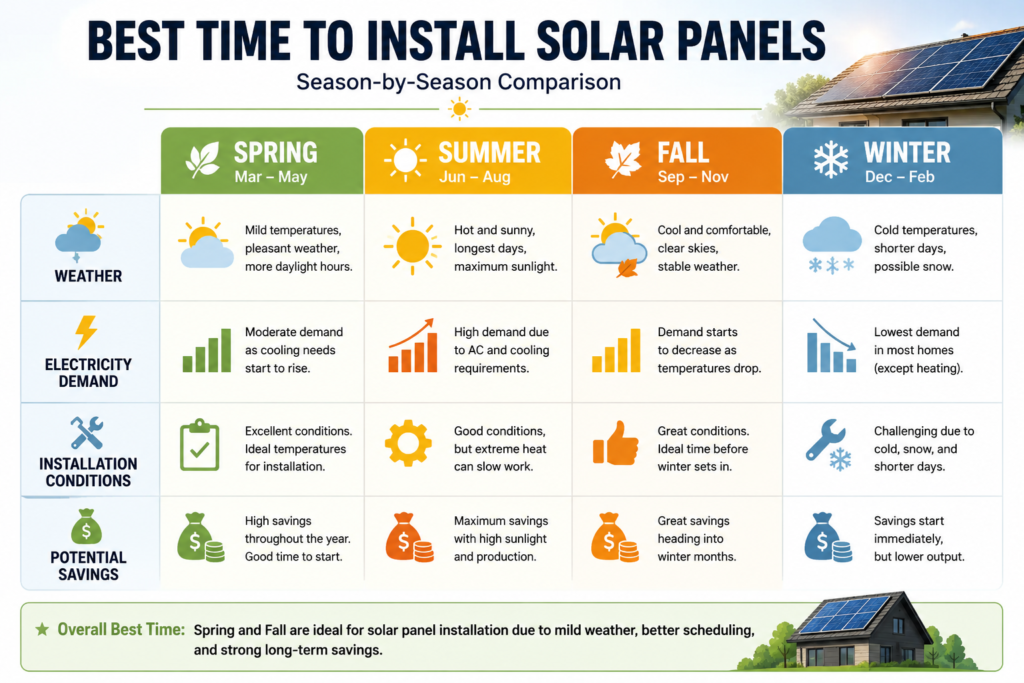
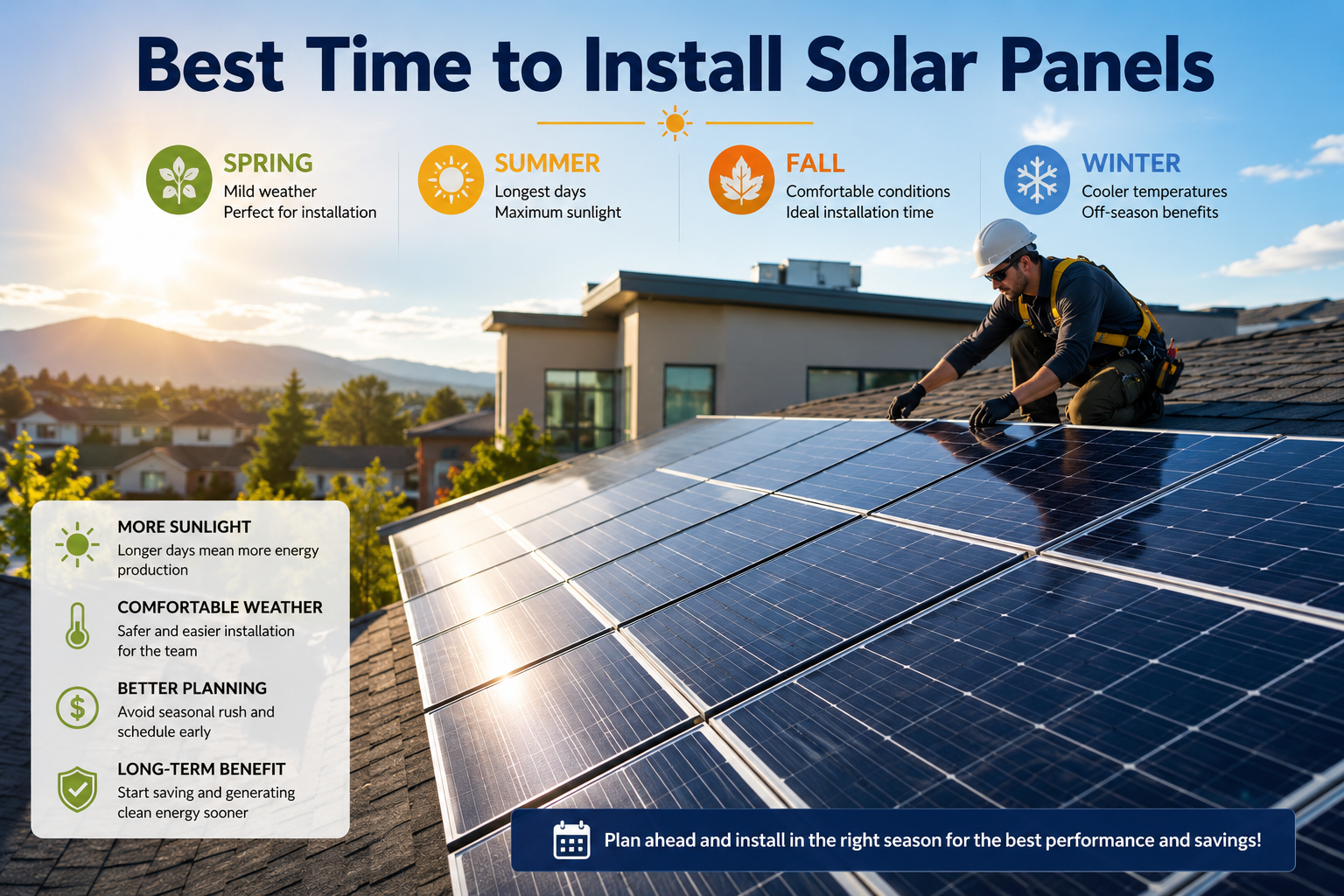
Solar panels can be installed in spring, summer, fall, or winter. Each season has advantages and disadvantages.
Spring
Spring can be an excellent time for solar installation because temperatures are usually moderate and weather conditions are often more comfortable for outdoor work.
Installing solar panels in spring also gives homeowners time to prepare their systems before the high electricity demand of summer.
Advantages of spring installation:
- Moderate temperatures
- Generally comfortable working conditions
- More time to prepare before summer
- Opportunity to identify and fix roof issues before installation
- System can begin generating electricity before peak summer demand
Summer
Summer can also be a good time to install solar panels, particularly if your electricity bills are highest during this season.
However, very high temperatures can make rooftop work more difficult and may cause scheduling delays during extreme heat or storms.
If your system is installed early in summer, you can begin generating electricity during a period when household energy consumption may be high.
Fall
Fall is often considered a good solar installation season in regions where temperatures become cooler and installation conditions are comfortable.
Some homeowners also prefer fall because they can complete installation before winter and have the system ready for the following year’s high-energy-use periods.
However, fall is not automatically the best season for every homeowner. The ideal timing depends on your local climate and electricity usage.
Winter
Solar panels can be installed during winter as long as weather and site conditions are suitable.
Cold temperatures themselves do not prevent solar panels from being installed. In fact, solar panels can perform efficiently in cold weather because photovoltaic cells generally work well at lower temperatures.
The main challenges are snow, heavy rain, strong winds, shorter daylight hours, and difficult rooftop conditions in some locations.
Is Fall the Best Time to Install Solar Panels?
Fall can be an excellent time to install solar panels, but it is not universally the best season.
In areas with hot summers, fall may provide more comfortable installation conditions. Homeowners may also have more flexibility to complete the project before winter.
Another advantage is that installing solar panels before winter gives homeowners time to monitor system performance and resolve installation issues before the next high-demand season.
However, if your electricity bills are already very high during summer, waiting until fall may mean missing several months of potential solar savings.
Therefore, the best time depends more on your electricity needs and local conditions than on the season alone.
Is Summer a Good Time to Install Solar Panels?
Yes, summer can be a good time to install solar panels, especially if your household uses the most electricity during summer.
Air conditioning, fans, refrigeration, and other appliances can significantly increase electricity consumption in hot weather. A properly sized solar system can help offset part of this electricity usage.
What Are the Challenges of Summer Installation?
The main challenge is extreme heat.
Solar installers working on rooftops may need to avoid the hottest part of the day for safety. Heavy rain, thunderstorms, or strong winds can also delay installation.
If you are planning a summer installation, ask the installer about:
- Expected installation dates
- Weather-related delays
- Safety procedures
- Equipment availability
- Expected system commissioning date
Can Solar Panels Be Installed in Winter?
Yes. Solar panels can generally be installed during winter if the roof and weather conditions are safe.
There is a common misconception that solar panels should only be installed during warm weather. In reality, solar panels do not need hot temperatures to work.
Why Cold Weather Does Not Prevent Solar Installation
Photovoltaic panels convert sunlight into electricity. They do not depend on heat to generate power.
In fact, excessive heat can slightly reduce the electrical efficiency of photovoltaic cells, while cooler conditions can be beneficial for panel performance.
The bigger concern during winter is usually the installation environment, rather than the panels themselves.
Heavy rain, snow, ice, strong winds, or an unsafe roof can make installation impractical.
Is Spring a Good Time for Solar Installation?
Spring is one of the most practical seasons for many homeowners.
The combination of moderate temperatures and longer daylight hours can make it easier to complete installation and begin producing electricity before the summer demand period.
Spring is particularly useful if you need time for:
- Roof inspection
- Solar system design
- Getting multiple quotations
- Choosing an inverter
- Selecting solar panels
- Applying for required approvals
- Arranging electrical work
Planning these steps early can help prevent last-minute installation problems.
What Weather Conditions Are Best for Solar Installation?
The best weather for solar panel installation is generally dry, calm, and reasonably cool or moderate weather.
Installers need safe access to the roof and enough stability to handle panels, mounting structures, cables, and other equipment.
Weather Conditions That Can Cause Delays
Installation may be delayed because of:
- Heavy rain
- Thunderstorms
- Strong winds
- Snow or ice
- Extremely high temperatures
- Unsafe roof conditions
A short weather delay is usually better than risking the safety of installers or damaging equipment.
It is also important to distinguish between installation weather and solar panel operating weather. Solar panels can operate in many weather conditions, but installation work requires safe conditions.
What Is the Best Time of Day to Install Solar Panels?
There is no universal hour that is always best for solar panel installation.
However, installers often prefer working during daylight hours when the roof and installation area are clearly visible.
In hot climates, the morning can be more comfortable than the middle of the afternoon.
Why Morning Installation Can Be Practical
Morning installation may offer:
- Cooler working conditions
- Better visibility
- Less exposure to extreme afternoon heat
- More working time during daylight
The exact schedule depends on the installer, roof orientation, weather, and project size.
The time of day has little importance for the long-term electricity production of the panels. What matters more is the quality of the installation and the system’s design.
Best Time to Install Solar Panels in Pakistan
For homeowners in Pakistan, the best installation period depends on the local climate and electricity consumption.
In many parts of Pakistan, electricity usage can rise significantly during the hot months because of air conditioners, fans, water pumps, and refrigeration.
For this reason, installing a solar system before the peak summer electricity-demand period can be a practical strategy.
If you are planning to install a solar system in Pakistan, it is important to understand the complete installation process before choosing an installer. Our detailed guide on solar installation in Pakistan covers the installation process, requirements, costs, important components, and practical tips for choosing the right solar installer.
Why Pre-Summer Installation Can Be Beneficial
If your solar system is installed and operational before summer, you can potentially start reducing grid electricity consumption when household demand increases.
However, homeowners should not delay a suitable solar project for too long simply because they missed a particular season.
Weather, equipment availability, installer quality, and the expected savings from the system should all be considered.
What About Winter Installation in Pakistan?
Winter can also be suitable for solar installation in many areas of Pakistan because temperatures are generally more comfortable for rooftop work.
The exact conditions vary between cities and regions, so the installer should assess the roof and local weather before scheduling the work.
Factors to Consider Before Installing Solar Panels
Choosing the installation date is only one part of planning a solar system.
Check Your Roof
Before installing panels, make sure the roof is structurally suitable and does not require major repairs.
If your roof needs waterproofing, repairs, or reconstruction, complete those tasks before installing the solar mounting system.
Compare Solar Quotes
Do not select an installer only because they offer the lowest price.
Compare:
- Solar panel brand and model
- Panel wattage
- Inverter brand
- Mounting structure
- Warranty
- Installation workmanship
- Protection equipment
- Earthing
- After-sales service
Consider Your Electricity Usage
Review your electricity bills from the previous several months.
Understanding your electricity consumption can help determine the appropriate solar system size and whether battery storage is necessary.
Check Equipment Availability
Popular solar panels and inverters may not always be immediately available.
If a particular panel or inverter model is important to you, confirm availability before finalizing the installation date.
Consider Local Solar Policies
Depending on your location, solar installation may involve local regulations, utility requirements, grid-connection procedures, or other approvals.
Always check the current requirements before purchasing equipment.
Should You Wait for the Best Season to Install Solar Panels?
Usually, you do not need to wait for a specific season if your roof, budget, equipment, and installer are ready.
Waiting several months for a supposedly perfect installation season can delay your electricity savings.
For example, if your system is ready in winter and your local conditions allow safe installation, installing it then may be more beneficial than waiting until summer.
The best approach is to balance:
weather + electricity demand + installer availability + equipment availability + project cost.
If all of these factors are favorable, there may be little reason to wait.
How Long Does Solar Panel Installation Take?
The physical installation of a residential solar system can often be completed within a relatively short period, but the total project timeline can be longer.
The overall process may include:
- Site assessment
- Solar system design
- Quotation and equipment selection
- Roof preparation
- Mounting structure installation
- Solar panel installation
- Inverter installation
- Electrical wiring
- Safety and protection equipment
- Testing and commissioning
- Required utility or grid procedures
The exact timeline depends on the size and complexity of the system, the installer, equipment availability, and local approval requirements.
Final Verdict
So, when is the best time to install solar panels?
The best time is when suitable weather, a reliable installer, available equipment, and your electricity needs all line up.
For many homeowners, installing solar panels before the highest electricity-demand season is a smart choice because the system can start producing electricity when energy consumption is high.
Spring and fall can provide comfortable installation conditions in many regions, while summer can be attractive if electricity consumption is highest during hot weather. Winter installation is also possible when weather and roof conditions are safe.
Instead of waiting for a specific month, focus on choosing a properly designed system, quality solar panels and inverter, professional installation, and the right system size for your electricity consumption.
What is the best month to install solar panels?
There is no single best month for every location. In many areas, spring or fall can provide comfortable installation conditions, while installing before the highest electricity-demand season can help you start saving sooner.
Is it better to install solar panels in summer or winter?
Both seasons can work. Summer may allow you to start reducing high electricity consumption immediately, while winter can offer more comfortable installation conditions in some regions. Weather and local electricity usage should guide the decision.
Can solar panels be installed during rain?
Installation during heavy rain is generally not advisable because wet roofs can become slippery and unsafe. A professional installer may reschedule the work until conditions are safe.
Do solar panels work better in summer?
Solar panels need sunlight rather than heat to generate electricity. Very high temperatures can actually reduce the electrical efficiency of photovoltaic cells slightly. Therefore, hotter weather does not automatically mean better solar performance.
Is fall a good time to install solar panels?
Yes. Fall can be a good time for installation in many regions because temperatures may be more comfortable and homeowners can complete the system before winter. However, it is not automatically the best season for every location.
Should I wait until summer to install solar panels?
Not necessarily. If your system is ready and installation conditions are safe, installing earlier can allow you to start producing solar electricity sooner. Waiting for summer may mean missing potential energy savings.
What is the best time of day to install solar panels?
Morning or earlier daylight hours can be practical, especially in hot climates, because rooftop temperatures may be lower. However, the quality and safety of the installation are much more important than the exact installation time.
How can I choose the right time for solar installation?
Consider your electricity consumption, local weather, roof condition, installer availability, equipment availability, budget, and any applicable solar or grid-connection requirements. These factors are more important than choosing a specific month.