
Solar Panel Buyers in Pakistan: The Complete 2026 Guide
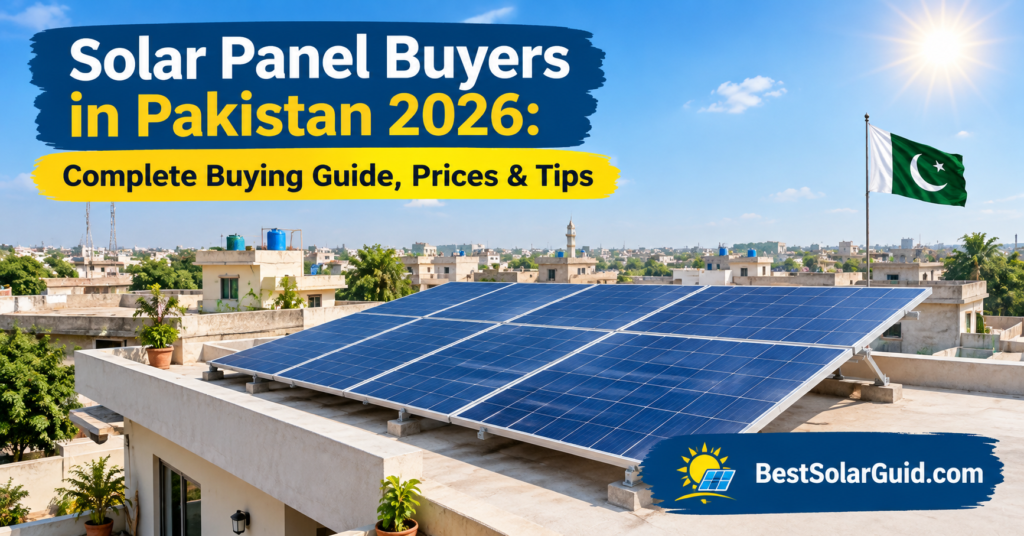
If you have ever opened an electricity bill in Pakistan and felt your stomach drop, you already understand why so many households and businesses are switching to solar. In 2024, Pakistan imported more solar panels than any other country in the world. That tells you something: ordinary buyers, not just big companies, are driving this shift. Wikipedia
But buying solar here is not as simple as picking a panel and paying. Prices move, brands vary in quality, rules around selling extra electricity have changed, and a poor installer can ruin a good system. This guide walks you through everything a solar panel buyer in Pakistan needs to know, from sizing and pricing to paperwork and resale.
Table of Contents
- Who Are Solar Panel Buyers in Pakistan?
- Why Pakistanis Are Buying Solar
- Types of Solar Systems
- Solar Panel Prices in Pakistan (2026)
- Best Solar Panel Brands to Consider
- How to Choose the Right System Size
- Hidden Costs Buyers Often Miss
- Net Metering and Net Billing: What Changed
- Where to Buy Solar Panels Safely
- Common Buying Mistakes to Avoid
- Financing and Payback
- Selling Used Solar Panels in Pakistan
- Maintenance Tips
- FAQs
- Final Thoughts
Who Are Solar Panel Buyers in Pakistan?
The phrase covers a wide group:
- Homeowners cutting monthly bills and surviving load shedding.
- Shopkeepers and small businesses who cannot afford power cuts.
- Factories and commercial buildings looking to control energy costs.
- Farmers replacing diesel or expensive grid power for tube wells.
- Installers and dealers who buy in bulk and resell.
- Used-panel buyers who purchase second-hand or surplus modules.
Each group has different needs, so the “best” purchase depends on who you are.
Why Pakistanis Are Buying Solar
- High and unpredictable electricity tariffs. Solar gives you a fixed cost after the initial investment.
- Load shedding. A hybrid system keeps lights and fans running.
- Strong sunlight. Most of the country gets plenty of sun, especially Punjab, Sindh and Balochistan.
- Falling equipment costs compared with a few years ago.
- Energy independence. You depend less on the grid and on fuel prices.
Types of Solar Systems
1. On-grid (grid-tied). Panels plus an inverter, no batteries. It is the cheapest option and gives the fastest payback, but it shuts down during a blackout. Best for homes in areas with fairly stable supply.
2. Hybrid. Panels, a hybrid inverter and batteries. It works with the grid and stores power for outages. It costs more but gives real backup. Best for areas with long load shedding.
3. Off-grid. Fully independent of the grid, using batteries. Ideal for farms, remote homes and places without grid access.
Solar Panel Prices in Pakistan (2026)
Prices change often, so always get a fresh quotation. Based on recent market listings:
- As of July 2026, Tier-1 N-type TOPCon panels from brands like Jinko, JA Solar and Trina cost roughly Rs 39 to 46 per watt.
- A 585W Tier-1 panel costs roughly Rs 23,000 to Rs 26,900.
- Prices dipped as low as Rs 22/W in late 2024, then rose by Rs 3,000 to 5,000 per panel in early 2026 because of a global surge in silver costs.
- Complete installed systems vary a lot. One guide puts a 5 kW system at roughly Rs 7 to 10 lakh in 2026, depending on brand, inverter and installer.
Different websites quote different ranges, so treat these as ballpark figures. The panel is only part of the bill: inverter, structure, cables, labour and approvals all add up.
Best Solar Panel Brands to Consider
Most buyers in Pakistan choose from these Tier-1 names:
- Jinko (Tiger Neo): very popular, strong warranty, widely available.
- JA Solar (DeepBlue): good value and reliable performance.
- Trina Solar (Vertex N): well-regarded, often competitively priced.
- LONGi (Hi-MO series): premium efficiency, higher price at the top end.
- Canadian Solar and Aiko: good options, especially if you want newer technology.
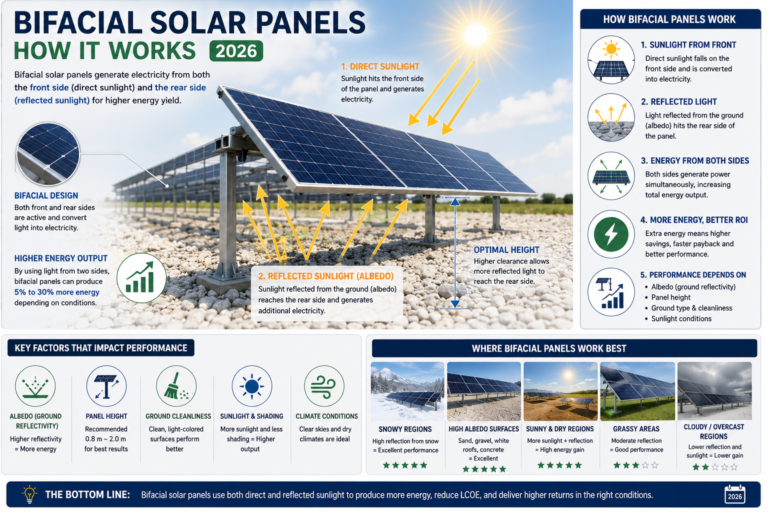
Tip: Look for N-type panels, bifacial or dual-glass construction where suitable, and a clear 25 to 30 year performance warranty. Be careful with unbranded or “local generic” panels. They are cheaper, but warranties are weak and quality is unpredictable.
How to Choose the Right System Size
Do not guess. Follow these steps:
- Collect your last 6 to 12 electricity bills and note monthly units.
- Divide average monthly units by about 120 to estimate the kW you need. As a rough guide, 1 kW produces around 4 to 5 units a day in good conditions.
- Check your roof space. A 600W panel needs roughly 2.5 to 3 square metres.
- Decide whether you need backup (hybrid) or only bill savings (on-grid).
- Avoid heavy oversizing. Extra capacity you cannot use or sell well is wasted money.
A sensible installer will ask for your bills before quoting. If someone quotes without asking, be cautious.
Before choosing an installer, learn what the solar installation process involves and what requirements you should check.
Hidden Costs Buyers Often Miss
- Net metering or net billing application fees. DISCO application fees can run from Rs 15,000 to 50,000 depending on your utility and system size, and quotes often leave this out.
- Mounting structure (galvanised steel costs more than basic iron).
- Cables, breakers and surge protection.
- Bidirectional meter and wiring changes.
- Battery replacement after several years in hybrid systems.
- Cleaning and annual servicing.
Ask for an itemised quotation so you can compare offers fairly.
Net Metering and Net Billing: What Changed
Net metering made solar very attractive because exported electricity earned a good credit. Rules have since tightened. The government cut the buyback rate for new net-metering users from about Rs 27 per unit to Rs 10 per unit. Other sources quote different figures depending on DISCO and tariff class, and a 2026 net billing framework has been discussed widely. Wikipedia
What this means for you:
- Do not buy a system sized mainly to sell power back.
- Size it to cover your own daytime use, since self-consumption saves you more per unit than exporting does.
- Check the latest NEPRA and DISCO (LESCO, MEPCO, K-Electric and so on) rules before paying, because policy can change again.
- Confirm that your panels and inverter are on the approved list if you want registration.
If you are new to solar billing, our guide to net metering explains how grid-connected solar and electricity exports work.
Where to Buy Solar Panels Safely
- Authorised dealers and distributors of the brand you want.
- Established installers with visible past projects and customer references.
- Major solar markets, such as Hall Road in Lahore, Naya Nazimabad area markets in Karachi and similar hubs, where prices are competitive, but only if you verify authenticity.
Checklist before paying:
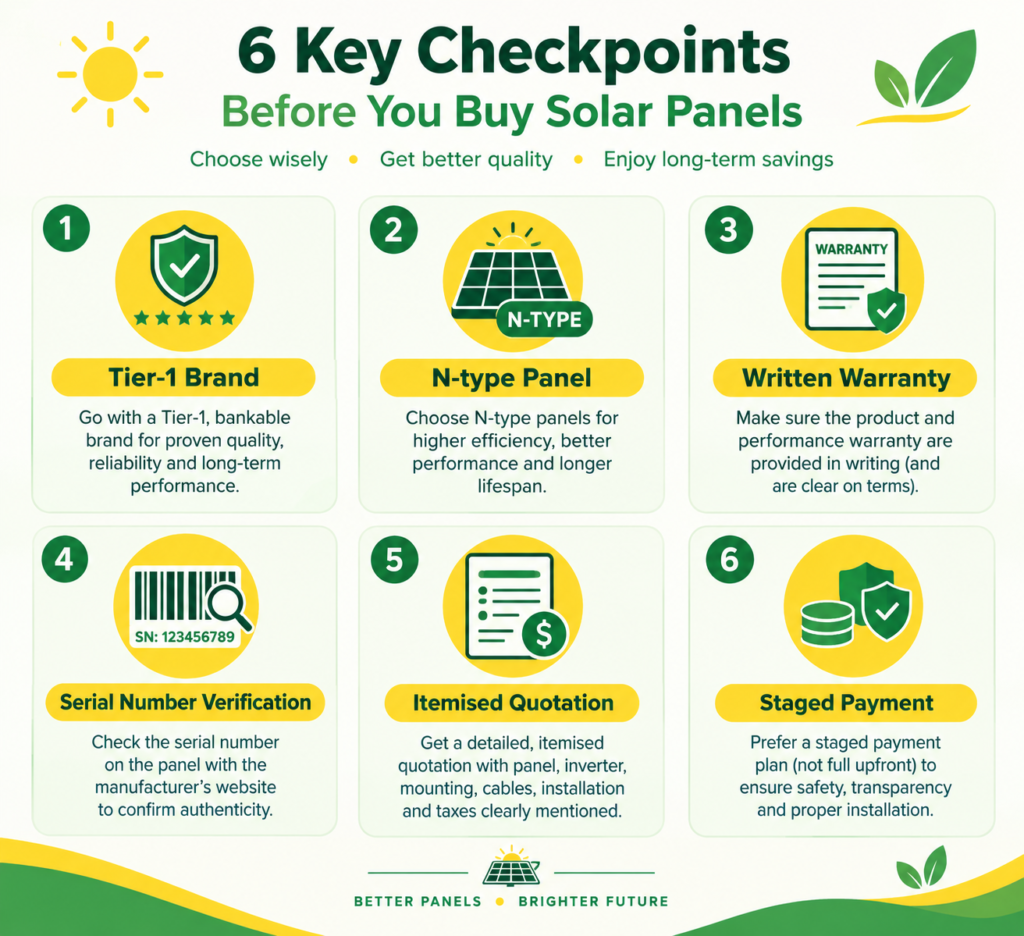
- Ask for the datasheet and the serial numbers.
- Verify the brand’s authorised dealer status where possible.
- Get warranty terms in writing, covering both product and performance.
- Avoid paying the full amount upfront. Pay in stages tied to delivery and commissioning.
- Check the panel grade. B-grade panels are cheaper but lack certification, have shorter lifespans, and may not qualify for net billing registration.
Common Buying Mistakes to Avoid
- Choosing purely on the lowest price.
- Buying a system without checking your actual consumption.
- Ignoring the inverter. A weak inverter is the most common point of failure.
- Skipping shade analysis on the roof.
- Not insisting on an itemised quote and written warranty.
- Hiring an installer with no after-sales service.
- Expecting the buyback rate from the past to still apply.
Financing and Payback
Many buyers pay in cash, but options exist:
- Bank solar financing and green energy loans, where available, often with fixed monthly instalments.
- Installment plans from some installers.
- Employer or group purchases that can bring bulk discounts.
For payback, on-grid systems usually recover their cost fastest. Guides put payback anywhere from about 3 to 5 years for on-grid systems, though your result depends on your tariff, usage and system cost. Hybrid systems take longer because of battery cost, but they buy you comfort during outages.
Selling Used Solar Panels in Pakistan
If you are on the other side, upgrading or removing a system, there is a market for second-hand panels:
- Who buys: local dealers, scrap and recycling dealers, small installers and budget-conscious buyers.
- What affects price: brand, age, wattage, physical condition, and whether they still produce close to rated output.
- How to sell well: test the output, clean the panels, keep original datasheets, and list them on online classifieds or approach solar market dealers directly.
- For buyers of used panels: inspect for cracks, hot spots, discolouration and delamination, test output under sun, and expect no meaningful warranty.
Used panels can work for non-critical needs such as small farms or sheds, but they are not recommended if you want net billing registration or long-term reliability.
Maintenance Tips
- Clean panels every 2 to 4 weeks, more often in dusty areas. Use soft water and a soft brush, early morning or evening.
- Inspect cables and connectors twice a year.
- Keep an eye on inverter alerts and daily generation numbers.
- Trim trees that cast new shade.
- Service batteries as the manufacturer recommends.
FAQs
How much does it cost to buy solar panels in Pakistan?
Tier-1 panels are roughly Rs 39 to 46 per watt in mid-2026, and a complete 5 kW system generally lands in the Rs 7 to 10 lakh range, depending on equipment and installer. Always get a current quote.
Which solar panel brand is best in Pakistan?
Jinko, JA Solar, Trina, LONGi and Canadian Solar are the usual Tier-1 choices. The best one for you is the one with genuine stock, a solid warranty and a trustworthy dealer.
Is solar still worth it after the net metering changes?
Yes, for most buyers, especially when you size the system for your own use. You save more by consuming your own solar power than by exporting it.
On-grid or hybrid: which should I buy?
On-grid if outages are rare and you want the fastest payback. Hybrid if load shedding is frequent and you need backup.
How long do solar panels last?
Quality panels typically carry 25 to 30 year performance warranties and keep working beyond that at reduced output.
Can I sell my old solar panels?
Yes. Dealers, scrap buyers and online marketplaces buy them, with prices based on brand, age and condition.
How do I avoid fake or low-grade panels?
Buy from authorised dealers, check serial numbers and datasheets, and insist on written warranty terms.
Final Thoughts
Solar is one of the smartest long-term moves a Pakistani household or business can make, but only if you buy carefully. Know your consumption, choose the right system type, stick to reputable Tier-1 brands, demand an itemised quote, and confirm the latest net billing rules before you commit. Do that, and your system will keep paying you back for decades.