Solar Panel Microinverters: The Complete 2026 Homeowner’s Guide to Better Solar Performance
Solar energy has become one of the fastest-growing sources of clean electricity around the world. As more homeowners and businesses install solar systems, choosing the right inverter has become just as important as selecting high-quality solar panels.
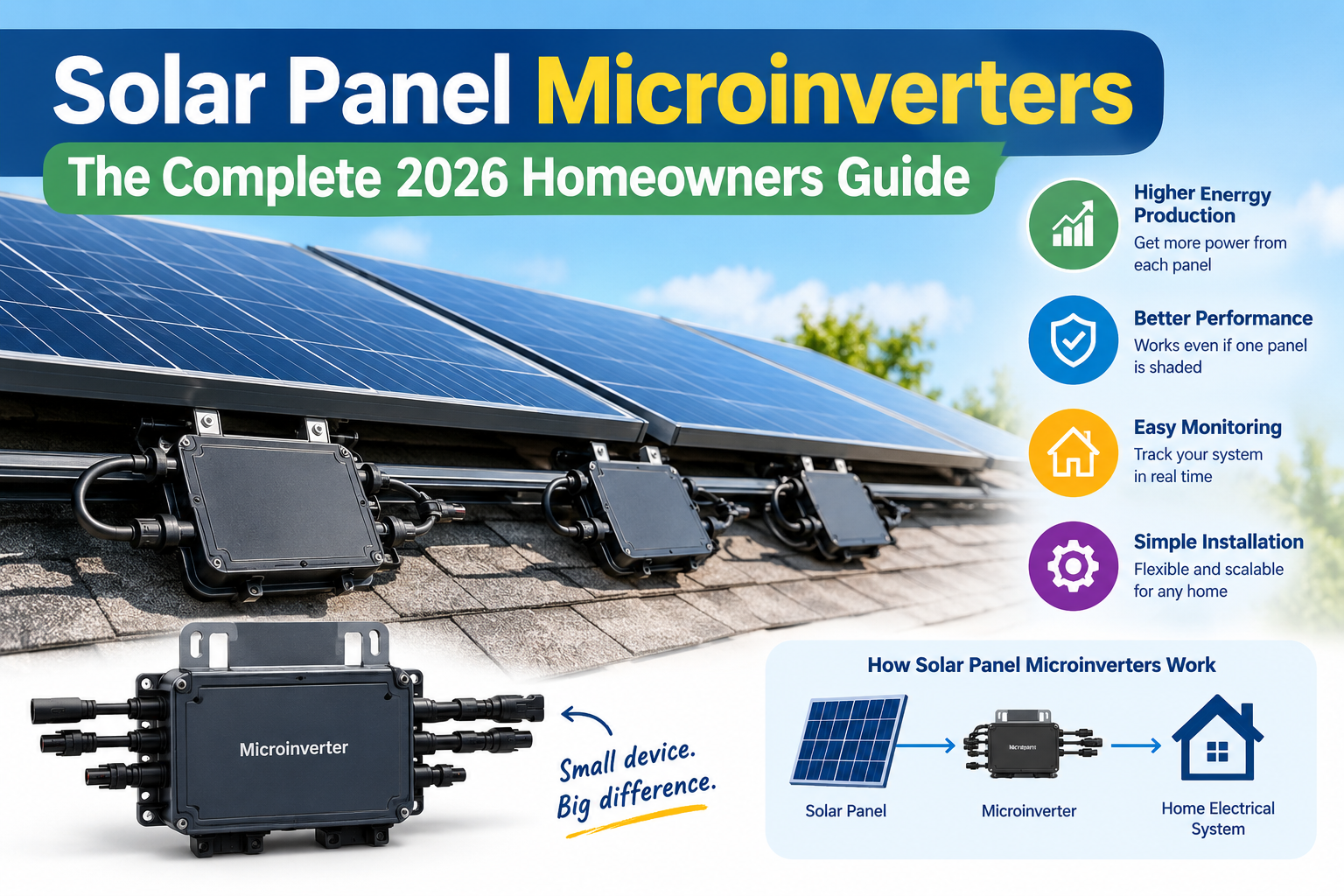
One of the most advanced technologies available today is solar panel microinverters. Unlike traditional string inverters that connect multiple panels to a single inverter, a microinverter is installed on each individual solar panel. This allows every panel to operate independently, improving energy production, increasing system reliability, and making solar systems more efficient—especially when some panels are shaded.
Whether you are planning to install a new solar system, upgrade an existing one, or simply want to understand how microinverters work, this guide covers everything you need to know. You’ll learn how solar panel microinverters function, their advantages and disadvantages, where they perform best, and which brands are trusted worldwide and in Pakistan.
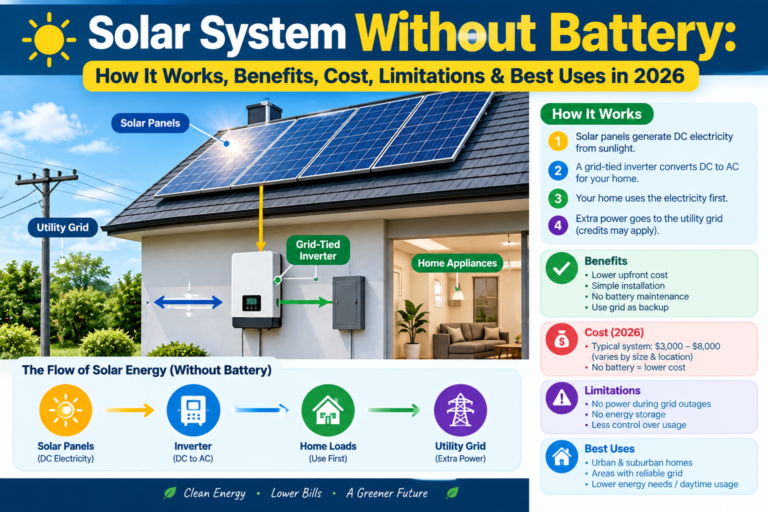
If you are planning a home solar system without battery storage, learn how this type of system works and what to consider before installation.
Table of Contents
- Are Microinverters Worth It?
- What Are Solar Panel Microinverters?
- How Do Solar Panel Microinverters Work?
- Main Components of a Microinverter System
- Types of Solar Inverters
- Why Are Microinverters Becoming Popular?
- Advantages of Solar Panel Microinverters
- Disadvantages of Solar Panel Microinverters
Are Solar Panel Microinverters Worth It?
For many homeowners, the answer is yes.
If your roof experiences partial shading, has multiple roof angles, or you want maximum energy production and detailed monitoring, solar panel microinverters are an excellent investment.
Although the upfront cost is higher, the additional electricity generated over many years can help offset the initial expense.
In addition, longer warranties, easier expansion, and increased reliability make microinverters a popular choice for modern residential solar systems.
What Are Solar Panel Microinverters?
A solar panel microinverter is a small inverter installed directly underneath or behind each solar panel. Its job is to convert the direct current (DC) electricity generated by that panel into alternating current (AC), which is the type of electricity used by homes and businesses.
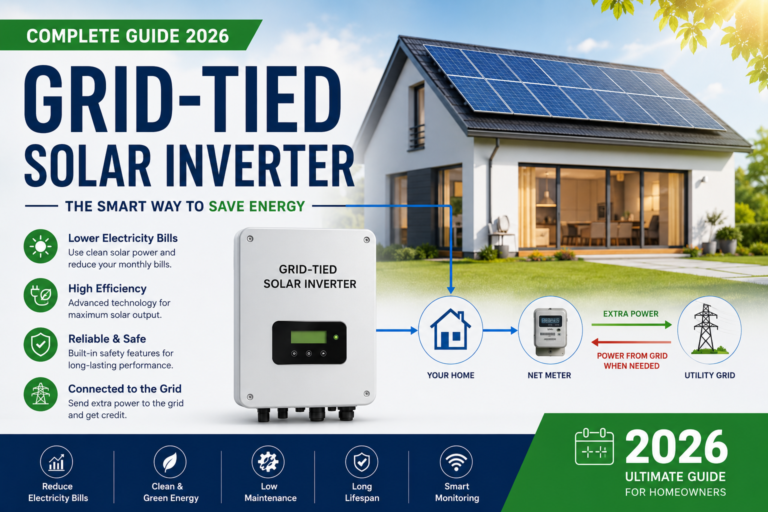
If your solar system is connected to the utility grid, you may also want to learn how a grid-tied solar inverter works and how it manages electricity between your home and the grid.
A solar panel microinverter is a small inverter installed directly underneath or behind each solar panel. Its job is to convert the direct current (DC) electricity generated by that panel into alternating current (AC), which is the type of electricity used by homes and businesses.
Unlike a string inverter, where multiple solar panels are connected to one central inverter, each panel with a microinverter works independently. This means that the performance of one panel does not affect the others.
For example, if one panel is covered by leaves or partially shaded by a tree, only that panel produces less electricity. The remaining panels continue operating at their maximum output.
This is one of the biggest reasons why many homeowners now prefer solar panel microinverters.
How Do Solar Panel Microinverters Work?
The process is simple:
- Sunlight reaches the solar panel.
- The solar cells generate DC electricity.
- The microinverter attached to that panel immediately converts DC into AC electricity.
- The AC electricity flows into your home’s electrical system.
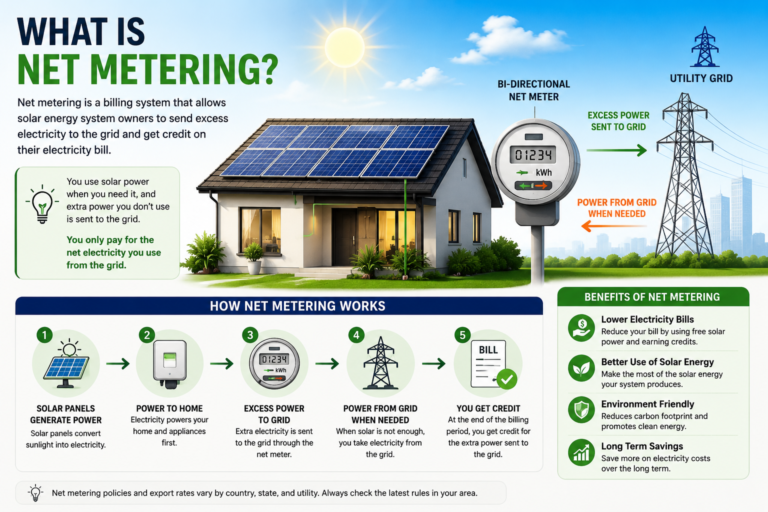
- Any extra electricity can be exported to the utility grid if your system supports net metering.
Because every panel has its own inverter, each one constantly adjusts to produce the highest possible energy based on the amount of sunlight it receives.
Main Components of a Microinverter Solar System
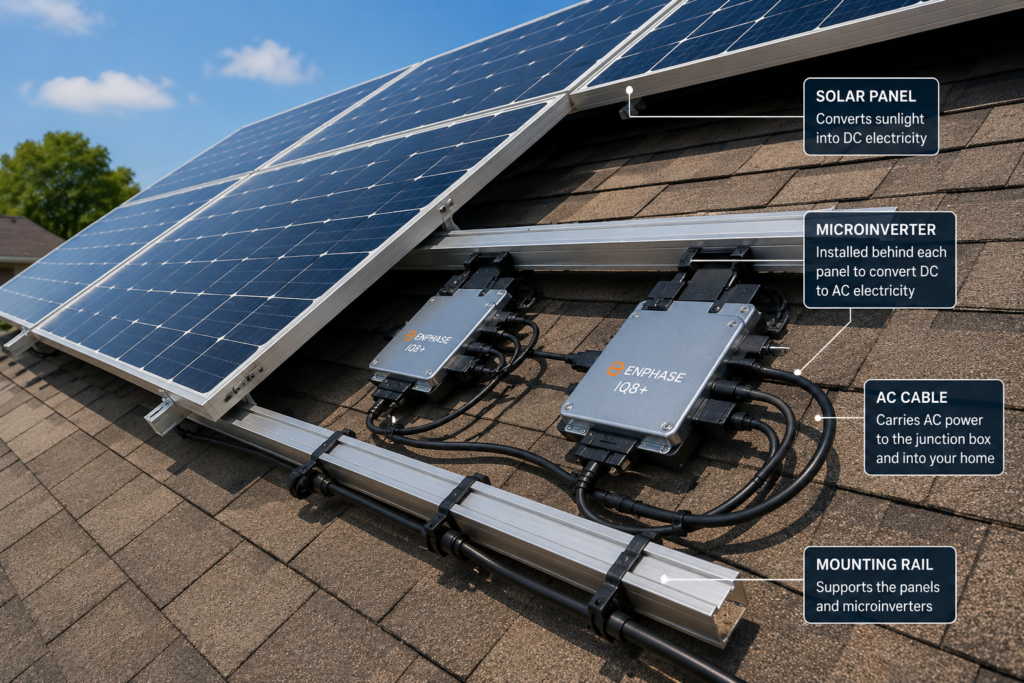
A typical microinverter-based solar system includes:
Solar Panels
Solar panels capture sunlight and generate DC electricity.
Microinverters
Each panel has its own microinverter, which converts DC power into AC power.
AC Trunk Cable
The AC trunk cable connects all microinverters and carries electricity to the electrical panel.
Monitoring System
Many modern microinverters include mobile or web-based monitoring that allows homeowners to track the performance of every individual panel.
Utility Meter or Net Meter
In grid-connected systems, excess electricity can be exported to the utility company through a net meter.
Types of Solar Inverters
There are several types of solar inverters available today.
1. String Inverters
A string inverter connects multiple solar panels in one series (string). All panels work together, meaning the lowest-performing panel can reduce the output of the entire string.
These are commonly used because they are affordable and suitable for roofs with full sunlight.
2. Solar Panel Microinverters
Microinverters are installed on each solar panel individually.
Each panel operates independently, resulting in higher energy production, better monitoring, and improved safety.
They are ideal for homes where shading is a concern or where roof sections face different directions.
3. Hybrid Inverters
Hybrid inverters work with both solar panels and battery storage systems.
They allow homeowners to store excess electricity for nighttime use or during power outages.
4. Central Inverters
Central inverters are designed for large commercial or utility-scale solar projects.
They are similar to string inverters but are much larger and can handle electricity from hundreds or thousands of solar panels.
Why Are Solar Panel Microinverters Becoming Popular?
The demand for solar panel microinverters has increased significantly over the last few years because they solve many of the problems associated with traditional string inverters.
Homeowners appreciate the ability to monitor each panel individually, while installers value the flexibility offered by microinverter systems.
Microinverters are especially useful for:
- Homes with partial shading
- Roofs facing multiple directions
- Small and medium-sized residential systems
- Future solar system expansion
- Premium solar installations
Advantages of Solar Panel Microinverters
Higher Energy Production
Every solar panel performs independently, allowing the system to generate more electricity throughout the day.
Better Performance During Shade
If one panel is shaded by a chimney, tree, or nearby building, only that panel loses efficiency.
The rest of the system continues operating normally.
Panel-Level Monitoring
Most manufacturers provide smartphone apps that allow users to monitor each solar panel separately.
This makes it much easier to detect problems and maintain the system.
Improved Safety
Microinverters convert DC electricity into AC directly at the panel.
This reduces the length of high-voltage DC wiring on the roof, making the system safer for homeowners and emergency responders.
Easy System Expansion
Planning to install more panels later?
With microinverters, adding additional panels is much easier because each panel already has its own inverter.
Longer Warranty
Many premium microinverter manufacturers offer warranties of 20–25 years, which is often much longer than traditional string inverters.
Better Reliability
If one microinverter fails, only one solar panel stops producing electricity.
The rest of the solar system continues working normally.
This reduces the risk of losing power production across the entire system.
Disadvantages of Solar Panel Microinverters
Although microinverters offer many advantages, they also have some drawbacks.
Higher Initial Cost
Microinverter systems generally cost more than string inverter systems because each solar panel requires its own inverter.
Roof Installation
Since microinverters are mounted beneath the panels, replacing one may require removing the affected solar panel.
More Electronic Components
A system with 20 solar panels will also have 20 microinverters.
Although they are designed for long-term reliability, there are more electronic devices installed compared to a single string inverter.
Solar Panel Microinverters vs. String Inverters: Which One Is Better?
One of the most common questions homeowners ask before installing a solar system is whether they should choose solar panel microinverters or a traditional string inverter. Both technologies convert DC electricity from solar panels into AC electricity for home use, but they work differently and are suited to different situations.
The right choice depends on your roof design, budget, shading conditions, and future expansion plans.
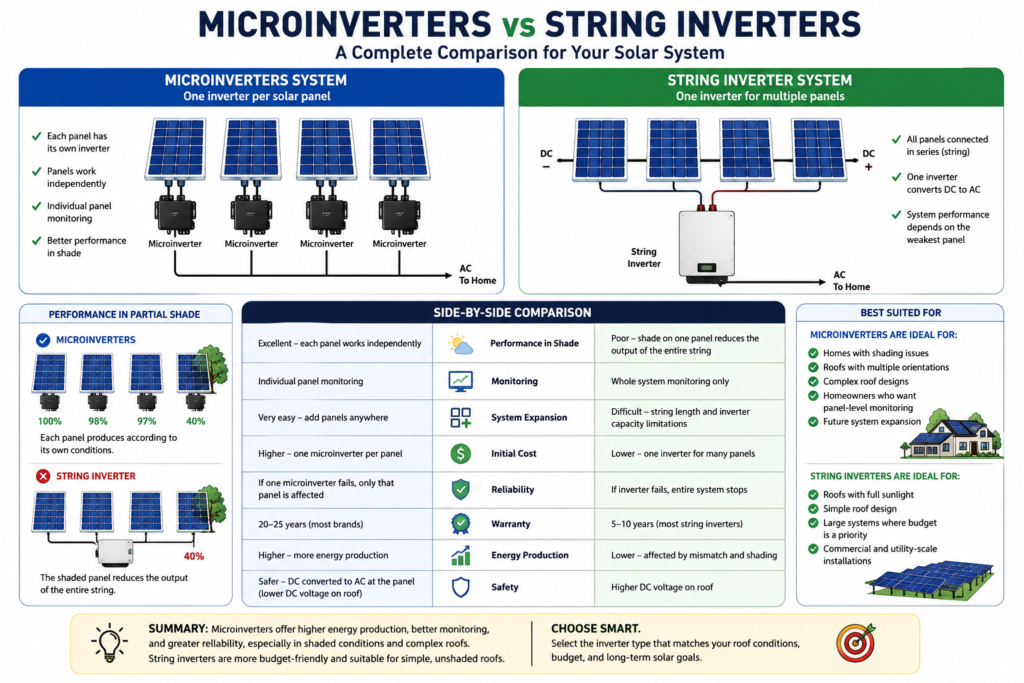
| Feature | Solar Panel Microinverters | String Inverters |
| Installation | One microinverter per solar panel | One inverter for multiple panels |
| Performance in Shade | Excellent | Reduced if one panel is shaded |
| Panel Monitoring | Individual panel monitoring | Whole system monitoring |
| System Expansion | Very easy | More difficult |
| Initial cost | Higher | Lower |
| Reliability | One failed unit affects one panel | One failed inverter affects the entire system |
| Safety | Higher due to lower rooftop DC voltage | Standard safety |
| Best For | Residential homes with complex roofs or shading | Large roofs with full sunlight |
Which One Should You Choose?
Choose solar panel microinverters if:
- Your roof has partial shading from trees, chimneys, or nearby buildings.
- Your roof faces different directions.
- You want to monitor each solar panel individually.
- You plan to add more solar panels in the future.
- You want maximum long-term energy production.
Choose a string inverter if:
- Your roof receives full sunlight throughout the day.
- You want to reduce the initial installation cost.
- Your solar system design is simple.
Best Solar Panel Microinverter Brands Worldwide
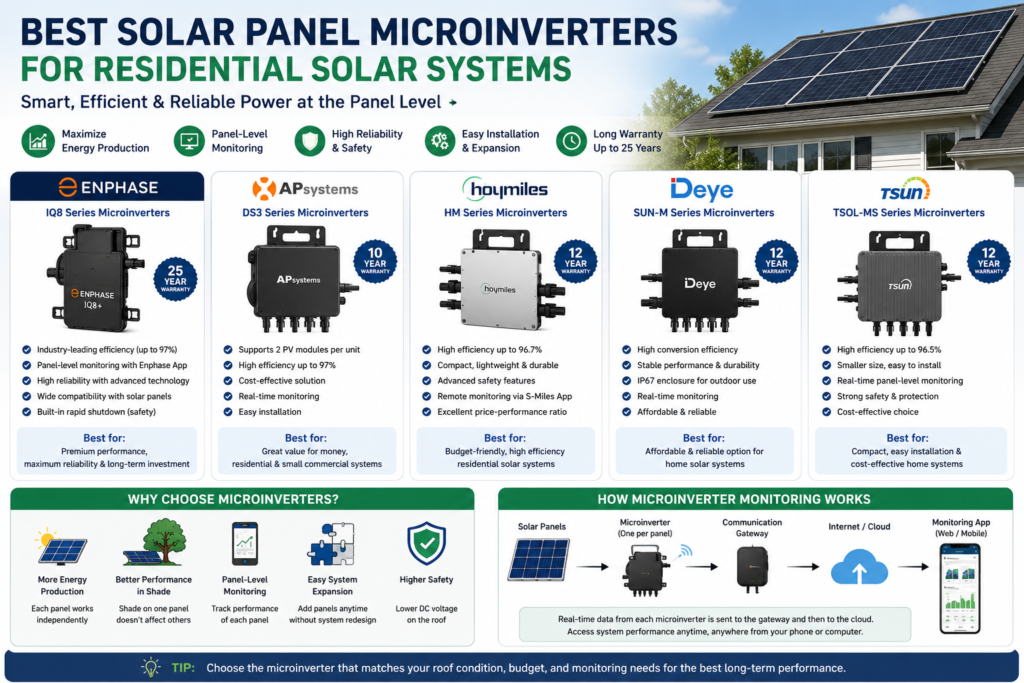
Several companies manufacture high-quality microinverters. The following brands are trusted by homeowners, installers, and solar professionals around the world.
Before choosing a microinverter system, it is also important to understand the difference between on-grid and off-grid solar systems and which setup is right for your home.
1. Enphase Energy – Best Overall
Country: United States
Enphase Energy is widely recognized as the market leader in residential microinverter technology. Its IQ Series microinverters are known for excellent efficiency, advanced monitoring, and long warranties.
Key Features
- Up to 25-year warranty
- High conversion efficiency
- Individual panel monitoring
- Reliable mobile app
- Excellent customer support
- Compatible with battery storage solutions
Best For
- Maximum system performance
- Homeowners who want premium quality
- Long-term investment
2. APsystems – Best Value for Money
Country: United States / China
APsystems offers reliable microinverters at a more affordable price than many premium competitors. Many models can support multiple solar panels, making them a cost-effective option.
Key Features
- Affordable pricing
- Good efficiency
- Easy installation
- Remote monitoring
- Suitable for residential and small commercial systems
Best For
- Small businesses
- Homeowners on a moderate budget
3. Hoymiles – Best Budget-Friendly Choice
Country: China
Hoymiles has become one of the fastest-growing microinverter manufacturers worldwide. The company is known for producing reliable products at competitive prices.
Key Features
- Excellent value
- High efficiency
- Strong safety features
- User-friendly monitoring platform
- Available in many countries
Best For
- Budget-conscious buyers
- Residential solar systems
4. Deye
Country: China
Deye is well known for solar inverters and energy storage products. In some markets, it also offers microinverter solutions suitable for residential installations.
Key Features
- Competitive pricing
- Reliable performance
- Good after-sales support in many regions
Best For
- Cost-effective residential systems
5. TSUN
Country: China
TSUN manufactures compact microinverters designed for residential rooftop solar systems. The brand has expanded into several international markets.
Key Features
- Compact design
- High efficiency
- Smart monitoring
- Easy installation
Best For
- Small home solar projects
Best Solar Panel Microinverters in Pakistan
Microinverters are still less common in Pakistan than string or hybrid inverters. However, as residential solar installations continue to grow, they are becoming easier to find through specialized solar companies and authorized distributors.
Here are some recommended brands:
Enphase Energy
If your budget allows, Enphase is considered the premium choice because of its outstanding reliability, long warranty, and advanced monitoring features.
Hoymiles
Hoymiles is one of the most practical options for Pakistani homeowners. It offers a good balance of price, efficiency, and performance.
APsystems
APsystems is another dependable option for residential installations and is available through selected suppliers.
Deye
Depending on availability, Deye products can also be considered for homeowners looking for a reliable and affordable solution.
Tip: Before purchasing a microinverter in Pakistan, make sure the supplier provides a genuine product, warranty support, and installation services.
How to Choose the Best Solar Panel Microinverter
Before buying a microinverter, consider the following factors:
1. Solar Panel Compatibility
Ensure the microinverter supports the voltage and power output of your solar panels.
2. Efficiency
Look for high conversion efficiency to maximize energy production.
3. Warranty
A warranty of 20–25 years is ideal, as it matches the expected lifespan of most solar panels.
4. Monitoring Features
Choose a model that allows you to monitor the performance of each panel using a smartphone or web portal.
5. Local Availability
Select a brand with authorized distributors and reliable after-sales service in your country.
6. Budget
The cheapest option is not always the best. Consider the long-term value, warranty, and expected energy savings.
Installation Tips
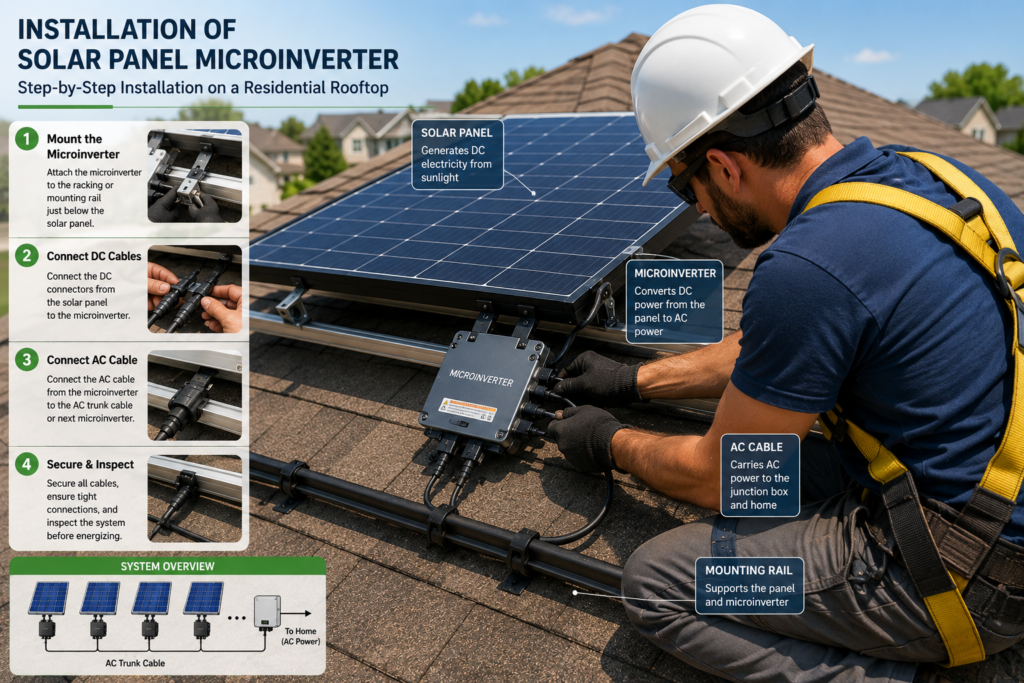
Proper installation is essential for getting the best performance from solar panel microinverters.
- Hire a qualified solar installer.
- Use high-quality mounting hardware.
- Ensure proper cable management.
- Follow the manufacturer’s installation guidelines.
- Test each microinverter after installation.
- Register the monitoring system before the solar system is commissioned.
A professionally installed system will deliver better performance, improved safety, and a longer service life.
Cost of Solar Panel Microinverters
The cost of a solar panel microinverter system depends on several factors, including the brand, the number of solar panels, installation charges, and your location.
In general, a microinverter system costs more than a traditional string inverter because each solar panel requires its own inverter. However, the higher upfront investment is often balanced by improved energy production, better reliability, and lower maintenance costs over the system’s lifetime.
The total cost may vary based on:
- The number of solar panels
- The microinverter brand
- Roof design and installation complexity
- Labor costs
- Monitoring features
- Warranty coverage
When comparing prices, don’t focus only on the initial purchase cost. Consider the long-term value, including energy savings, warranty, and system performance.
Lifespan of Solar Panel Microinverters
One of the biggest advantages of solar panel microinverters is their long service life.
Most high-quality microinverters are designed to last 20–25 years, which closely matches the lifespan of modern solar panels.
This means you are less likely to replace the inverter during the life of your solar system, unlike some traditional string inverters that may require replacement sooner.
Warranty
Warranty is an important factor when choosing a microinverter.
Many leading manufacturers provide warranties ranging from 20 to 25 years, giving homeowners confidence in the long-term reliability of their investment.
Always read the warranty terms carefully and purchase from an authorized dealer to ensure your warranty remains valid.
Maintenance Tips
Although solar panel microinverters require very little maintenance, following a few simple practices can help keep your solar system performing efficiently.
Keep Solar Panels Clean
Dust, bird droppings, leaves, and dirt can reduce electricity production. Clean the panels when necessary or follow your installer’s maintenance recommendations.
Monitor System Performance
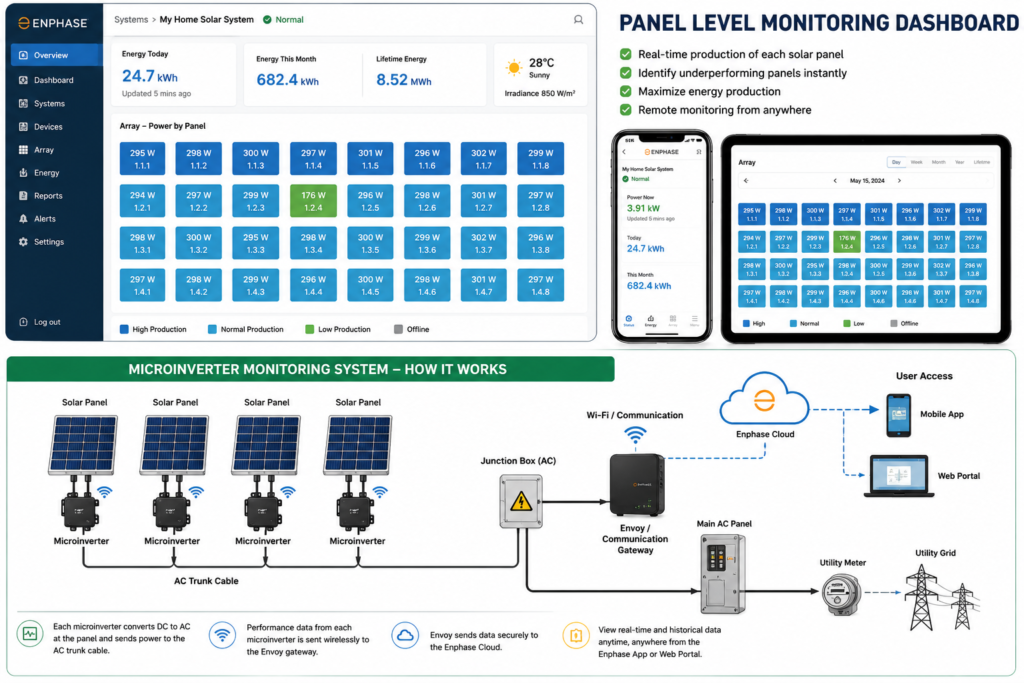
Use the manufacturer’s monitoring app or web portal to check the output of each solar panel. A sudden drop in production may indicate a problem that needs attention.
Schedule Periodic Inspections
Have your solar system inspected by a qualified technician every few years, or as recommended by the manufacturer, to ensure all electrical connections remain secure and the system is operating safely.
Check for Shading
As trees grow or nearby structures change, shading can increase over time. Trim branches where appropriate and keep panels free from unnecessary obstructions.
Common Mistakes to Avoid
Avoiding these common mistakes can improve the performance and lifespan of your solar system.
Buying Based Only on Price
Low-cost products may not provide the same efficiency, warranty, or reliability as trusted brands.
Choosing an Incompatible Microinverter
Always ensure the microinverter is compatible with your solar panel’s electrical specifications.
Ignoring Warranty Coverage
A longer warranty often reflects greater manufacturer confidence in product quality.
Poor Installation
Even the best microinverter can underperform if it is not installed correctly. Always use an experienced solar installer.
Skipping Performance Monitoring
Regular monitoring helps identify issues early, reducing downtime and improving long-term energy production.
Final Recommendation
Solar panel microinverters are an excellent solution for homeowners who want to maximize the performance of their solar energy system. Although they usually cost more than traditional string inverters, they provide several important advantages, including better performance under partial shading, individual panel monitoring, improved safety, and easier future expansion.
If your roof has multiple orientations or receives shade during parts of the day, microinverters can help your solar panels generate more electricity over the lifetime of the system.
For homeowners seeking premium quality, Enphase Energy is a top choice. If you are looking for a balance between performance and affordability, Hoymiles and APsystems are strong alternatives.
Conclusion
As solar technology continues to evolve, solar panel microinverters have become a smart option for modern residential solar systems. By allowing each solar panel to operate independently, they improve energy production, enhance system reliability, and simplify monitoring and maintenance.
While the initial investment is higher than a traditional string inverter, many homeowners find that the long-term benefits justify the cost. By selecting a trusted brand, working with a qualified installer, and maintaining your system properly, you can enjoy clean, reliable solar energy for decades.
Whether you are installing your first solar system or upgrading an existing one, understanding how solar panel microinverters work will help you make an informed decision that meets your energy needs and budget.
1. What is a solar panel microinverter?
A solar panel microinverter is a small inverter installed on each individual solar panel to convert DC electricity into AC electricity.
2. Are microinverters better than string inverters?
They are often a better choice for homes with partial shading, multiple roof angles, or homeowners who want panel-level monitoring and easier system expansion.
3. Do microinverters work during cloudy weather?
Yes. They continue to generate electricity whenever sunlight reaches the panels, although total power production will naturally be lower on cloudy days.
4. How long do microinverters last?
Most premium microinverters have an expected lifespan of 20–25 years.
5. Are microinverters safe?
Yes. Because they convert DC power to AC power at each panel, they reduce the amount of high-voltage DC wiring on the roof, which improves overall system safety.
6. Can I add more solar panels later?
Yes. One of the major advantages of microinverters is that expanding your solar system is usually much simpler than with many traditional string inverter systems.
7. Do microinverters require batteries?
No. They can operate in grid-connected systems without batteries. However, if you want backup power during grid outages, you may need a compatible battery storage solution.
8. Which brand is considered the best?
Enphase Energy is widely recognized as one of the leading premium microinverter manufacturers, while Hoymiles and APsystems are popular choices that offer strong value for many homeowners.
9. Are microinverters suitable for Pakistan?
Yes. They can be an excellent choice for residential installations, especially where roofs have shading or different orientations. Before purchasing, confirm that the product, warranty, and technical support are available through a reliable local supplier.
10. Are microinverters worth the extra cost?
For many homeowners, yes. The combination of higher energy production, improved reliability, panel-level monitoring, and easier future expansion can make the additional investment worthwhile.