On-Grid vs Off-Grid Solar System: Which One Is Better in 2026?
Choosing the right solar system is one of the most important decisions when switching to solar energy. Many people are confused about whether they should install an on-grid solar system or an off-grid solar system.
The right choice depends on your electricity needs, budget, and whether your area has a reliable power supply.
An on-grid solar system works together with the utility grid and usually does not require batteries. An off-grid solar system works independently and stores electricity in batteries, making it a good option for places where grid power is not available.
In this guide, you will learn the difference between these two systems, how they work, their advantages and disadvantages, installation costs, and which one is the better choice in 2026.
Table of Contents
- What Is an On-Grid Solar System?
- Main components of an On-Grid Solar System
- What Is an Off-Grid Solar System?
- Main components of an Off-Grid Solar System
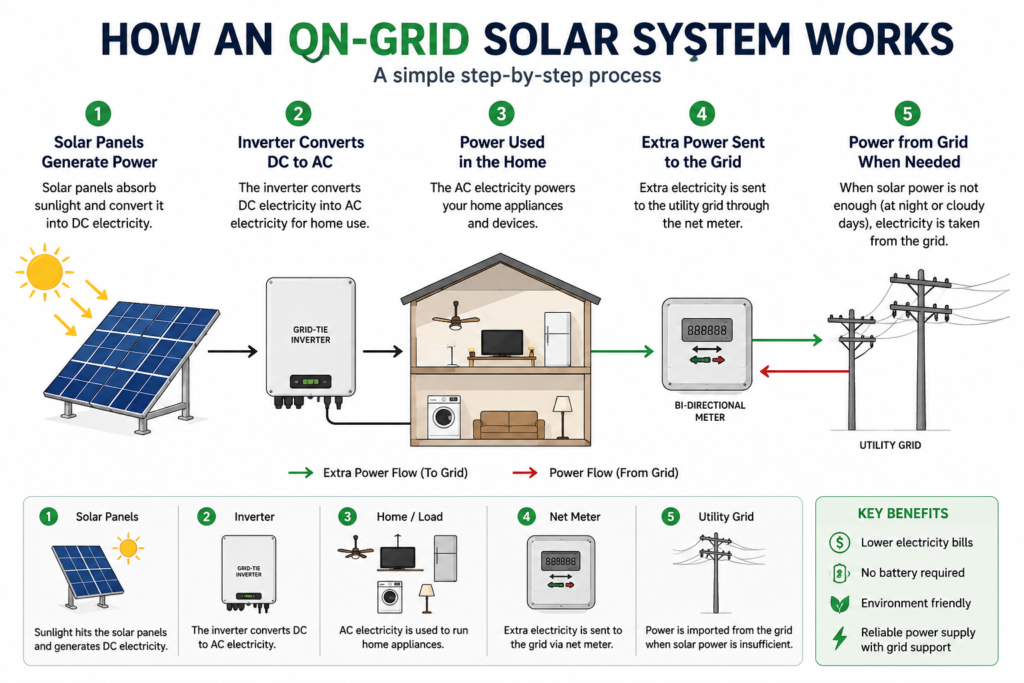
- How Does an On-Grid Solar System Work?
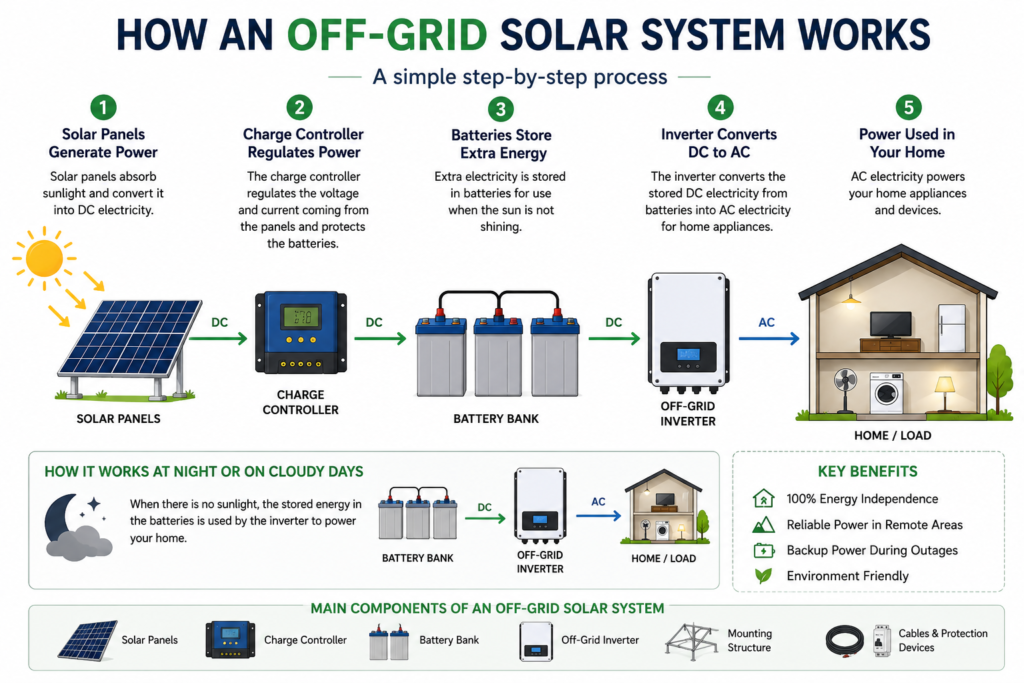
- How Does an Off-Grid Solar System Work?
- Advantages and Disadvantages of On-Grid and Off-Grid Solar System
- On-Grid vs Off-Grid Solar System Comparison
- Frequently Asked Questions
- final thoughts
What Is an On-Grid Solar System?
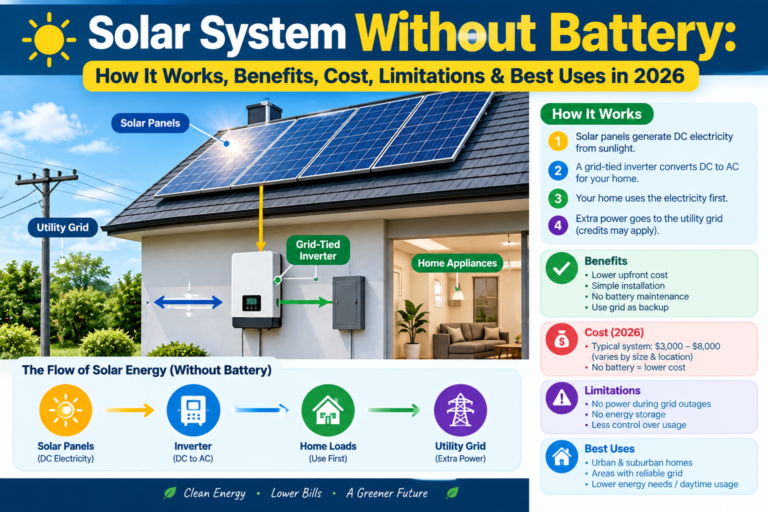
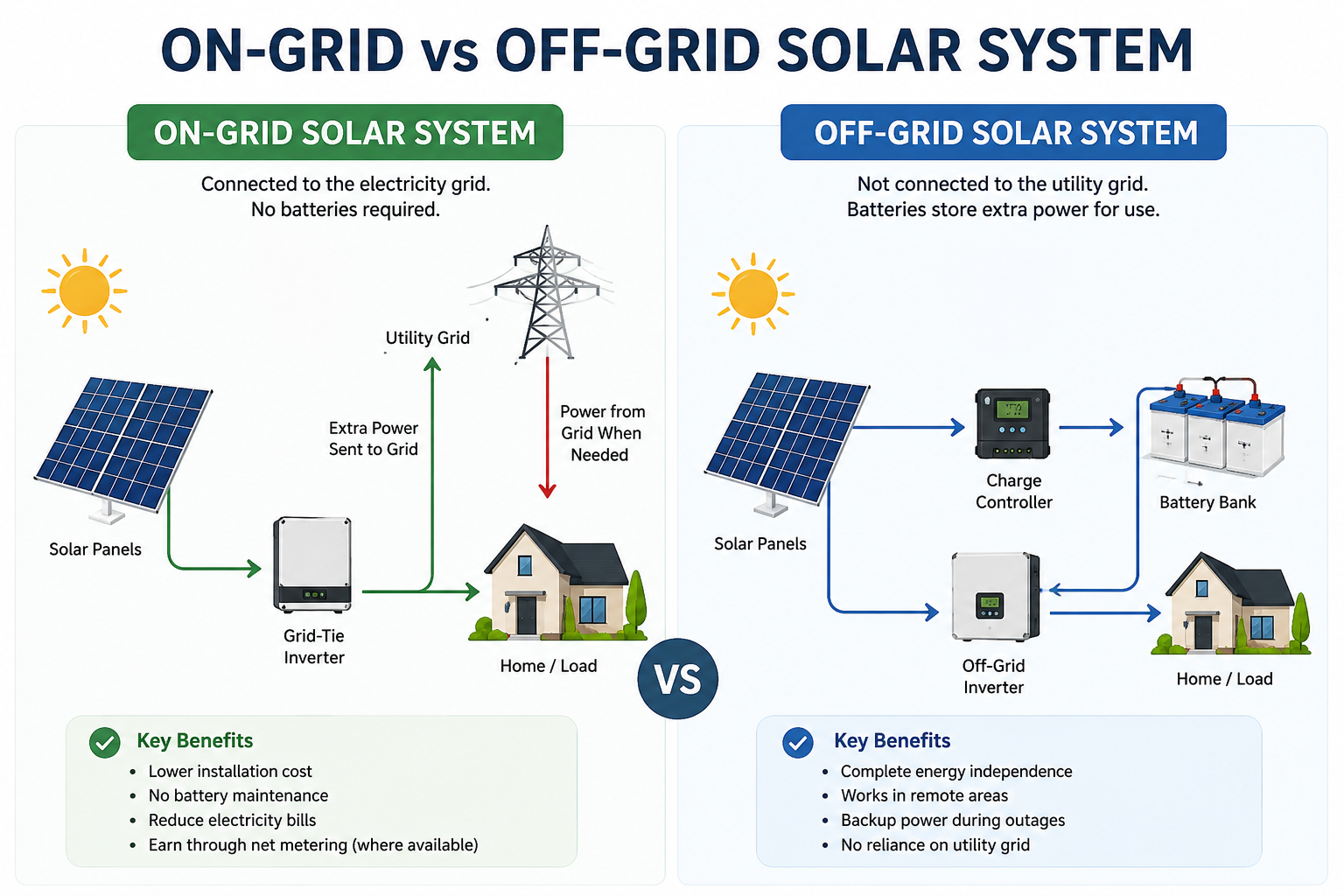
An on-grid solar system, also called a grid-tied solar system, is connected to the local electricity grid. During the day, solar panels produce electricity from sunlight. Your home uses this solar power first.
If your solar panels produce more electricity than your home needs, the extra electricity can be sent back to the grid through net metering, where this service is available.
At night or on cloudy days, when your solar panels are not producing enough electricity, your home automatically uses electricity from the utility grid. This means you continue to have power without needing large battery storage.
Because batteries are usually not required, on-grid systems are more affordable and easier to maintain. They are one of the most popular choices for homes and businesses in cities and towns with a reliable electricity supply.
Main Components of an On-Grid Solar System
- Solar panels
- Grid-tied solar inverter
- Mounting structure
- Electric meter
- Utility grid connection
What Is an Off-Grid Solar System?
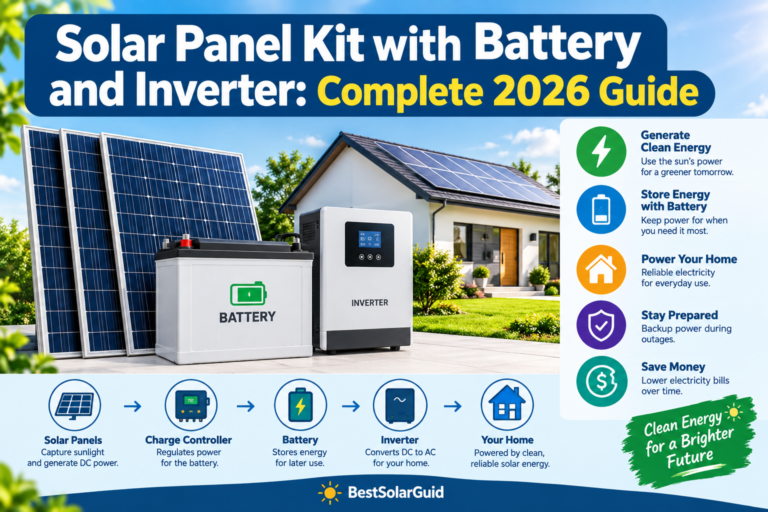
An off-grid solar system works independently without any connection to the utility grid. It generates electricity through solar panels and stores excess energy in batteries for use when sunlight is unavailable.
This system is ideal for remote locations where grid electricity is unavailable or unreliable. Since batteries are essential, off-grid systems are generally more expensive but provide complete energy independence.
Main Components of an Off-Grid Solar System
- Solar panels
- Off-grid inverter
- Solar charge controller
- Battery bank
- Mounting structure
If you’re interested in reducing installation costs, read our guide on Solar System Without Battery.
If you’re planning a residential installation, don’t miss our detailed article on Home Solar System Without Battery.
How Does an On-Grid Solar System Work?
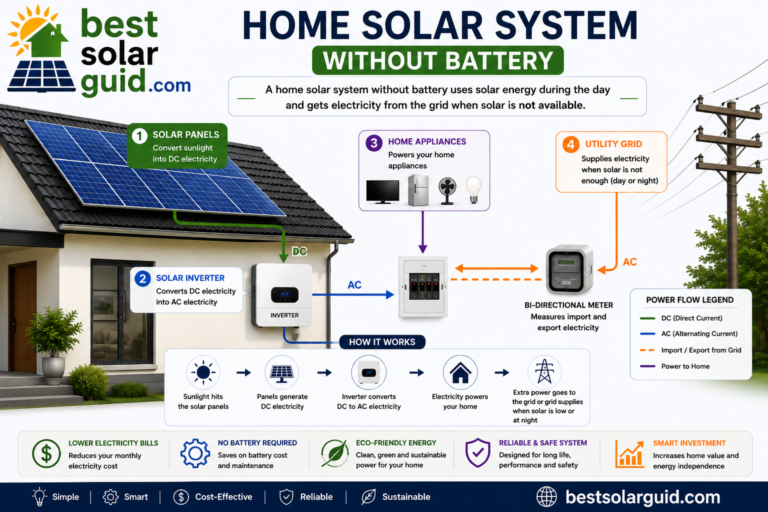
An on-grid solar system is simple and efficient. It uses sunlight to generate electricity and stays connected to the utility grid.
Here is how it works step by step:
Step 1: Solar Panels Capture Sunlight
Solar panels absorb sunlight and convert it into DC (Direct Current) electricity.
Step 2: The Solar Inverter Converts the Power
The inverter changes DC electricity into AC (Alternating Current), which is the type of electricity used by most home appliances.
Step 3: Your Home Uses Solar Energy
The electricity produced by the solar panels is used to run lights, fans, TVs, refrigerators, air conditioners, and other appliances.
Step 4: Extra Electricity Goes to the Grid
If your solar panels produce more electricity than your home needs, the extra electricity can be sent to the utility grid through net metering, where available.
Step 5: Electricity Comes from the Grid When Needed
At night or during bad weather, when the solar panels are not producing enough electricity, your home automatically uses electricity from the utility grid.
How Does an Off-Grid Solar System Work?
An off-grid solar system works without any connection to the utility grid. It stores extra solar energy in batteries so you can use electricity even after sunset.
Step 1: Solar Panels Generate Electricity
During the day, solar panels produce DC electricity from sunlight.
Step 2: Charge Controller Protects the Batteries
The charge controller regulates the electricity going into the batteries. It prevents overcharging and helps extend battery life.
Step 3: Batteries Store Extra Energy
Any electricity that is not used immediately is stored in the battery bank.
Step 4: Inverter Supplies AC Power
The inverter converts stored DC electricity into AC electricity for your home appliances.
Step 5: Batteries Provide Power at Night
When there is no sunlight, the batteries supply electricity to your home.
Advantages and Disadvantages of On-Grid and Off-Grid Solar Systems
Before choosing a solar system, it is important to understand both the benefits and the limitations of each option. This will help you make a better decision based on your budget, location, and energy needs.
Advantages of an On-Grid Solar System
1. Lower Installation Cost
An on-grid solar system is usually more affordable because it does not require a battery bank. This reduces both the initial investment and future replacement costs.
2. Lower Electricity Bills
Your solar panels produce free electricity during the day. This can significantly reduce your monthly electricity bill.
3. Easy to Maintain
With fewer components, especially no batteries in most cases, maintenance is simple and less expensive.
4. Efficient Use of Solar Energy
If net metering is available in your area, any extra electricity can be exported to the grid, helping you make the most of the energy your system produces.
Disadvantages of an On-Grid Solar System
No Backup During Power Outages
Most on-grid systems automatically switch off during a power outage for safety reasons. Unless you have a battery backup or a hybrid system, your home will not have electricity until the grid is restored.
Depends on the Utility Grid
Your system relies on the grid whenever solar production is low, such as at night or during long periods of cloudy weather.
Advantages of an Off-Grid Solar System
1. Complete Energy Independence
An off-grid system allows you to generate and store your own electricity without relying on the utility grid.
2. Perfect for Remote Areas
It is an excellent choice for locations where grid electricity is unavailable or difficult to access.
3. Power During Blackouts
Since electricity is stored in batteries, your home can continue to receive power even during long power outages.
4. Full Control Over Your Energy
You decide how electricity is generated, stored, and used, giving you greater energy independence.
Disadvantages of an Off-Grid Solar System
Higher Installation Cost
Off-grid systems require batteries, charge controllers, and additional equipment, making them more expensive than on-grid systems.
Battery Replacement
Solar batteries do not last forever. Depending on the battery type and usage, they may need replacement after several years.
Careful Energy Planning
Since there is no utility grid for backup, you must use electricity wisely and ensure your battery bank is large enough to meet your daily needs.
On-Grid vs Off-Grid Solar System Cost Comparison (2026)
The total cost depends on your location, system size, equipment quality, and installation charges. In general:
| System Type | Typical Cost | Battery Required |
|---|---|---|
| On-Grid Solar System | Lower | No (in most cases) |
| Off-Grid Solar System | Higher | Yes |
An on-grid system is often the better choice if you have reliable utility power and want to reduce electricity bills.
An off-grid system is more suitable if you need complete energy independence or live in a remote area without grid access.
Common Mistakes to Avoid
Many people make these mistakes when buying a solar system:
- Choosing the cheapest system without checking its quality.
- Buying a system that is too small for future electricity needs.
- Ignoring the quality of the inverter and solar panels.
- Not checking whether local regulations or net metering are available.
- Hiring inexperienced installers.
Avoiding these mistakes can save money and improve the long-term performance of your solar system.
Final Thoughts
Both on-grid and off-grid solar systems have their own advantages. The right choice depends on where you live, your budget, and how much energy independence you want.
If your area has a reliable electricity grid, an on-grid solar system is usually the smarter and more affordable option. It has a lower installation cost, requires less maintenance, and can significantly reduce your electricity bills.
If you live in a remote location or want complete independence from the utility grid, an off-grid solar system is a better choice. Although it costs more because of the battery bank, it provides reliable electricity even when the grid is unavailable.
Before making a decision, compare your energy needs, available budget, and future plans. Choosing the right system today can help you save money and enjoy clean, renewable energy for many years.
1. Which is better: an on-grid or an off-grid solar system?
It depends on your needs. If you have a reliable electricity supply and want to lower your electricity bills, an on-grid solar system is usually the better choice. If you live in a remote area with no grid connection or frequent power outages, an off-grid solar system may be the best option.
2. Does an on-grid solar system need batteries?
No. Most on-grid solar systems work without batteries because they use electricity from the utility grid when solar power is not enough. However, some homeowners choose a hybrid system with batteries for backup power.
3. Is an off-grid solar system more expensive?
Yes. Off-grid systems usually cost more because they require batteries, a charge controller, and additional equipment.
4. Can an off-grid solar system run a whole house?
Yes, it can. However, the system must be properly designed with enough solar panels and battery storage to meet your home’s daily electricity needs.
5. Which solar system is best for a home?
For most homes in cities and towns with a reliable electricity supply, an on-grid solar system is the most practical and cost-effective choice. An off-grid system is generally better for homes in remote locations without access to the utility grid.
6. What is the difference between an on-grid and off-grid solar system in terms of batteries?
An on-grid solar system can operate without batteries because it remains connected to the utility grid. An off-grid solar system normally requires batteries to store excess solar electricity for use at night or when sunlight is unavailable.
7. What is the difference between an on-grid and off-grid solar system in terms of energy independence?
An on-grid system still depends on the utility grid when solar production is insufficient, while an off-grid system is designed to operate independently of the grid. Off-grid systems therefore provide greater energy independence but require adequate solar generation and battery storage.