Best Solar Panel Cleaner Solution: Top Brands and a Complete Guide to Keeping Your Panels Spotless
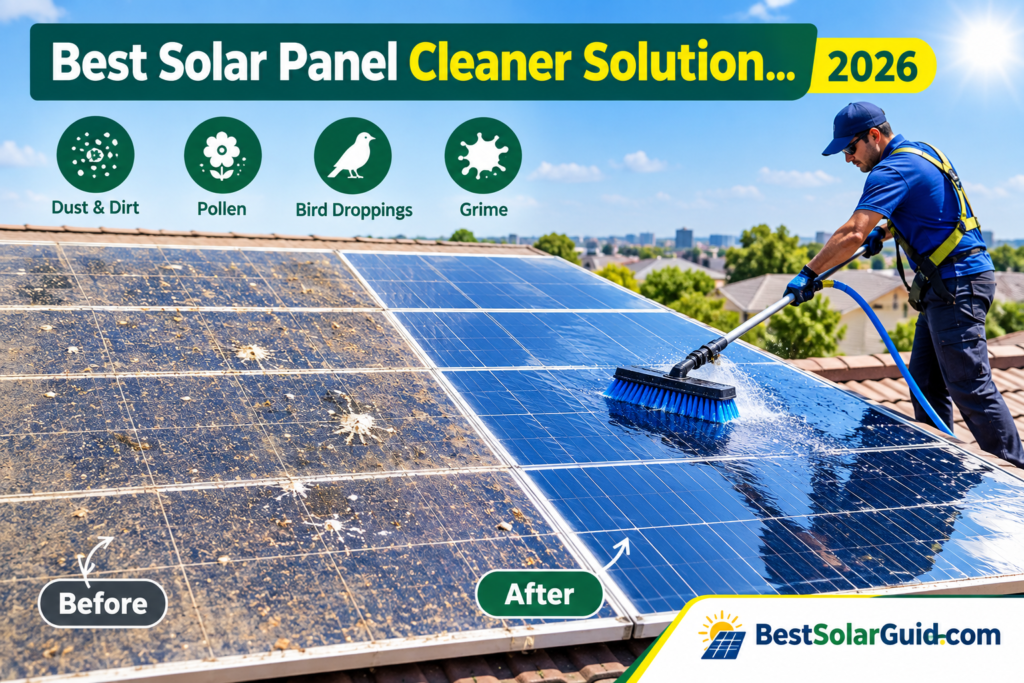
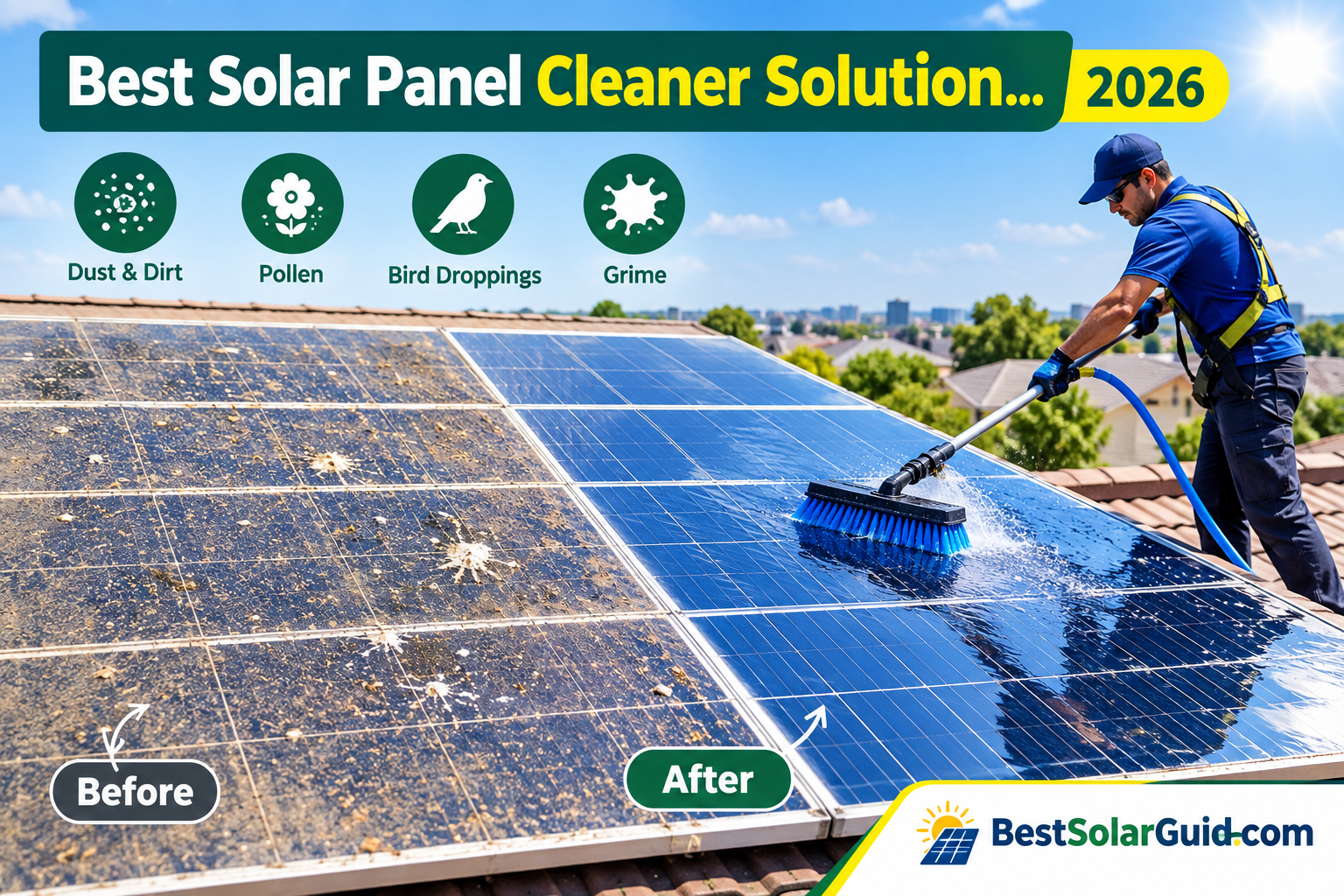
If you’ve invested in solar panels, you already know they need sunlight to work — but what you might not realize is how much dust, pollen, bird droppings, and grime can quietly eat into your energy output. Even a thin layer of dust can reduce panel efficiency by 15-25%, and in dusty regions this loss can climb even higher. That’s why choosing the right solar panel cleaner solution isn’t just a nice-to-have — it’s part of protecting the investment you already made.
In this guide, we’ll walk through everything you need to know: the different types of cleaning solutions available, how to pick the right one for your setup, how often you should clean, and whether a DIY approach or a professional service makes more sense for you.
Table of Contents
- Why Solar Panel Cleaning Matters
- Types of Solar Panel Cleaner Solutions
- How to Choose the Right Cleaning Solution
- DIY Cleaning vs Professional Cleaning Services
- Step-by-Step: How to Clean Solar Panels Safely
- How Often Should You Clean Solar Panels?
- Cost of Solar Panel Cleaning Solutions
- Eco-Friendly and Water-Saving Options
- Popular Solar Panel Cleaner Brands to Consider
- Common Mistakes to Avoid
- Frequently Asked Questions
Why Solar Panel Cleaning Matters
Solar panels are built to withstand rain, wind, and sun, but dust and grime buildup happens gradually and often goes unnoticed until your monthly generation numbers start dropping. A few key reasons cleaning matters:
- Energy loss: Dust, dirt, and bird droppings block sunlight from reaching the photovoltaic cells, directly lowering output.
- Hotspots and long-term damage: Uneven dirt patches can cause certain cells to overheat, which over years can shorten panel lifespan.
- Return on investment: Since solar systems are a long-term investment, even a small annual efficiency loss adds up to real money over 20-25 years of use.
- Warranty and inspection requirements: Some manufacturers recommend regular maintenance, including cleaning, to keep performance warranties valid.
Regular maintenance is especially important when you want to get the most energy from your solar panels. For a better understanding of panel output, see our guide to 400 watt solar panels.
Types of Solar Panel Cleaner Solutions
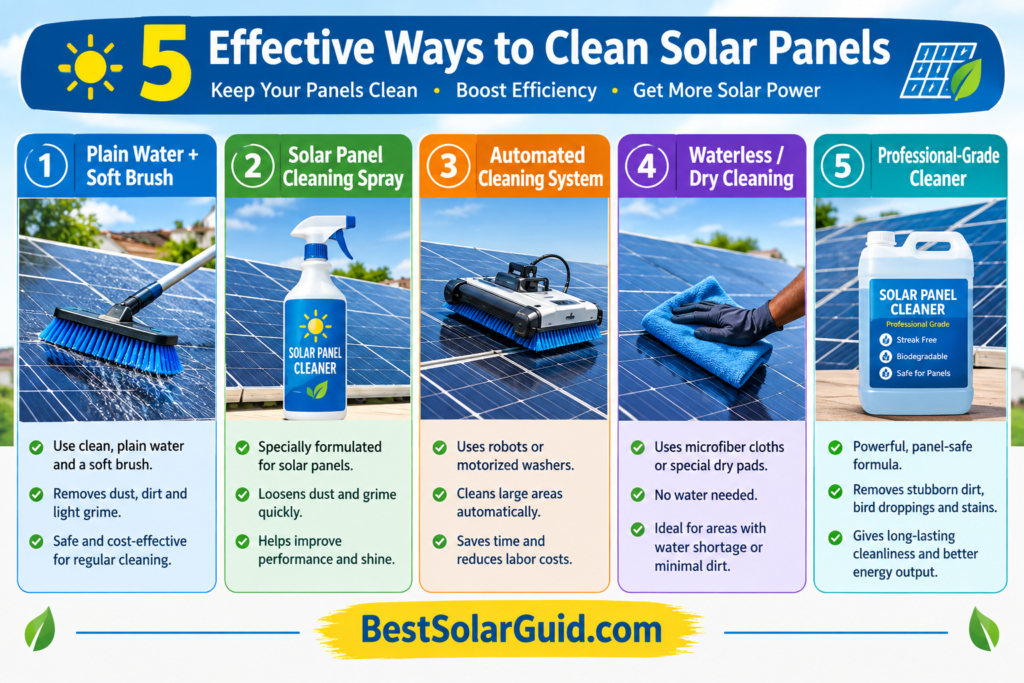
1. Plain Water and Soft Brush
The simplest and safest option for most homeowners. Distilled or filtered water paired with a soft, non-abrasive brush removes dust and light grime without leaving mineral spots.
2. Solar Panel Cleaning Sprays and Solutions
Commercial cleaning sprays are formulated specifically for glass and anti-reflective coatings. They typically include:
- Mild, pH-balanced surfactants that lift grime without stripping coatings
- Anti-static properties that slow down future dust accumulation
- Streak-free formulas designed not to leave residue that could block light
3. Automated Cleaning Systems
For large residential or commercial solar farms, automated robotic cleaners use rotating brushes or squeegees on rails to clean entire arrays without manual labor. These are more expensive upfront but save significantly on recurring labor costs.
4. Waterless / Dry Cleaning Solutions
In areas where water is scarce, waterless cleaning sprays combined with microfiber cloths or dry brushes can remove dust without needing a water source — useful for off-grid or remote installations.
5. Professional-Grade Chemical Cleaners
These are stronger degreasing agents used for panels with stubborn buildup like bird droppings, tree sap, or industrial soot. They should only be used according to manufacturer guidelines, since harsh chemicals can degrade panel coatings over time.
How to Choose the Right Cleaning Solution
When comparing options, keep these factors in mind:
- Panel coating compatibility: Always check whether a cleaner is safe for anti-reflective or nano-coated panels.
- Water availability: If water access is limited, a waterless or dry solution may be more practical.
- Array size: Small rooftop systems are usually fine with manual cleaning, while large arrays benefit more from automated systems.
- Climate: Dusty, arid, or coastal (salt-heavy) environments require more frequent cleaning and possibly specialized formulas.
- Budget: DIY water-and-brush cleaning costs almost nothing, while automated systems require a larger initial investment.
DIY Cleaning vs Professional Cleaning Services
| Factor | DIY Cleaning | Professional Service |
|---|---|---|
| Cost | Low (just water/brush or a spray bottle) | Moderate to high, depends on array size |
| Safety | Risk if panels are on a steep or high roof | Trained technicians handle height and equipment |
| Consistency | Depends on your own schedule | Often scheduled on a recurring basis |
| Equipment | Basic brush, squeegee, hose | Specialized tools, sometimes robotic systems |
| Best for | Small, easily accessible rooftop systems | Large arrays, hard-to-reach panels, commercial setups |
If your panels are on a single-story roof and easily reachable with a ladder, DIY cleaning with a soft brush and water is usually sufficient. For elevated, hard-to-access, or commercial-scale installations, a professional cleaning service reduces both safety risk and the chance of accidental panel damage.
Step-by-Step: How to Clean Solar Panels Safely
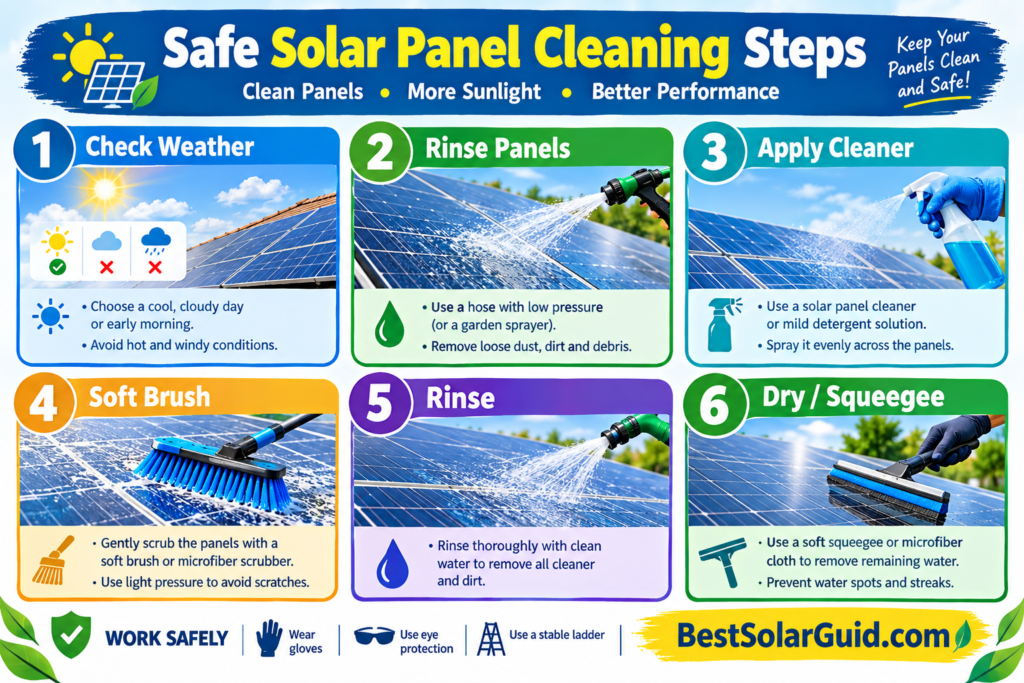
- Check the weather — clean in the early morning or late evening when panels are cool. Cleaning hot panels with cold water can cause thermal shock and micro-cracks.
- Turn off the system (recommended for larger systems) or at least avoid touching electrical components while wet.
- Rinse first with plain water to loosen surface dust before scrubbing.
- Apply your chosen cleaner solution using a soft brush, sponge, or microfiber cloth — never an abrasive scrubber.
- Clean in one direction rather than circular motions to avoid micro-scratches.
- Rinse thoroughly to remove any soap or cleaner residue.
- Air dry or squeegee to prevent water spots, especially if you have hard water.
How Often Should You Clean Solar Panels?
- Low-dust regions: Every 6-12 months is generally enough.
- Dusty, arid, or desert climates: Every 1-3 months, since dust accumulates much faster.
- Coastal areas: Salt residue can build up quickly; cleaning every 1-2 months is often recommended.
- After storms or bird activity: Spot-clean as needed rather than waiting for the scheduled cleaning.
A simple way to know it’s time: if you notice a visible drop in your energy generation dashboard, or you can see a dusty film on the panel surface, it’s time to clean.
Cost of Solar Panel Cleaning Solutions
- DIY water and brush setup: Minimal cost, often under the price of a garden hose attachment and a soft brush.
- Commercial cleaning sprays: Moderately priced per bottle, with coverage varying by panel size.
- Professional cleaning service: Priced per panel or per array size, with larger commercial installations getting better per-unit rates.
- Automated/robotic cleaning systems: The highest upfront cost, but designed to pay for themselves over time through labor savings on large solar farms.
Since prices vary by region, supplier, and system size, it’s worth getting a few local quotes before deciding between a one-time DIY setup and a recurring professional service.
Eco-Friendly and Water-Saving Options
With growing awareness of water scarcity, many manufacturers now offer:
- Biodegradable cleaning solutions that break down safely if runoff reaches soil or nearby plants
- Waterless nano-coating sprays that both clean and add a protective, dust-resistant layer
- Rainwater harvesting setups paired with manual cleaning to reduce dependence on treated tap water
These options are especially useful for homeowners who want to minimize environmental impact while still keeping panels performing at their best.
Popular Solar Panel Cleaner Brands to Consider
If you’d rather go with a trusted name than build your own routine from scratch, here are some brands worth knowing — both locally in Pakistan and internationally.
Popular in Pakistan
- SoWash Solar Maintenance Solutions — a leading solar panel cleaning company in Pakistan offering specialized services for residential, commercial, and utility-scale solar installations using advanced cleaning equipment.
- Pakistan Home Solution — operating in Lahore and Islamabad since 2017, offering dedicated solar panel and water tank cleaning services.
- Many regional solar installers, such as Solar Panel Pakistan (Lahore) and Delta Power (Karachi), also offer cleaning and maintenance as part of their after-sales services alongside installation.
Popular Worldwide
- Ecoppia — an Israeli company known for water-free robotic PV cleaning systems, certified safe for long-term use on panels from major manufacturers including Trina Solar, JA Solar, Canadian Solar, and Jinko Solar. Widely used on utility-scale solar farms.
- SolarCleano (hyCLEANER solarROBOT) — an autonomous cleaning device with lane-keeping and edge-detection technology that uses only water and brushes, no chemical agents required.
- SunBrush mobil — a Germany-based brand often described as a world leader in PV cleaning systems.
- Airtouch — a water-free cleaning device that uses an air blower with microfiber wipers, suited to water-scarce regions.
- SolaBright — a UK-based liquid cleaning solution, pH-neutral and low-foaming, formulated to remove lichen, dirt, grime, and bird droppings without damaging panel coatings.
- Glass Gleam Solar (Titan Laboratories) — a US retail cleaning solution designed to restore panel efficiency, with hardwater softeners and a residue-free finish.
- Other established names in the global market include Saint-Gobain, Premier Solar Cleaning, Pacific Panel Cleaners, Clean Solar Solutions, and Miraikikai.
A note on soap: many professional cleaners deliberately avoid soap-based cleaners altogether, relying instead on deionized water with rotating-brush systems, since soap residue can shade panels and cause dirt to stick even faster than before.
Common Mistakes to Avoid
- Using hard tap water repeatedly, which can leave mineral deposits (limescale) that block sunlight over time
- Cleaning panels during peak sun hours, risking thermal shock from sudden temperature changes
- Using abrasive tools like steel wool or hard-bristle brushes that scratch the glass surface
- Ignoring manufacturer guidelines, which may specify approved cleaning products to keep the warranty valid
- Walking directly on panels during cleaning, which can crack cells or damage the frame
Frequently Asked Questions
Can I use regular dish soap to clean solar panels?
It’s best avoided. Regular dish soap can leave a residue or streaks that reduce light absorption. A pH-balanced, panel-specific cleaner or plain water is safer for long-term use.
Does rain clean solar panels naturally?
Light rain helps rinse away loose dust but usually isn’t enough on its own, especially in dusty or humid climates where grime sticks to the surface.
Will cleaning solar panels void my warranty?
Not if you follow the manufacturer’s recommended cleaning method. Using unapproved chemicals or abrasive tools, however, could affect warranty coverage.
Is it safe to clean solar panels myself?
Yes, for ground-level or easily accessible rooftop panels. For steep roofs or elevated commercial arrays, it’s safer to hire a professional cleaning service.
How do I know if my panels need cleaning?
A drop in your energy monitoring app’s output, combined with visible dust or grime on the panel surface, is the clearest sign it’s time to clean.
Are automated cleaning robots worth it for home use?
For a small residential system, they’re usually not cost-effective. They make more financial sense for large commercial or utility-scale solar farms where labor costs add up quickly.
Conclusion
Keeping your solar panels clean is one of the simplest ways to protect your investment and keep your energy output where it should be. Whether you go with a basic water-and-brush routine or invest in a professional cleaning solution, consistency is what makes the real difference over the life of your system.