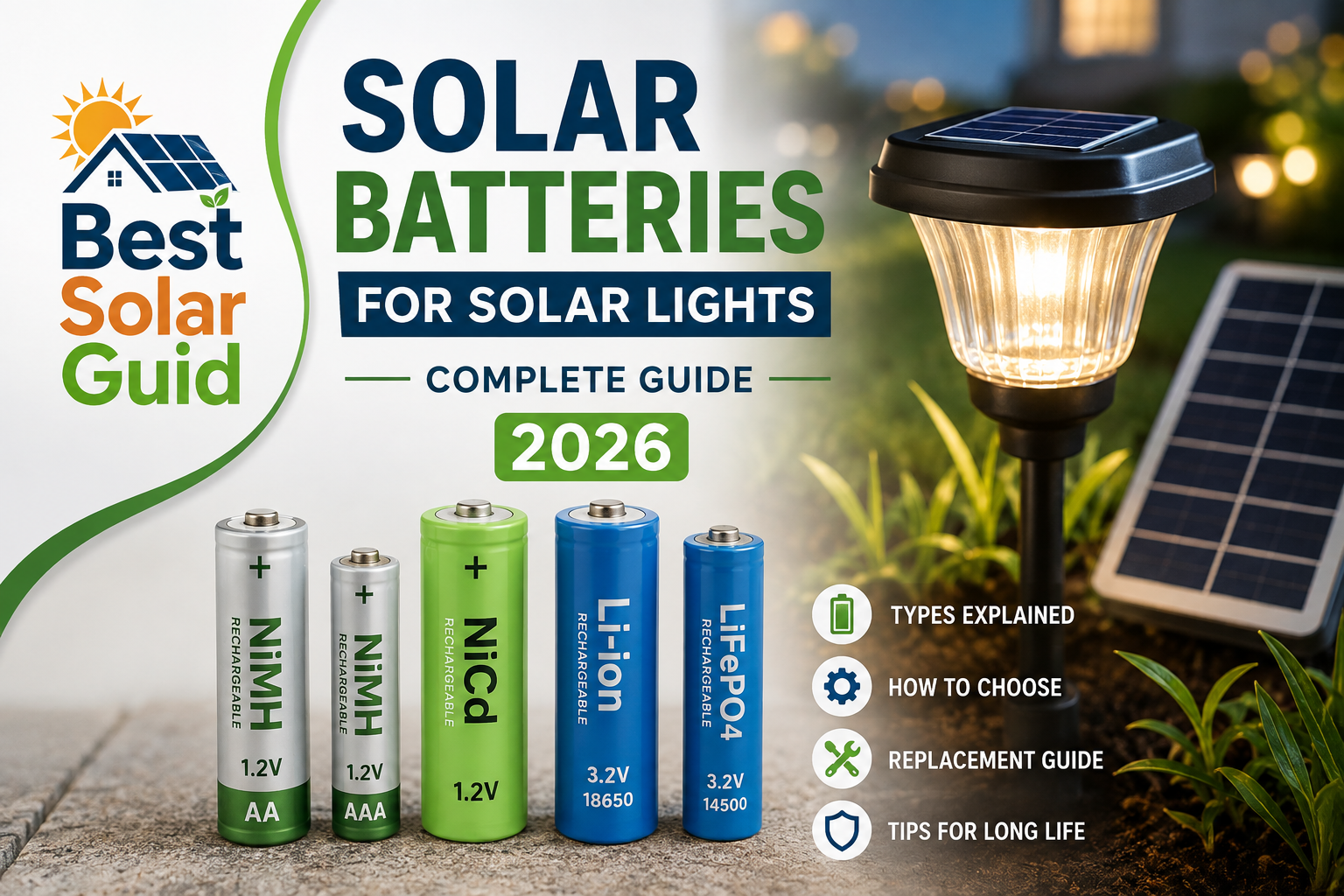
Solar Batteries for Solar Lights: Complete 2026 Guide to Types, Sizes, Lifespan, Replacement, and Best Batteries
Solar lights are one of the easiest ways to illuminate a garden, pathway, driveway, patio, balcony, fence, or outdoor area without running electrical wiring. But when a solar light becomes dim, stops working, or only stays on for an hour or two, the problem is often not the solar panel or LED.
In many cases, the battery inside the light has simply reached the end of its useful life.
Choosing the right solar batteries for solar lights can make a major difference in brightness, nighttime runtime, charging performance, reliability, and overall lifespan. However, replacing a solar-light battery is not as simple as buying any rechargeable AA or AAA battery.
Different solar lights use different battery chemistries, voltages, sizes, and charging systems.
This complete 2026 guide explains everything you need to know about solar batteries for solar lights, including the best battery types, AA and AAA batteries, NiMH vs NiCd vs lithium vs LiFePO4, battery capacity, voltage, lifespan, replacement steps, charging problems, hot-weather performance, maintenance, safety, and how to choose the right battery for your particular solar light.
Table of Content
- Quick Answer: What Are the Best Solar Batteries for Solar Lights?
- What Are Solar Batteries for Solar Lights?
- How Do Solar Lights Charge Their Batteries?
- Types of Solar Batteries for Solar Lights
- Solar Battery Comparison: NiMH vs NiCd vs Li-ion vs LiFePO4
- What Size Batteries Do Solar Lights Use?
- AA Solar Batteries: What Should You Buy?
- What Does mAh Mean on a Solar-Light Battery?
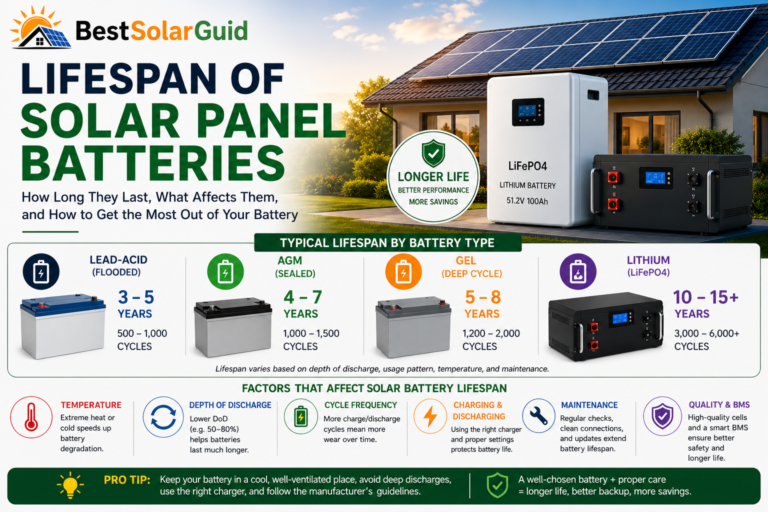
- How Long Do Solar Light Batteries Last?
- Why Do Solar Light Batteries Fail?
- How Can You Tell When a Solar Light Battery Needs Replacing?
- Solar Light Is Not Working? Check These Things First
- How to Replace Solar Light Batteries
- Can You Replace NiMH With Lithium?
- Can You Use a Higher mAh Battery in Solar Lights?
- What Is the Best Battery Capacity for Solar Lights?
- Solar Battery Runtime: How Long Should a Solar Light Stay On?
- Why Does My Solar Light Work for Only 1–2 Hours?
- Solar Batteries for Solar Lights in Hot Climates
- Solar Batteries for Solar Lights in Cold Weather
- How to Make Solar Light Batteries Last Longer
- How Often Should You Replace Solar Light Batteries?
- Are Solar Light Batteries Expensive?
- Solar Light Battery vs Home Solar Battery: What’s the Difference?
- Best Solar Batteries for Solar Lights: What Should You Look For?
- Are Low-Self-Discharge NiMH Batteries Good for Solar Lights?
- Can Solar Lights Use Rechargeable AA Batteries?
- Can Solar Lights Use AAA Rechargeable Batteries?
- What Does 1.2V Mean?
- What Does 3.2V LiFePO4 Mean?
- Can I Use a 1.5V Alkaline AA Battery Instead of a 1.2V Rechargeable Battery?
- Can I Put Two Batteries With Different Capacities Together?
- Why Is My New Solar Battery Not Charging?
- Should You Replace the Solar Light or Just the Battery?
- Safety Tips for Solar Light Batteries
- Solar Batteries for Solar Lights: Buying Checklist
- Best Solar Battery for Different Types of Solar Lights
- What Is the Best Solar Battery for Solar Lights in 2026?
- Final Verdict
- Frequently Asked Questions About Solar Batteries for Solar Lights
- Key Takeaway
Quick Answer: What Are the Best Solar Batteries for Solar Lights?
For many small residential solar garden, pathway, decorative, and outdoor lights, NiMH rechargeable batteries remain a practical and widely compatible choice, particularly when the original light was designed for a 1.2V AA or AAA NiMH cell.
For newer or higher-performance solar lights, LiFePO4 or another lithium chemistry may be better, but only when the light’s charging circuit and specifications are designed for that battery.
The most important rule is:
Never choose a replacement battery based only on its size or mAh rating. Match the battery chemistry, voltage, physical size, and charging system specified by the light manufacturer.
A 1.2V NiMH battery is not automatically interchangeable with a 3.2V LiFePO4 or 3.7V Li-ion battery, even if the cells physically look similar.
What Are Solar Batteries for Solar Lights?
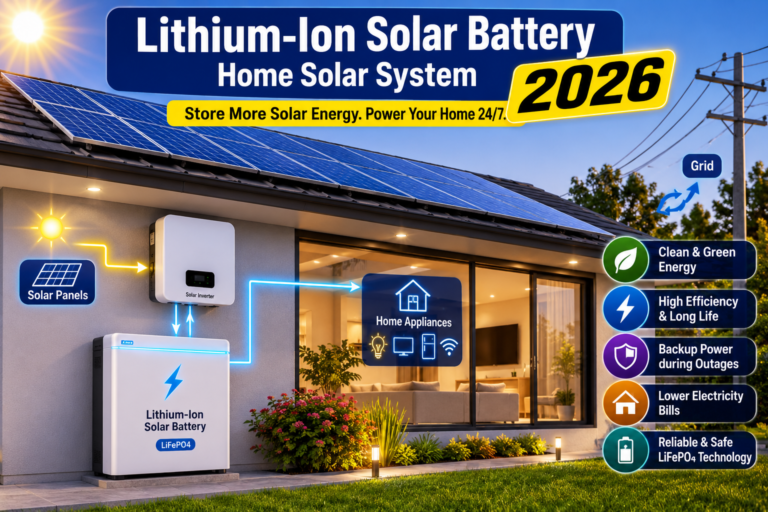
Solar batteries for solar lights are rechargeable batteries that store the electricity generated by the light’s small solar panel during daylight.
A typical solar light works through four basic stages:
Sunlight → Solar Panel → Charge Controller → Rechargeable Battery → LED Light
During the day, the solar panel converts sunlight into electrical energy. The charging circuit sends appropriate current to the rechargeable battery, which stores that energy.
When the sun goes down, a light sensor detects darkness and the stored energy is used to power the LED.
This means the battery is effectively the energy storage component of the solar light.
If the battery loses capacity, the solar panel may still be working perfectly, but the light can:
- become dim
- turn off early
- fail to turn on
- work only after very sunny days
- flash or flicker
- run for much less time than when it was new
The battery therefore plays a major role in determining how well a solar light performs at night.
How Do Solar Lights Charge Their Batteries?
A solar light does not usually charge its battery in the same way as a phone or laptop.
The solar panel is small and produces electricity only when sufficient light reaches it. A charging circuit regulates the energy going into the battery.
A simplified process looks like this:
During the Day
- Sunlight reaches the photovoltaic panel.
- The panel generates DC electricity.
- The charging circuit regulates that electricity.
- The rechargeable battery stores the available energy.
At Night
- The light sensor detects darkness.
- The solar panel stops producing useful charging energy.
- The control circuit switches the LED on.
- The battery supplies electricity to the LED.
- The battery gradually discharges until the light switches off or enters low-power mode.
This daily cycle is why solar-light batteries experience repeated charging and discharging.
Outdoor temperature, sunlight availability, battery quality, charging design, and depth of discharge all affect how long the battery remains useful.
Types of Solar Batteries for Solar Lights
There is no single battery that works in every solar light.
The main rechargeable battery chemistries you may encounter include:
- NiMH — Nickel-Metal Hydride
- NiCd — Nickel-Cadmium
- Li-ion — Lithium-Ion
- LiFePO4 — Lithium Iron Phosphate
- Lead-acid — mainly for larger specialized solar lighting systems
For ordinary residential solar garden lights, NiMH and lithium-based batteries are the most relevant choices today, while NiCd is mainly found in older products.
1. NiMH Batteries for Solar Lights
NiMH (Nickel-Metal Hydride) remains one of the most common choices for small solar garden and pathway lights.
Typical consumer solar lights may use:
- AA NiMH
- AAA NiMH
- 1.2V NiMH rechargeable cells
NiMH offers a useful balance between cost, availability, capacity, and compatibility.
Advantages of NiMH
- Widely available
- Relatively affordable
- Good choice for many small solar lights
- Less problematic than old NiCd technology
- Available in low-self-discharge versions
- Available in AA and AAA sizes
- Suitable for repeated charge/discharge use
Many solar-light batteries are in the approximate 1,000–2,000 mAh range, although actual requirements vary significantly by product.
Do not assume that the highest mAh battery is automatically the best.
A very high-capacity battery may take longer to recharge when paired with a small solar panel.
Current 2026 guides continue to identify NiMH as a practical choice for many everyday solar lights.
2. NiCd Batteries for Solar Lights
NiCd (Nickel-Cadmium) batteries were extremely common in older solar garden lights.
They are known for:
- durability
- relatively strong performance in temperature variations
- tolerance of certain charging conditions
However, NiCd batteries have important disadvantages.
They contain cadmium, a toxic heavy metal, and have historically been associated with memory-effect concerns.
For a modern replacement, NiMH is often a more environmentally friendly option when the solar light’s charging system supports it.
However, do not automatically replace a NiCd cell with NiMH simply because both are 1.2V.
The charging characteristics of different chemistries are not identical.
Always check the manufacturer’s specifications and charging circuit before changing chemistry.
3. Lithium-Ion Batteries for Solar Lights
Lithium-ion batteries provide higher energy density than traditional nickel-based batteries and are used in some modern solar lighting products.
You may encounter cylindrical lithium cells such as:
- 14500
- 18500
- 18650
However, lithium-ion cells commonly have a nominal voltage around 3.6–3.7V, depending on the cell chemistry and specification.
That is dramatically different from a typical 1.2V NiMH AA battery.
Therefore:
A 3.7V lithium-ion cell should not simply replace a 1.2V NiMH battery because the physical size appears similar.
The solar light must be specifically designed for the lithium battery and its charging requirements.
4. LiFePO4 Batteries for Solar Lights
LiFePO4 (Lithium Iron Phosphate) is becoming increasingly important in higher-quality solar lighting products.
A LiFePO4 cell typically has a nominal voltage around 3.2V, so it is not a universal replacement for 1.2V NiMH/NiCd cells.
Why LiFePO4 Is Attractive
LiFePO4 offers several advantages:
- Long cycle life
- Good thermal stability
- High usable energy
- Good durability
- Lower risk of thermal runaway compared with some other lithium chemistries
- Excellent suitability for certain outdoor and higher-performance applications
However, these benefits only apply when the solar light is designed around LiFePO4.
A LiFePO4 cell is not a drop-in replacement for every AA NiMH solar-light battery.
Recent 2026 solar-light guidance continues to emphasize LiFePO4 for compatible higher-performance outdoor fixtures.
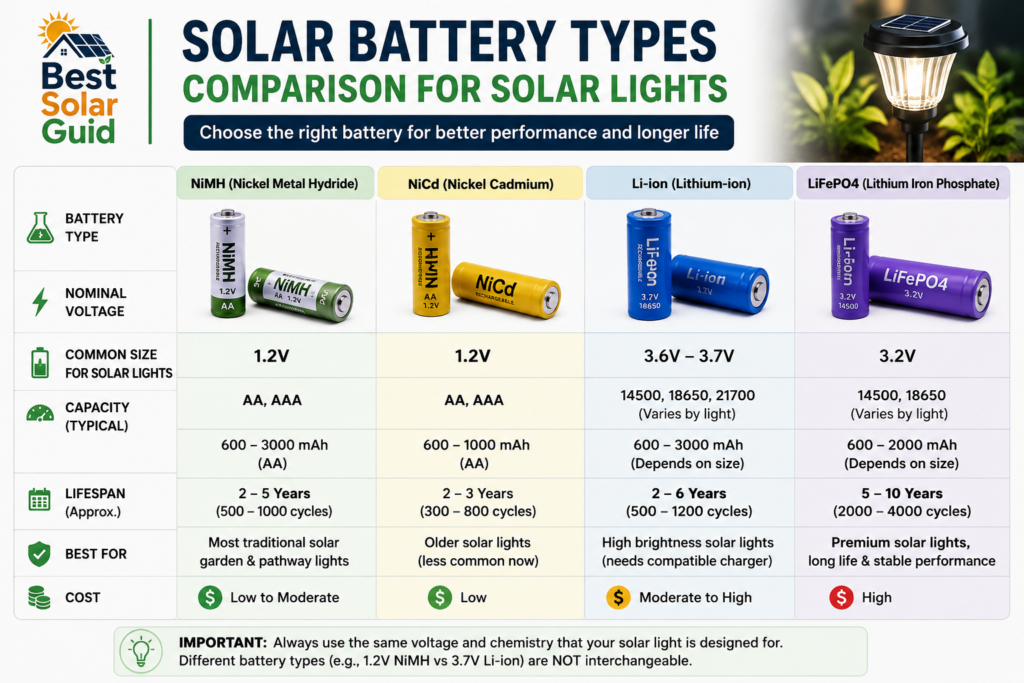
Solar Battery Comparison: NiMH vs NiCd vs Li-ion vs LiFePO4
| Battery Type | Typical Nominal Voltage | Common Solar-Light Uses | Main Advantages | Main Disadvantages |
|---|---|---|---|---|
| NiMH | 1.2V | Garden/pathway/decorative lights | Affordable, widely available, easy to find | Lower energy density than lithium |
| NiCd | 1.2V | Older solar lights | Durable, temperature tolerant | Cadmium, older technology |
| Li-ion | ~3.6–3.7V | Some modern/high-power lights | High energy density | Requires compatible charging system |
| LiFePO4 | ~3.2V | Modern/high-performance lights | Long cycle life, good thermal stability | Not compatible with ordinary 1.2V systems |
Important: Voltage and chemistry should be confirmed from the original battery, product manual, or manufacturer’s specifications before purchasing a replacement.
What Size Batteries Do Solar Lights Use?
The most common battery sizes in small solar lights include:
- AA
- AAA
- 14500
- 18500
- 18650
- Other manufacturer-specific rechargeable cells
The exact battery depends on the light.
AA Batteries
AA is particularly common in:
- solar pathway lights
- garden stake lights
- decorative lights
- small wall-mounted lights
- outdoor lanterns
AAA Batteries
AAA cells are often used in smaller decorative fixtures where there is less physical space.
14500 Batteries
A 14500 lithium cell can resemble an AA battery in physical dimensions, but its electrical characteristics are different.
This is a very important distinction.
An AA label tells you the physical format. It does not automatically tell you the chemistry or voltage.
18650 Batteries
18650 cells are larger cylindrical lithium-ion cells commonly used in higher-power equipment and some solar lighting products.
They should only be used when the fixture was designed for them.
AA Solar Batteries: What Should You Buy?
If your solar light specifically says it uses a 1.2V rechargeable AA NiMH battery, a good-quality low-self-discharge NiMH AA battery is generally a strong choice.
One example of a well-established rechargeable battery line is Panasonic’s eneloop.
Panasonic currently lists standard eneloop AA cells with a minimum capacity of 1900 mAh, while its lineup also includes higher-capacity versions. Panasonic’s published cycle-life figures depend on the testing standard used; it notes that the older “up to 2,100 cycles” figure corresponds to the older IEC test method, while the revised 2017 test method gives approximately 600 cycles under the stricter conditions.
That distinction is important because battery advertisements can sometimes make cycle-life numbers look more impressive than real-world conditions justify.
For a solar light, look beyond the headline mAh figure and consider:
- correct voltage
- correct chemistry
- low self-discharge
- reputable manufacturer
- operating temperature
- actual charging capability of the solar light
- warranty or quality assurance
What Does mAh Mean on a Solar-Light Battery?
mAh means milliamp-hours.
It describes the battery’s electrical charge capacity.
For example:
- 600 mAh
- 1,000 mAh
- 1,500 mAh
- 1,900 mAh
- 2,000 mAh
- 2,500 mAh
Generally, a higher mAh battery can store more energy at the same voltage.
But there is an important catch:
Higher mAh Does Not Always Mean Better
Suppose your solar light has a small solar panel that can only provide a limited amount of charging energy each day.
Installing a much larger battery may not produce the expected improvement because the panel may not have enough energy to recharge it fully.
For solar lighting, the best battery is the one that is well matched to the solar panel, charging circuit, LED power, and expected nighttime runtime.
This is why replacing a 1,000 mAh battery with a 3,000 mAh battery without checking the system can be a poor upgrade.
How Long Do Solar Light Batteries Last?
The lifespan of solar-light batteries varies considerably.
A realistic expectation for many consumer solar lights is around 2–3 years, but some batteries can last longer while low-quality batteries may fail much sooner.
Battery lifespan depends on:
- battery chemistry
- cell quality
- number of charge/discharge cycles
- outdoor temperature
- sunlight exposure
- charging design
- depth of discharge
- moisture
- battery storage conditions
- quality of the solar light’s electronics
Recent solar-light guidance commonly places consumer battery life around the two-to-three-year range, although this should be treated as an approximate range rather than a guarantee.
Battery lifespan depends on the battery type, charging cycles, temperature, and how frequently the solar light is used.
Why Do Solar Light Batteries Fail?
A solar light battery can fail for several reasons.
1. Heat
Heat is one of the biggest enemies of rechargeable batteries.
Outdoor solar lights can become very hot because the battery housing may sit directly beneath the sun.
High temperatures accelerate battery ageing and can reduce usable capacity.
This is particularly important in hot climates such as Pakistan, the Middle East, India, parts of Africa, Australia, and the southern United States.
2. Deep Discharge
If a solar light completely drains its battery every night and repeatedly remains deeply discharged, battery ageing can accelerate.
A weak battery may eventually reach a point where it cannot hold enough energy for normal nighttime operation.
3. Poor Charging Conditions
A dirty or shaded solar panel produces less energy.
Less energy means less charging.
A light that receives only a few hours of weak sunlight may never fully recharge its battery.
4. Water and Moisture
Outdoor lights are exposed to:
- rain
- humidity
- condensation
- irrigation
- dust
- mud
Water entering the battery compartment can corrode contacts and damage electronics.
5. Low-Quality Batteries
Cheap batteries may have:
- lower actual capacity than advertised
- high self-discharge
- inconsistent internal resistance
- poor cycle life
- weak performance in temperature extremes
A reputable battery can therefore be cheaper in the long run even when its initial purchase price is higher.
How Can You Tell When a Solar Light Battery Needs Replacing?
A battery is a likely suspect when:
- the light is noticeably dimmer
- it turns off much earlier than before
- it works after several sunny days but not after cloudy days
- it flashes or flickers
- it no longer stays on overnight
- the battery looks swollen, leaking, corroded, or damaged
- cleaning the panel does not solve the problem
- the light has been operating for several years
However, don’t immediately buy a battery.
First check the solar panel and the light’s switch.
A dirty panel can cause symptoms that look exactly like a weak battery.
Solar Light Is Not Working? Check These Things First
Before replacing the battery, follow this troubleshooting sequence.
Step 1: Clean the Solar Panel
Use a soft cloth to remove:
- dust
- dirt
- pollen
- bird droppings
- leaves
- other debris
A dirty panel can significantly reduce charging.
Step 2: Check Sunlight
Make sure the panel receives direct sunlight for several hours.
Trees, walls, roofs, buildings, and shade can reduce charging.
Step 3: Check the ON/OFF Switch
Some solar lights will not charge or operate correctly if the switch is in the wrong position.
Step 4: Inspect Battery Contacts
Look for:
- corrosion
- dirt
- rust
- loose contacts
- moisture
Step 5: Inspect the Battery
Look at the label.
Record:
- chemistry
- voltage
- size
- capacity
- manufacturer
- model number
Step 6: Replace the Battery Only If Appropriate
Install a compatible rechargeable battery rather than an ordinary disposable battery.
Cleaning the panel and contacts before installing a replacement battery is also recommended in current solar-light replacement guidance.
How to Replace Solar Light Batteries
Replacing the battery in many garden lights is relatively simple.
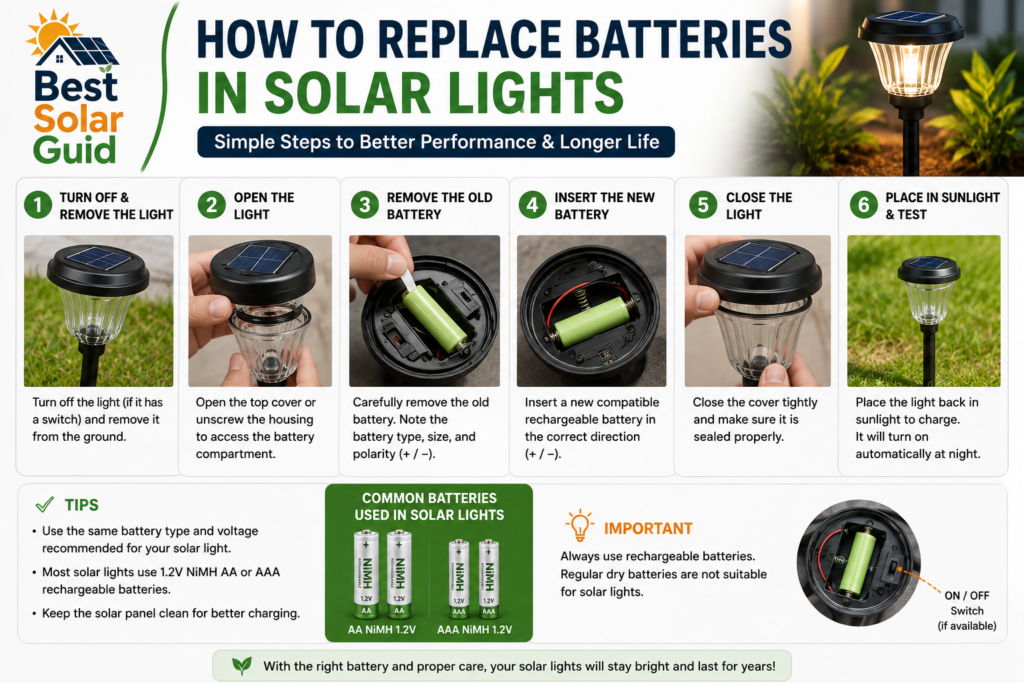
Step 1: Turn the Light Off
If your model has an ON/OFF switch, switch it off before opening the battery compartment.
Step 2: Open the Battery Compartment
Depending on the design, you may need to:
- remove a screw
- twist the top
- remove a cover
- open the bottom housing
Step 3: Remove the Old Battery
Carefully remove the battery.
Do not force it if it is stuck.
Step 4: Read the Battery Label
This is one of the most important steps.
Write down:
Size + Voltage + Chemistry + Capacity
For example:
AA + 1.2V + NiMH + 1,200 mAh
Step 5: Buy a Compatible Replacement
The replacement should match the manufacturer’s requirements.
Step 6: Clean the Contacts
Remove corrosion or dirt carefully.
Make sure everything is completely dry.
Step 7: Install the Battery Correctly
Match the positive (+) and negative (−) terminals.
Never reverse the battery.
Step 8: Close the Housing Properly
The battery compartment should be properly sealed against moisture.
Step 9: Give the New Battery Adequate Sunlight
After installation, allow the light to receive strong direct sunlight before judging its nighttime performance.
Can You Put Regular Batteries in Solar Lights?
No.
Do not replace a rechargeable solar-light battery with an ordinary disposable alkaline battery unless the manufacturer explicitly says that the fixture supports it.
Solar lights are designed around rechargeable batteries.
A disposable alkaline battery is not designed to be repeatedly charged by a solar panel.
Attempting to charge a non-rechargeable battery can cause leakage, damage, overheating, or other safety problems.
Use the rechargeable chemistry specified by the manufacturer.
Can You Replace NiMH With Lithium?
This is one of the most common questions.
Short Answer:
Not automatically.
A NiMH battery commonly has a nominal voltage of approximately 1.2V.
Many lithium-ion cells have a nominal voltage around 3.6–3.7V, while LiFePO4 cells are commonly around 3.2V.
The charging circuitry also differs.
Therefore, even if the replacement battery fits physically, it may be electrically incompatible.
Only use a lithium battery if the solar light was specifically designed for that chemistry and voltage.
This is especially important for 14500 cells, which can physically resemble AA batteries while having very different electrical characteristics.
Can You Use a Higher mAh Battery in Solar Lights?
Sometimes, but it is not always recommended.
If the original battery is:
1.2V 1,000 mAh NiMH
you might consider a:
1.2V 1,500 mAh NiMH
if the manufacturer allows it.
But simply installing the highest-capacity battery you can find is not necessarily an upgrade.
The solar panel must be capable of supplying enough energy to recharge the battery.
If the battery is too large for the available charging energy, it may spend much of its time partially charged.
A balanced system is better than a battery with the biggest number printed on the label.
What Is the Best Battery Capacity for Solar Lights?
There is no universal “best” mAh rating.
The correct capacity depends on:
- LED wattage
- nighttime operating hours
- solar panel output
- battery chemistry
- available sunlight
- charging efficiency
- light mode
- temperature
For many small AA solar lights, roughly 1,000–2,000 mAh NiMH cells are commonly encountered, but the correct specification for your light should always take priority over a generic recommendation.
Solar Battery Runtime: How Long Should a Solar Light Stay On?
Manufacturers often advertise very long runtimes, but real-world runtime can vary.
A solar light may stay illuminated for:
- only a few hours after weak charging
- much longer after a full sunny day
- less time during winter
- less time after several cloudy days
- less time when the battery is ageing
Runtime is affected by both energy stored in the battery and energy consumed by the LED.
For example, a brighter LED setting uses more energy than a low-power decorative mode.
Some modern solar lights also use motion sensors or automatic dimming to reduce energy consumption.
Why Does My Solar Light Work for Only 1–2 Hours?
A short runtime can have several causes.
Possible causes:
- Old battery
- Dirty solar panel
- Insufficient sunlight
- Shading
- Corroded battery contacts
- Weak solar panel
- Faulty charging circuit
- LED consuming more energy than expected
- Very cold or hot conditions
- Battery installed incorrectly
If the light used to work all night but now lasts only one or two hours, the battery is a strong suspect.
But if the problem started immediately after installation, inspect the panel placement, battery specification, switch, and charging system first.
Solar Batteries for Solar Lights in Hot Climates
Climate matters more than many buyers realize.
In countries such as Pakistan, outdoor solar lights can experience intense summer heat.
A battery installed inside a dark plastic enclosure under direct sunlight can become considerably hotter than the surrounding air.
This can accelerate ageing.
Tips for Hot Climates
- Choose a quality battery from a reputable manufacturer.
- Avoid placing solar lights where the battery housing receives unnecessary heat if the design allows repositioning.
- Keep the panel clean.
- Prevent water from entering the battery compartment.
- Use the chemistry specified by the manufacturer.
- Do not install an incompatible lithium cell simply because it is advertised as “high capacity.”
LiFePO4 can be attractive for compatible designs because of its thermal characteristics, but it still needs an appropriate charging and protection system.
Solar Batteries for Solar Lights in Cold Weather
Cold temperatures can also affect battery performance.
Nickel-based batteries and lithium-based batteries behave differently at low temperatures.
In cold conditions, available capacity can decrease, and charging behavior becomes especially important.
If you live in a cold climate, check the manufacturer’s stated operating and charging temperature limits.
Never assume that a battery rated for discharge at a certain temperature is automatically safe to charge at the same temperature.
Charging limits can be different from discharge limits.
How to Make Solar Light Batteries Last Longer
You can extend battery life by taking care of the complete solar-light system.
1. Keep the Solar Panel Clean
A clean panel collects more sunlight.
2. Give It Direct Sunlight
Avoid placing the panel permanently in heavy shade.
3. Keep Water Out
Make sure seals and battery covers are properly closed.
4. Use the Correct Battery
Do not experiment with incompatible chemistry or voltage.
5. Don’t Mix Batteries
If the fixture uses multiple cells, replace them as a matching set rather than mixing old and new batteries.
6. Inspect the Contacts
Corrosion increases resistance and can reduce charging and discharge performance.
7. Avoid Cheap, Unverified Cells
A battery with a realistic specification from a reputable manufacturer is usually a better long-term choice than an unknown cell with an exaggerated capacity rating.
How Often Should You Replace Solar Light Batteries?
There is no fixed replacement schedule.
Instead, replace the battery when performance has clearly degraded and troubleshooting confirms that the battery is the problem.
For many consumer solar lights, a replacement may be needed after approximately 2–3 years, although high-quality cells and favorable operating conditions can extend service life.
Are Solar Light Batteries Expensive?
For small garden lights, battery replacement is usually inexpensive compared with replacing the entire fixture.
The cost depends on:
- battery chemistry
- size
- capacity
- brand
- number of cells
- local market
- whether the battery is a standard or specialty format
Small AA/AAA NiMH cells are generally much cheaper than the large LiFePO4 batteries used in home solar-storage systems.
Do not confuse solar-light batteries with residential solar batteries.
A battery inside a garden light may cost only a small amount, while a home solar-storage battery can cost hundreds or thousands of dollars.
For example, 2026 Pakistan market reports for residential LiFePO4 storage batteries show prices in the hundreds of thousands of PKR for multi-kWh systems; those batteries are fundamentally different products from small solar-light cells.
Solar Light Battery vs Home Solar Battery: What’s the Difference?
This distinction is important.
| Feature | Solar Light Battery | Home Solar Battery |
| Typical use | Garden/path/decorative light | Home energy storage |
| Size | Small cell | Large battery pack |
| Typical voltage | Often 1.2V or a few volts | Commonly 12V, 24V, 48V/51.2V or higher |
| Capacity | Usually measured in hundreds/thousands of mAh | Usually measured in Ah/kWh |
| Charging source | Small solar panel | Full-size solar PV system/inverter |
| Cost | Relatively low | Much higher |
| Installation | Usually DIY/simple | Professional installation recommended |
This article is specifically about solar batteries for solar lights, not residential solar-storage batteries.
Best Solar Batteries for Solar Lights: What Should You Look For?
Instead of choosing a battery purely because it has the highest advertised capacity, evaluate these factors.
1. Correct Chemistry
Choose the chemistry specified by the light.
2. Correct Voltage
Voltage must match the system.
3. Correct Size
The cell must physically fit.
4. Appropriate Capacity
Higher capacity can increase runtime, but only if the solar charging system can support it.
5. Low Self-Discharge
Low-self-discharge NiMH batteries can be particularly useful in applications where the battery must retain energy between charging periods.
6. Brand and Quality
Choose reputable manufacturers where possible.
7. Temperature Performance
Outdoor lights experience greater temperature swings than indoor electronics.
8. Cycle Life
A battery designed for repeated charging is more appropriate than a general-purpose rechargeable cell that is not suited to the application.
If you are comparing battery capacity, lifespan, and performance, choosing the right solar battery type is an important first step.
Are Low-Self-Discharge NiMH Batteries Good for Solar Lights?
Yes, when the solar light is designed for NiMH.
Low-self-discharge NiMH batteries are designed to retain their stored energy better during periods when they are not being actively used.
This can be useful for solar lighting because several cloudy or low-sunlight days may reduce the energy available from the panel.
Panasonic’s current eneloop information, for example, highlights charge retention during storage and provides different capacity/cycle-life options across its range.
Can Solar Lights Use Rechargeable AA Batteries?
Yes.
Many solar lights use rechargeable AA batteries.
However, “AA” only describes the physical size format.
You still need to confirm:
- rechargeable chemistry
- voltage
- capacity
- polarity
- manufacturer requirements
For example:
AA NiMH 1.2V
and
AA-size lithium-ion 3.7V
are not electrically equivalent.
This is one of the most important things to remember when buying replacement batteries.
Can Solar Lights Use AAA Rechargeable Batteries?
Yes, if the fixture is designed for AAA cells.
AAA rechargeable NiMH batteries are commonly found in smaller solar lights.
Again, check the original battery specifications before replacement.
Never assume that an AAA lithium-ion cell can replace an AAA NiMH cell simply because both are labelled AAA.
What Does 1.2V Mean?
Voltage describes the electrical potential of the battery.
A typical NiMH rechargeable cell has a nominal voltage of approximately 1.2V.
That is why many traditional solar garden lights use 1.2V rechargeable cells.
The battery’s voltage is part of the design of the LED circuit and charging system.
Using a substantially higher-voltage cell can damage the electronics or create unsafe operating conditions.
What Does 3.2V LiFePO4 Mean?
A LiFePO4 cell commonly has a nominal voltage around 3.2V.
That is more than twice the nominal voltage of a 1.2V NiMH cell.
Therefore, a 3.2V LiFePO4 battery should only be used in a solar light designed for LiFePO4.
Can I Use a 1.5V Alkaline AA Battery Instead of a 1.2V Rechargeable Battery?
Generally, no.
The solar light’s battery system is designed around a rechargeable cell and its charging characteristics.
A normal alkaline AA battery is disposable and is not intended to be charged repeatedly by the solar panel.
Use the rechargeable battery type specified by the manufacturer.
Can I Put Two Batteries With Different Capacities Together?
It is generally better not to mix batteries of different capacities, ages, chemistries, or states of charge in the same fixture.
If your solar light uses multiple cells, use a matching set.
Mixing batteries can cause uneven charging and discharging and can reduce performance.
Why Is My New Solar Battery Not Charging?
If a new battery does not seem to work, check the following:
Solar panel
Is it clean and receiving direct sunlight?
Battery orientation
Are the positive and negative terminals correctly positioned?
Battery compatibility
Is the voltage and chemistry correct?
Switch
Is the light actually switched to the correct operating position?
Contacts
Are the contacts clean and free of corrosion?
Charging circuit
If everything else checks out, the internal charging electronics may be faulty.
A new battery cannot solve a failed charging circuit.
Should You Replace the Solar Light or Just the Battery?
Replacing the battery is usually worth trying when:
- the solar panel is clean
- the LED still works
- the housing is in good condition
- the battery is several years old
- replacement batteries are inexpensive
- the charging circuit appears functional
Replacing the entire light may make more sense when:
- the solar panel is severely degraded
- the housing has cracked
- water has damaged the electronics
- the charging circuit has failed
- replacement batteries are difficult to source
- the light is already very old or poor quality
A simple battery replacement can sometimes restore a solar light that otherwise appears to be “dead.”
Safety Tips for Solar Light Batteries
Rechargeable batteries should be handled carefully.
Never:
- use a swollen or damaged battery
- puncture a battery
- short-circuit battery terminals
- install a battery with the wrong voltage
- charge a disposable battery
- mix incompatible chemistries
- force a battery into the compartment
- use an unknown lithium cell without confirming compatibility
For lithium batteries:
Use only batteries and charging systems specifically designed to work together.
Lithium cells require appropriate charging control and protection.
If a lithium battery is swollen, damaged, unusually hot, leaking, or producing a strange smell, stop using it and follow the manufacturer’s safety/disposal instructions.
Environmental Considerations
Battery disposal matters.
NiCd batteries contain cadmium and should be handled through appropriate battery-recycling or hazardous-waste channels where available.
NiMH and lithium batteries should also be recycled through appropriate battery collection systems rather than being thrown into ordinary household waste where local regulations prohibit that practice.
Recycling helps recover valuable materials and reduces environmental impact.
Regular maintenance and timely battery replacement can help solar lights maintain better brightness and runtime.
Solar Batteries for Solar Lights: Buying Checklist
Before buying a replacement, check all of these:
- Battery chemistry
- Nominal voltage
- Physical size
- Capacity in mAh
- Number of batteries required
- Manufacturer specification
- Rechargeable designation
- Temperature requirements
- Low-self-discharge feature where appropriate
- Battery quality and reputation
- Correct polarity
- Compatibility with the solar light’s charging circuit
If you are unsure, take a photo of the old battery label and compare its specifications with the replacement.
Best Solar Battery for Different Types of Solar Lights
| Solar Light Type | Common Battery Choice | What to Prioritize |
| Small garden stake light | 1.2V NiMH AA/AAA | Compatibility and reasonable capacity |
| Pathway light | NiMH or manufacturer-specified lithium | Runtime and outdoor durability |
| Decorative solar light | NiMH AA/AAA | Cost and compatibility |
| Solar wall light | NiMH or lithium-based system | Capacity and correct voltage |
| Motion-sensor solar light | Lithium/NiMH depending on design | High usable energy and cycle life |
| High-power solar flood light | Often lithium-based | Battery capacity, BMS/protection, thermal performance |
| Commercial solar lighting | Manufacturer-specified lithium/LiFePO4 | Cycle life, temperature, safety, serviceability |
These are general categories, not universal rules. Always follow the individual light manufacturer’s specification.
What Is the Best Solar Battery for Solar Lights in 2026?
There is no single battery that deserves the title “best” for every solar light.
For traditional small garden lights designed for 1.2V rechargeable cells, a good-quality low-self-discharge NiMH battery remains one of the safest and most practical choices.
For newer, higher-power solar lights designed around lithium, lithium-based batteries can offer greater energy density and potentially longer service life.
For compatible premium outdoor systems, LiFePO4 can be an excellent choice because of its long cycle life and thermal characteristics.
The key word is compatible.
The best battery is not necessarily the most expensive battery or the battery with the highest mAh rating.
It is the battery that is properly matched to the solar light’s:
voltage + chemistry + size + charging system + energy requirement + operating environment.
Final Verdict
If you are replacing a battery in an ordinary solar garden or pathway light in 2026, start by checking the original battery.
If it says something similar to:
AA — 1.2V — NiMH
then a quality 1.2V NiMH rechargeable battery with an appropriate capacity is generally the logical replacement.
If the light specifies:
LiFePO4 — 3.2V
then use a compatible LiFePO4 battery.
If it specifies:
Li-ion — approximately 3.6/3.7V
use the correct lithium battery and charging system.
Never choose a battery only because it physically fits.
The wrong voltage or chemistry can cause poor performance, damage the electronics, or create a safety problem.
For most homeowners, the smartest approach is simple: read the original battery label, match the specifications, choose a reputable rechargeable cell, keep the solar panel clean, and protect the battery compartment from excessive moisture and heat.
That approach can restore dim solar lights, improve nighttime runtime, reduce unnecessary replacements, and help your outdoor lighting system perform reliably for years.
Key Takeaway
Solar batteries for solar lights are small but extremely important components.
The right battery can keep your lights brighter for longer, while the wrong battery can cause poor performance or damage.
Before buying, remember the four most important checks:
1. Chemistry
2. Voltage
3. Size
4. Charging compatibility
Get those four right, and you have a much better chance of getting reliable solar-light performance throughout the year.
What batteries are best for solar lights?
For many small solar garden and pathway lights, quality NiMH rechargeable batteries are an excellent choice when the fixture is designed for 1.2V NiMH cells. Newer compatible lights may use lithium-ion or LiFePO4 batteries.
How long do batteries in solar lights last?
Many consumer solar-light batteries last around two to three years, but actual lifespan depends on chemistry, quality, temperature, charging, discharge depth, sunlight, and overall light design.
Can I use regular AA batteries in solar lights?
Only if by “regular” you mean the correct rechargeable AA battery specified by the manufacturer. Do not use disposable alkaline batteries in a system designed to recharge its battery.
Is NiMH better than NiCd for solar lights?
For many modern applications, NiMH is preferable because it avoids cadmium and offers good capacity and rechargeability. However, the replacement must be compatible with the light’s charging system.
Can I use lithium batteries in solar garden lights?
Only when the solar garden light is designed for that lithium chemistry and voltage. A lithium-ion or LiFePO4 cell is not automatically compatible with a 1.2V NiMH system.
Is a higher mAh battery better?
Not necessarily. Higher capacity can provide more stored energy, but the solar panel must be capable of adequately recharging the larger battery.
Why do solar lights stop working at night?
A weak battery is a common cause, but dirty panels, insufficient sunlight, corrosion, faulty charging circuits, incorrect switch settings, and damaged electronics can also be responsible.
Why does my solar light only work for a few hours?
The battery may have lost capacity, or the solar panel may not be providing enough energy. Clean the panel, check sunlight and contacts, and inspect the battery specifications before replacing it.
Can I replace a 1.2V battery with a 3.7V battery?
No—not unless the solar light was specifically designed for that higher-voltage battery and its charging system. Physical size does not make batteries electrically interchangeable.
Are LiFePO4 batteries good for outdoor solar lights?
Yes, when the light is specifically designed for LiFePO4. They can provide long cycle life and good thermal performance, but their voltage and charging requirements differ from NiMH batteries.
Should I replace all batteries at once?
If a solar light uses multiple rechargeable cells, replacing the complete set with matching batteries is generally preferable to mixing old and new cells.
How can I make solar light batteries last longer?
Keep the solar panel clean, provide good sunlight, prevent moisture intrusion, use the correct battery chemistry and voltage, avoid incompatible replacements, and choose quality rechargeable cells.