Home Battery Storage Without Solar Maintenance Cost & Annual Budget Guide 2026
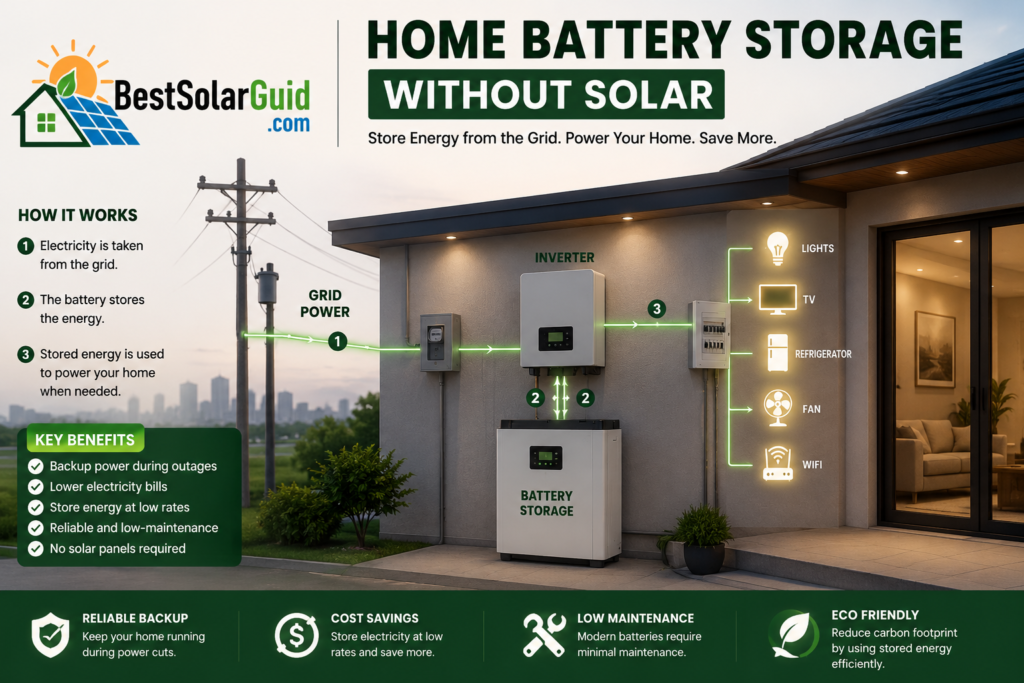
A home battery can store electricity from the grid and provide backup power when the electricity goes out. Unlike a traditional solar-plus-battery system, a home battery storage system without solar panels charges primarily from the electricity grid.
This makes home battery storage useful for homeowners who want backup power but do not have suitable roof space for solar panels, live in a rented property, or simply want to add energy storage before installing solar.
But there is one question many homeowners overlook:
How much does it cost to maintain a home battery without solar each year?
The good news is that modern lithium home batteries generally require much less routine maintenance than older lead-acid battery systems. Some systems do not require scheduled preventive maintenance at all. For example, Tesla states that Powerwall does not require pre-scheduled preventive maintenance, with owner maintenance mainly involving keeping the unit and airflow areas clear of debris.
However, a realistic annual budget should not include only cleaning. You should also consider inspections, inverter or gateway servicing, monitoring, warranty coverage, possible repair costs, and eventually battery replacement.
This guide explains the home battery storage without solar maintenance cost annual budget, what you may actually need to spend each year, and how to plan for long-term ownership in both international markets and Pakistan.
Table of Content
- What Is Home Battery Storage Without Solar?
- Why Install a Home Battery Without Solar?
- Does a Home Battery Without Solar Need Annual Maintenance?
- Home Battery Storage Without Solar Maintenance Cost: Annual Budget
- What Should Your Annual Home Battery Budget Include?
- The Most Important Cost People Forget: Battery Replacement
- Maintenance Cost vs Replacement Cost
- Does Battery Type Affect Maintenance Cost?
- Home Battery Maintenance Checklist
- What Can Increase Annual Battery Maintenance Costs?
- Home Battery Maintenance in Pakistan
- What About Lead-Acid Batteries in Pakistan?
- How Much Should a Pakistani Homeowner Budget Annually?
- Does a Home Battery Without Solar Save Money?
- Battery Degradation Is a Real Cost
- How to Reduce Home Battery Maintenance Costs
- How Warranty Can Reduce Your Annual Maintenance Budget
- What Is Usually Not Included in Routine Maintenance?
- Should You Pay for an Annual Battery Maintenance Plan?
- Is Home Battery Storage Without Solar Worth the Maintenance Cost?
- Home Battery Storage Without Solar vs Generator
- What Size Home Battery Do You Need Without Solar?
- Signs Your Home Battery Needs Professional Attention
- Home Battery Storage Without Solar Maintenance Checklist
- Frequently Asked Questions
- Final Verdict
- Conclusion
What Is Home Battery Storage Without Solar?
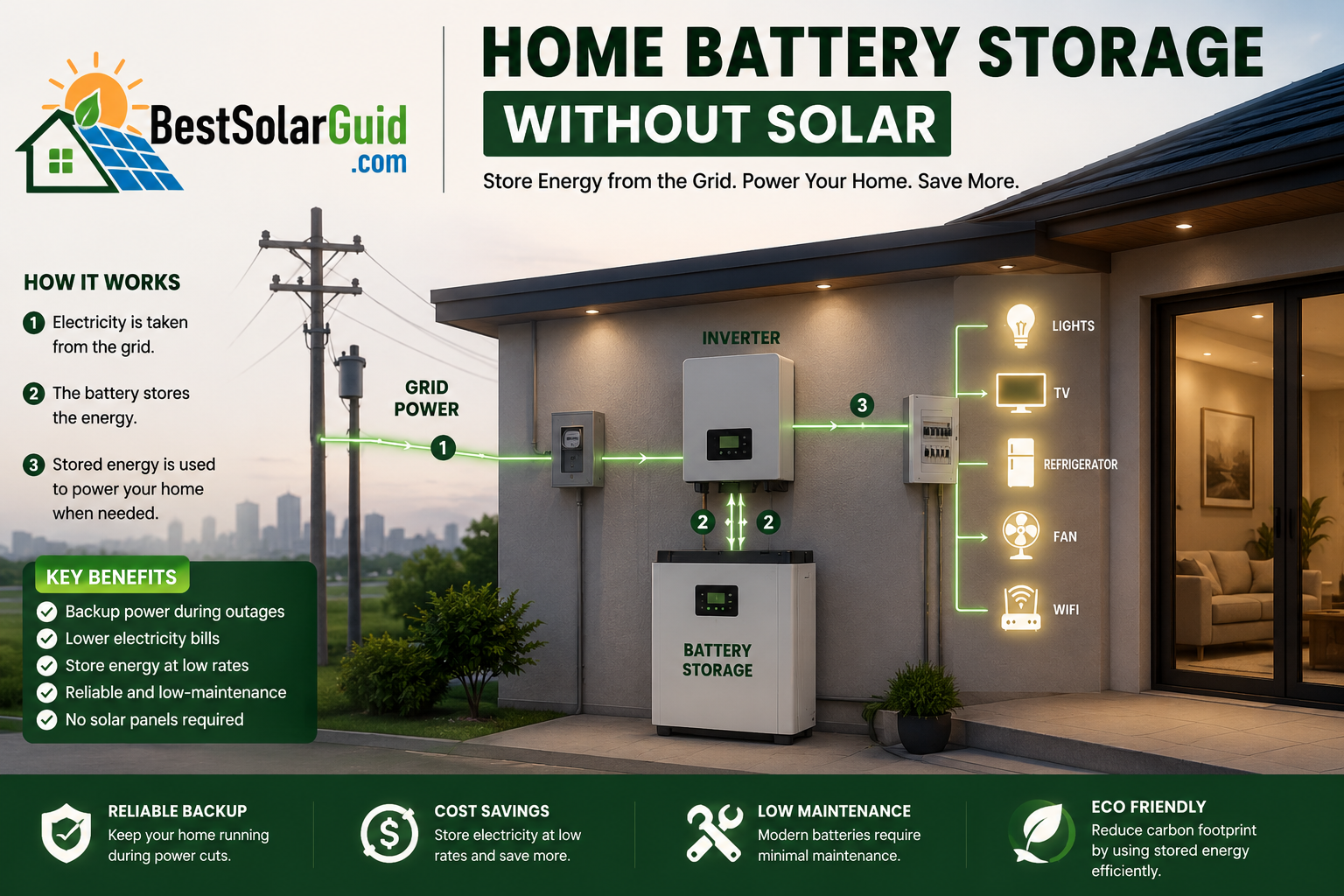
Home battery storage without solar is a residential energy-storage system that stores electricity without being connected to rooftop solar panels.
Instead of charging from solar energy, the battery can generally be charged from the electrical grid, depending on the system design and local regulations.
The basic process is:
Grid electricity → Battery charger/inverter → Home battery → Home appliances
During normal conditions, the battery can charge from the grid.
When electricity is expensive or unavailable, the system can discharge stored electricity to selected household loads.
This is different from a typical solar battery system:
Solar panels → Inverter → Battery → Home
A battery without solar therefore depends much more heavily on electricity tariffs, grid availability, battery charging rules, and how the homeowner operates the system.
Why Install a Home Battery Without Solar?
There are several reasons a homeowner may choose battery storage even without solar panels.
1. Backup Power During Outages
The most obvious benefit is backup electricity.
Depending on battery capacity and household consumption, a battery can keep essential loads operating during a power outage.
These may include:
- Lights
- Wi-Fi router
- Computers
- Security cameras
- Refrigerators
- Fans
- Medical or essential equipment
- Selected outlets
However, a battery’s backup duration depends on its usable capacity and the power demand of the appliances connected to it.
2. Use Cheaper Electricity
In markets with time-of-use electricity tariffs, homeowners may be able to charge the battery when electricity is cheaper and use stored electricity during expensive periods.
This can potentially reduce electricity costs.
However, the financial benefit depends on the difference between off-peak and peak electricity prices, battery efficiency, degradation, financing costs, and local tariffs.
3. No Solar Installation Required
A homeowner may want energy storage but may not want to install solar panels.
For example:
- The roof may be unsuitable.
- The property may be rented.
- There may be shading.
- The homeowner may plan to install solar later.
- Solar installation may not be financially attractive in the short term.
4. Energy Independence
A battery can provide a degree of protection from grid interruptions.
It does not necessarily make a home completely off-grid, but it can reduce dependence on the grid for short periods.
Does a Home Battery Without Solar Need Annual Maintenance?
Usually, modern lithium-ion home batteries require relatively little routine maintenance.
This is one of the biggest differences between modern home battery systems and older lead-acid battery banks.
For example, Tesla’s Powerwall documentation says that the Powerwall and Gateway do not require scheduled preventive maintenance. The owner is mainly responsible for keeping the unit clear of debris and ensuring that the system remains operational.
That does not mean you should completely ignore the battery.
A sensible annual maintenance budget can include:
- Visual inspection
- System performance check
- Monitoring and software checks
- Cleaning around the unit
- Electrical inspection when appropriate
- Inverter or gateway inspection
- Professional service when required
- Unexpected repair allowance
The actual amount can range from almost zero for basic owner-maintained systems to several hundred dollars per year for systems requiring professional service or additional equipment.
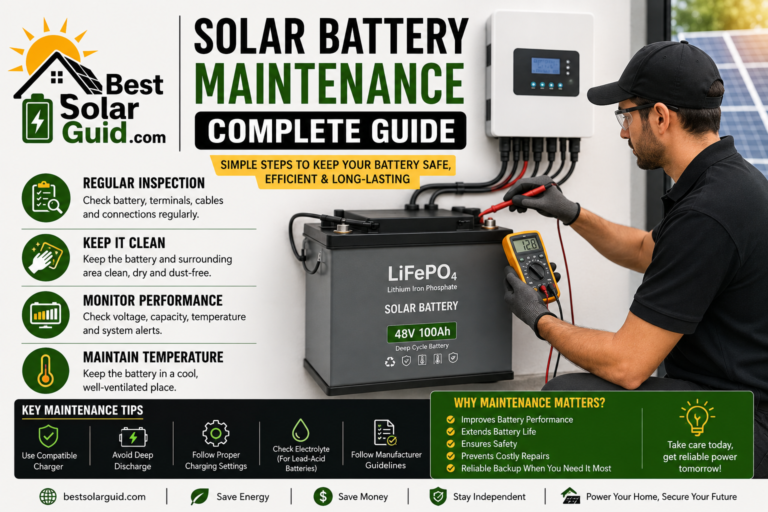
For a detailed maintenance checklist, inspection routine, and battery-care tips, read our complete solar battery maintenance guide.
Home Battery Storage Without Solar Maintenance Cost & Annual Budget
There is no universal maintenance price because home battery systems differ significantly.
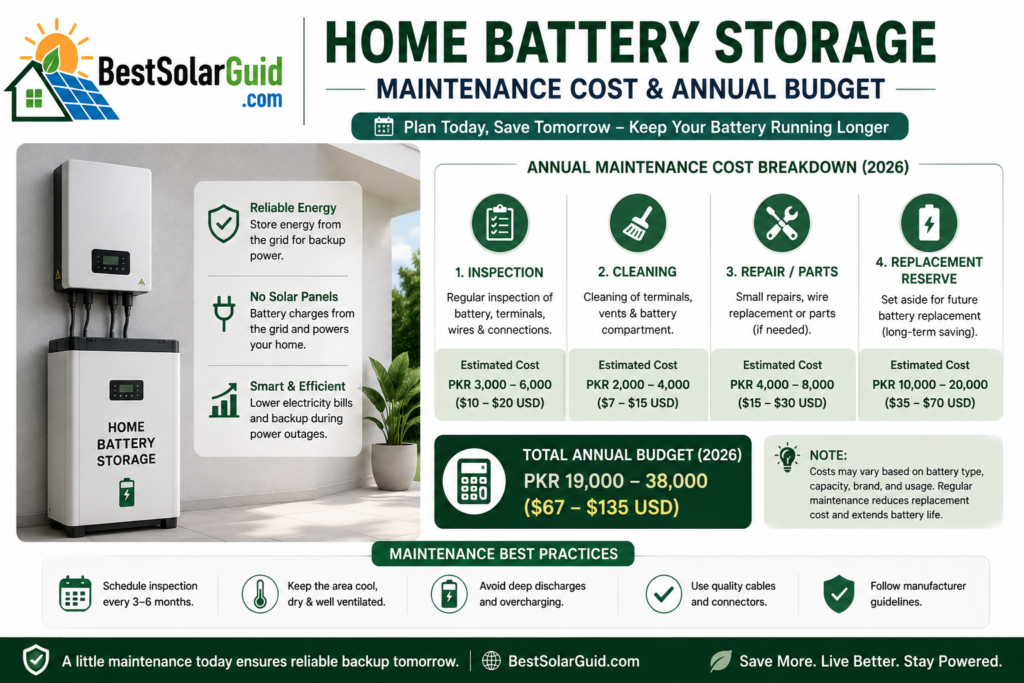
A useful planning approach is to divide annual ownership costs into three levels.
Basic Maintenance Budget
Approximate planning range: $0–$150 per year
This may apply when:
- The battery is under warranty.
- The system is a modern lithium battery.
- No scheduled professional service is required.
- The owner performs basic visual checks.
- The inverter and battery are functioning normally.
Some manufacturers explicitly state that their systems do not require scheduled preventive maintenance. Tesla is one example.
Standard Maintenance Budget
Approximate planning range: $100–$350 per year
This can be a reasonable budgeting range for homeowners who want to allow for occasional inspection, cleaning, monitoring, and minor service.
A current 2026 market estimate places basic home battery maintenance around $100–$350 annually, although actual costs vary significantly by system and location.
Higher-Service Budget
Approximate planning range: $250–$600+ per year
A larger budget may make sense when the system includes:
- Separate inverter
- Backup gateway
- Critical-loads panel
- Complex electrical equipment
- Professional annual inspection
- Extended service plan
- Older equipment
- More demanding operating conditions
This does not mean every homeowner will spend $600 every year.
It is better understood as a reserve for systems with higher service requirements.
What Should Your Annual Home Battery Budget Include?
A smart annual budget should not simply say:
“Battery maintenance = $200.”
Instead, divide the budget into different categories.
| Annual Cost Category | Typical Budget Consideration |
|---|---|
| Basic owner inspection | $0–$50 |
| Cleaning/airflow maintenance | $0–$50 |
| Professional inspection | $100–$300+ |
| Inverter/gateway service | Varies |
| Minor repairs | Varies |
| Software/monitoring | Often included, but depends on system |
| Extended warranty/service plan | Depends on provider |
| Battery replacement reserve | Separate long-term budget |
These are planning ranges, not fixed market prices.
Local labor costs, equipment design, manufacturer requirements, and warranty coverage can change the actual cost considerably.
The Most Important Cost People Forget: Battery Replacement
Maintenance and replacement are not the same thing.
A homeowner might spend very little on annual maintenance but still need to plan for eventual battery replacement.
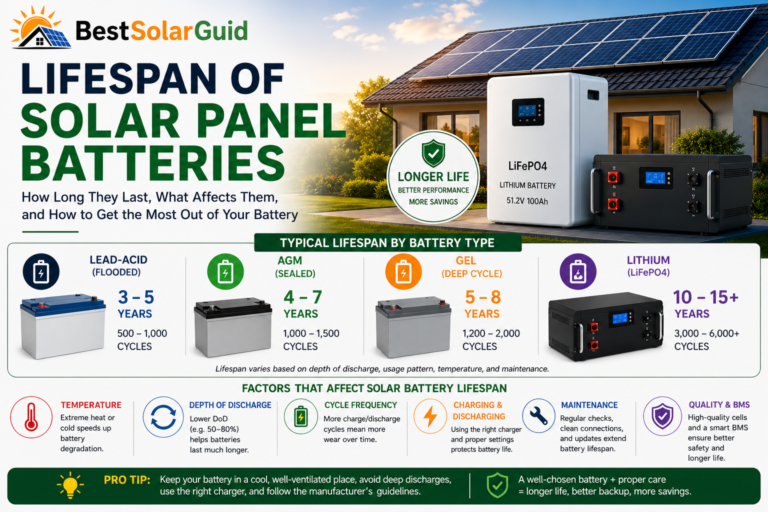
Rechargeable batteries gradually lose usable capacity as they age.
This means your long-term ownership budget should include a replacement reserve, even if you do not expect to replace the battery soon.
For example, if you expect a future replacement to cost $8,000 and want to spread that cost over 10 years:
$8,000 ÷ 10 = $800 per year
That does not mean you will literally pay $800 every year.
Instead, it gives you a way to think about the battery’s long-term cost.
This distinction is extremely important when calculating the real cost of home energy storage.
Maintenance Cost vs Replacement Cost
These two costs should always be separated.
Maintenance Cost
Maintenance includes:
- Inspection
- Cleaning
- Monitoring
- Minor service
- Professional checks
Replacement Cost
Replacement includes:
- New battery
- New inverter if necessary
- Labor
- Disposal/recycling
- Installation
- Electrical modifications
A battery can have very low maintenance requirements while still representing a significant long-term replacement expense.
Does Battery Type Affect Maintenance Cost?
Absolutely.
The battery chemistry has a major effect on maintenance requirements.
Lithium-Ion Batteries
Most modern residential storage systems use lithium-based technology.
Advantages include:
- Low routine maintenance
- No electrolyte refilling
- High usable capacity
- Integrated battery management systems
- Good cycle performance
Maintenance generally focuses on monitoring, temperature, physical condition, connections, and system alerts.
LiFePO4 Batteries
Lithium iron phosphate, or LiFePO4, is increasingly used in stationary storage.
These batteries generally require little routine hands-on maintenance.
However, homeowners should still follow the manufacturer’s instructions for:
- Charging
- Temperature
- Storage
- Installation
- Battery management
- Troubleshooting
Flooded Lead-Acid Batteries
Flooded lead-acid batteries require more hands-on maintenance.
Depending on the manufacturer, maintenance may include:
- Electrolyte-level checks
- Water replacement
- Terminal inspection
- Corrosion control
- Ventilation checks
- Charging checks
This can make the total maintenance burden higher than for modern sealed lithium systems.
AGM and Gel Batteries
AGM and gel batteries generally require less maintenance than flooded lead-acid batteries.
They do not normally require routine water refilling.
However, they still need appropriate charging settings, temperature management, and periodic inspection.
Home Battery Maintenance Checklist
A simple annual maintenance routine can help identify problems before they become expensive.
Monthly Quick Check
You do not necessarily need a technician every month.
Check:
- Is the battery operating normally?
- Are there warning messages?
- Is the battery unusually hot?
- Is backup performance normal?
- Is the monitoring app showing any errors?
- Is anything blocking the battery’s airflow?
Every 3–6 Months
Depending on the manufacturer:
- Inspect the surrounding area.
- Check for dust and debris.
- Check cables and visible connections.
- Review battery performance.
- Check inverter/gateway alerts.
- Look for physical damage.
Once a Year
Consider a professional inspection if:
- The manufacturer recommends it.
- The system has a separate inverter.
- The battery is older.
- You notice unusual performance.
- The system frequently reports errors.
- You want a preventive electrical inspection.
Again, some modern systems do not require scheduled professional preventive maintenance, so the manufacturer’s instructions should take priority.
What Can Increase Annual Battery Maintenance Costs?
Several factors can increase your yearly expenses.
1. Older Battery Systems
Older systems may require more inspection and repair than newer integrated lithium systems.
2. Separate Inverter
Some batteries include integrated power electronics, while others require a separate inverter.
A separate inverter introduces another piece of equipment that may require inspection or eventual replacement.
3. Backup Gateway
Some whole-home backup systems use additional control equipment.
More components mean more potential service requirements.
4. Harsh Climate
Extreme temperatures can affect battery operation and may increase the importance of temperature management.
Tesla, for example, notes that Powerwall can limit charging or discharging at temperature extremes to protect battery life.
5. Poor Installation
An incorrectly installed battery system can create additional service problems.
Proper installation is therefore part of long-term maintenance planning.
Home Battery Maintenance in Pakistan
Home battery storage is particularly relevant in Pakistan because many households experience grid interruptions and may want backup electricity.
However, the maintenance strategy depends strongly on the battery technology.
For a modern lithium battery system, homeowners should focus on:
- Temperature
- Ventilation where required
- Battery monitoring
- Inverter settings
- Electrical connections
- Error codes
- Physical condition
Pakistan’s hot summers make temperature management especially important.
A battery installed in an extremely hot, poorly ventilated room may operate under more stressful conditions than one installed in a suitable environment.
What About Lead-Acid Batteries in Pakistan?
Lead-acid batteries remain common in backup and UPS applications.
Their maintenance burden can be higher because some types require:
- Water checks
- Terminal cleaning
- Corrosion inspection
- Ventilation
- Regular charging checks
For homeowners who want the lowest routine maintenance, a modern lithium-based home storage system may be easier to manage, although its upfront cost can be higher.
How Much Should a Pakistani Homeowner Budget Annually?
There is no single nationwide maintenance price because technician rates and equipment vary by city, installer, battery brand, and system size.
For a modern lithium home battery, a homeowner may have very little routine maintenance expense if the system is under warranty and operating normally.
A sensible budget could therefore be divided into:
Routine Maintenance Reserve
Set aside money for:
- Inspection
- Cleaning
- Minor electrical service
- Occasional technician visits
Repair Reserve
Keep a separate emergency amount for:
- Inverter faults
- Communication problems
- Cooling problems
- Electrical components
- Out-of-warranty repairs
Replacement Reserve
This is the most important long-term category.
Instead of assuming that the battery will last forever, plan for eventual replacement.
Important: Pakistan prices vary significantly by battery capacity, brand, exchange rates, import costs, installation, and market conditions. For that reason, it is better to use current local quotations rather than publish one permanent rupee figure.
Does a Home Battery Without Solar Save Money?
This is a more complicated question than simply looking at maintenance cost.
Without solar panels, the battery generally needs to purchase electricity from the grid.
Its financial value can come from:
- Buying electricity at cheaper times.
- Using stored electricity during expensive periods.
- Avoiding losses caused by outages.
- Providing backup power.
- Reducing dependence on a generator.
If electricity has a flat tariff, the financial savings from charging and discharging the battery may be limited.
If electricity prices vary significantly between cheap and expensive periods, the economics can be more attractive.
Example: How Grid-Charged Battery Savings Work
Imagine a hypothetical battery system that charges using electricity at:
$0.10/kWh
and later offsets electricity that would have cost:
$0.25/kWh
At first glance, the difference is:
$0.25 − $0.10 = $0.15/kWh
But you cannot assume that the full $0.15 is profit.
You must also consider:
- Battery charging losses
- Inverter losses
- Battery degradation
- Maintenance
- Financing
- Installation cost
- Fixed electricity charges
This is why a home battery should not be judged only by the difference between peak and off-peak electricity prices.
Battery Degradation Is a Real Cost
Every time a battery charges and discharges, some wear occurs.
The amount of degradation depends on:
- Battery chemistry
- Depth of discharge
- Temperature
- Charging rate
- Number of cycles
- Operating conditions
- Battery age
A 2026 research paper on residential battery energy management highlights why degradation should be included when evaluating the economics of battery cycling; aggressive cycling can create costs that simple electricity-price calculations overlook.
This means that a battery should not be cycled aggressively just to save a small amount of money.
How to Reduce Home Battery Maintenance Costs
You can reduce unnecessary maintenance expenses by taking a few practical steps.
1. Choose a Low-Maintenance Battery
Modern lithium systems generally require less hands-on maintenance than flooded lead-acid batteries.
2. Use an Experienced Installer
Good installation can prevent many avoidable problems.
3. Keep the Battery Environment Suitable
Avoid excessive heat, moisture, dust, and blocked airflow.
4. Monitor the System
Use the manufacturer’s app or monitoring system where available.
5. Do Not Ignore Error Messages
Small problems can become expensive if ignored.
6. Follow the Manufacturer’s Instructions
Do not modify charging settings or attempt repairs without understanding the system.
7. Keep Warranty Documentation
Save:
- Purchase invoice
- Installation documents
- Warranty
- Battery model number
- Serial number
- Service records
This can save money if a covered failure occurs.
How Warranty Can Reduce Your Annual Maintenance Budget
Warranty coverage can significantly affect your financial planning.
For example, Enphase’s current U.S. warranty documentation for certain IQ Battery models specifies coverage based on a combination of time, discharged cycles, and energy throughput, with some models covered for up to 10 years subject to the stated conditions.
Tesla’s Powerwall warranty documentation also highlights the importance of following operating and maintenance requirements. Its current documentation states that reliable internet connectivity is required to maintain the full 10-year warranty under the specified terms.
This shows why homeowners should not simply ask:
“How much does battery maintenance cost?”
They should also ask:
“What does my warranty cover, and what conditions do I need to meet?”
What Is Usually Not Included in Routine Maintenance?
Homeowners sometimes assume that every future battery expense is part of maintenance.
It usually is not.
Potential additional costs include:
- Battery replacement
- Inverter replacement
- Gateway replacement
- Major electrical repairs
- Labor outside warranty
- Relocation of the battery
- Upgrading the system
- Electrical panel upgrades
- Emergency service
- Damage caused by improper installation or unauthorized modification
Tesla’s warranty documentation, for example, specifies exclusions related to unauthorized modification or repair and normal battery degradation.
Always read the warranty for your specific model.
Should You Pay for an Annual Battery Maintenance Plan?
Not necessarily.
An annual service plan can make sense when:
- The battery manufacturer recommends regular service.
- The system is large or complex.
- The battery is outside warranty.
- You have a separate inverter and gateway.
- You want professional monitoring.
- The system is difficult to inspect yourself.
But if the manufacturer explicitly states that no scheduled preventive maintenance is required, paying for a generic annual maintenance contract may not provide much additional value.
The better approach is to check the manufacturer’s requirements first.
Home Battery Storage Without Solar: Annual Budget Example
Consider a hypothetical homeowner with a modern lithium home battery.
Basic annual budget
- Owner inspection: $0
- Routine cleaning: $0–$25
- Occasional professional check: $0–$150
- Minor service reserve: $50–$100
Possible annual planning budget: around $50–$275
Now consider a more complex system with a separate inverter, gateway, and professional service.
Higher-service annual budget
- Professional inspection: $150–$300
- Minor service reserve: $50–$150
- Monitoring/service plan: varies
- Repair reserve: $100+
Possible planning budget: $300–$600+
These figures are budgeting examples, not guaranteed annual charges.
Is Home Battery Storage Without Solar Worth the Maintenance Cost?
For many homeowners, the answer depends on what they want the battery to accomplish.
It May Be Worth It If:
- You experience frequent outages.
- You need reliable backup power.
- You have time-of-use electricity pricing.
- Electricity prices vary significantly throughout the day.
- You cannot install solar.
- You want to install solar later.
- You want an alternative to a fuel generator.
It May Be Less Attractive If:
- Your electricity supply is extremely reliable.
- Your electricity tariff is flat.
- You rarely need backup power.
- The battery is expensive relative to the savings.
- You are buying the system purely to reduce bills without analyzing tariffs and battery degradation.
A battery should therefore be evaluated based on both financial savings and backup value.
Home Battery Storage Without Solar vs Generator
For backup applications, homeowners often compare batteries with fuel generators.
Battery Advantages
- Quiet operation
- No fuel storage
- Low routine maintenance
- Fast automatic backup
- No exhaust fumes
- Can be used indoors when installed according to applicable requirements
Generator Advantages
- Can operate for extended periods with fuel
- Suitable for very high loads depending on generator size
- Does not depend on battery capacity
Battery Disadvantage
Once the battery is depleted, it needs to recharge.
A generator can continue operating as long as it has an appropriate fuel supply.
For many homes, the best solution depends on outage duration, load requirements, local fuel availability, and budget.
What Size Home Battery Do You Need Without Solar?
Maintenance cost is only one part of the decision.
You also need the correct battery size.
For example, if your essential loads consume:
1 kW
and you have a battery with:
10 kWh usable capacity
the theoretical runtime would be approximately:
10 hours
But real-world runtime will be lower or different depending on:
- Inverter efficiency
- Battery reserve
- Load changes
- Temperature
- Battery condition
- Manufacturer operating limits
A larger battery does not automatically mean better value.
The correct size depends on what you actually need to run during an outage.
Signs Your Home Battery Needs Professional Attention
Contact a qualified technician if you notice:
- Battery swelling
- Unusual heat
- Burning smell
- Smoke
- Leakage
- Repeated system errors
- Sudden loss of capacity
- Unexpected shutdowns
- Damaged cables
- Unusual sounds
- Charging problems
- Inverter faults
Do not attempt to open a sealed lithium battery or repair internal components yourself.
Home Battery Storage Without Solar Maintenance Checklist
- Check the battery’s operating status.
- Review the monitoring app.
- Check for warning messages.
- Keep the area around the battery clear.
- Check ventilation and airflow requirements.
- Inspect visible cables and equipment.
- Look for physical damage.
- Watch for unusual heat or smell.
- Review backup performance.
- Keep warranty documents.
- Follow manufacturer maintenance instructions.
- Schedule professional service if recommended.
- Maintain a repair reserve.
- Plan for eventual battery replacement.
Final Verdict
A home battery storage system without solar can be a practical solution for backup power and, in some electricity markets, for reducing electricity costs through time-of-use energy management.
The good news is that modern lithium battery systems are generally low-maintenance. Some manufacturers do not require scheduled preventive maintenance, which means homeowners may spend little or nothing on routine service in a normal year.
However, a smart annual budget should go beyond basic maintenance. Homeowners should consider occasional professional inspections, inverter or gateway service, unexpected repairs, warranty conditions, and—most importantly—the eventual cost of battery replacement.
For a modern residential lithium system, $100–$350 per year can be used as a practical general maintenance-planning range, while more complex systems may justify a larger reserve. These are planning figures rather than fixed industry prices.
For Pakistani homeowners, the same principle applies, but local technician rates, battery brands, exchange rates, import costs, electricity tariffs, and climate conditions can significantly change the economics.
The best home battery is not simply the one with the lowest maintenance cost. It is the one whose capacity, warranty, operating requirements, service support, and total lifetime cost match your actual energy and backup needs.
Conclusion
Home battery storage without solar can provide reliable backup electricity without requiring a rooftop solar system, and modern lithium batteries make ownership much easier because routine maintenance is generally minimal. However, homeowners should still monitor the system, maintain suitable operating conditions, keep the equipment area clear, and follow the manufacturer’s instructions.
When planning your annual budget, separate routine maintenance from repairs, equipment replacement, and battery degradation. This gives you a much more realistic picture of the true cost of owning a home energy-storage system.
For most homeowners, the smartest approach is not to spend money on unnecessary maintenance but to keep a reasonable annual service reserve, understand the warranty, monitor battery performance, and plan ahead for eventual replacement.
Whether you are considering battery storage in the United States, United Kingdom, Australia, Pakistan, or another market, the same rule applies: calculate the total lifetime cost—not just the installation price or annual maintenance bill—before deciding whether a home battery without solar is right for you.
How much does it cost to maintain a home battery without solar?
Modern lithium systems may require very little routine maintenance. A reasonable planning range can be approximately $100–$350 per year for basic inspection and service needs, while more complex systems may justify a larger reserve. Actual costs vary by manufacturer, location, system design, and warranty coverage.
Can you use a home battery without solar panels?
Yes. Some residential battery systems can charge from the electrical grid and provide stored electricity later. The exact functionality depends on the battery, inverter, utility rules, and system configuration.
Do home batteries need annual servicing?
Not always. Some modern batteries do not require scheduled preventive maintenance. Tesla, for example, states that Powerwall does not require pre-scheduled preventive maintenance.
Does a lithium home battery need maintenance?
Usually very little. Owners should still monitor the system, keep the area clear, watch for warnings, and follow manufacturer instructions.
Is battery maintenance expensive?
For modern lithium systems, routine maintenance can be relatively inexpensive. Unexpected repairs, inverter problems, or replacement costs can be much more significant.
Does a battery without solar save money?
It can, particularly where electricity prices vary between peak and off-peak periods. However, savings must account for charging losses, battery degradation, maintenance, installation costs, and tariffs.
How long does a home battery last?
Battery life depends on chemistry, cycles, temperature, depth of discharge, operating conditions, and manufacturer specifications. Warranty terms are a useful starting point when comparing systems.
What is the biggest long-term cost of home battery storage?
For many homeowners, the biggest long-term cost is not routine cleaning or inspection but eventual battery replacement and, depending on the system, inverter or other equipment replacement.
Is home battery storage without solar worth it in Pakistan?
It can be valuable for backup power, particularly where grid interruptions are a concern. Financial savings are more complicated and depend on electricity tariffs, battery cost, charging source, battery efficiency, and how often the system is used.