Solar Energy Storage Benefits for Homeowners in 2026
Introduction
If you’ve installed solar panels, or you’re thinking about it, you’ve probably run into one nagging question: what happens to all that electricity your panels make when you’re not home to use it? That’s the gap battery storage fills. Heading into 2026, more homeowners than ever are closing that gap on purpose, not as an afterthought.
This isn’t a niche upgrade anymore. It’s quickly becoming the default way people think about going solar — panels for generation, a battery for control. Let’s walk through exactly why that shift is happening, what it means for your wallet and your peace of mind, and how to figure out if it makes sense for your own home.
Table of Contents
- What Is Solar Energy Storage?
- Why 2026 Is a Turning Point for Home Battery Storage
- Key Benefits of Solar Energy Storage for Homeowners
- How Much Can You Really Save?
- Choosing the Right Battery for Your Home
- Incentives and Financing in 2026
- Is Solar Battery Storage Worth It in 2026?
- Final Thoughts
What Is Solar Energy Storage?
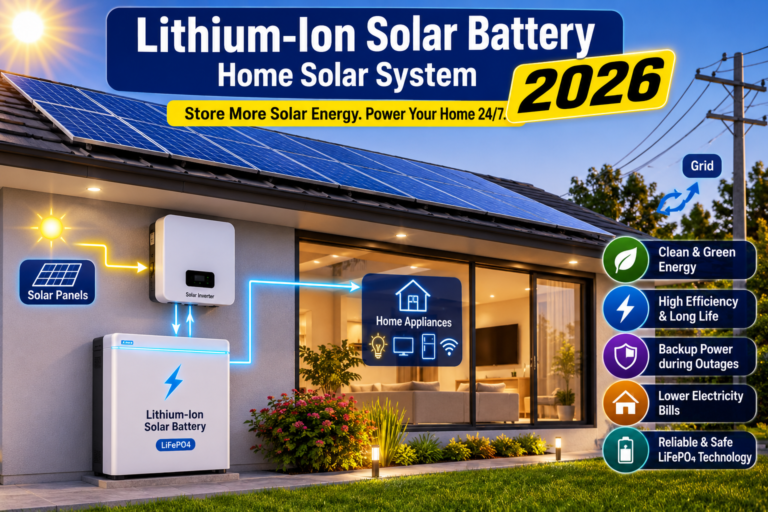
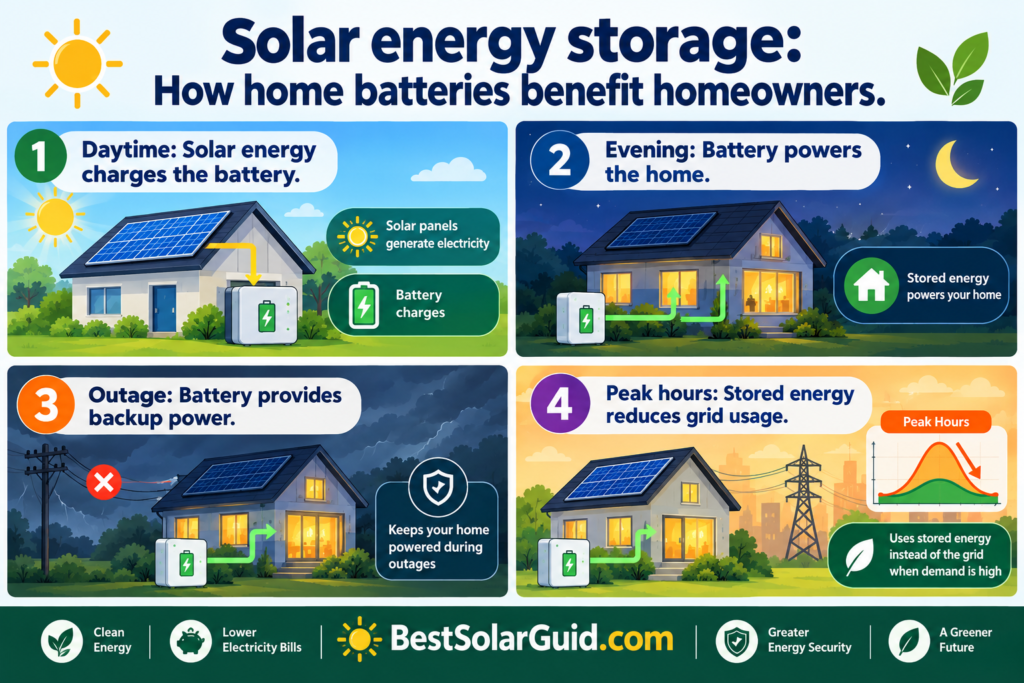
At its core, solar energy storage is pretty simple. Your solar panels generate electricity during daylight hours, often more than your home is using at that exact moment. Instead of letting that surplus flow straight back to the utility grid for a modest credit, a home battery captures it and holds onto it.
That stored power then becomes available whenever you actually need it: after sunset, during a rate-hike window in the late afternoon, or the moment your neighborhood loses power in a storm. It’s less about generating more electricity and more about using the electricity you already generate more intelligently.
Why 2026 Is a Turning Point for Home Battery Storage
A few things are converging this year that make storage more relevant than it was even two or three years ago.
First, the policy landscape has shifted. The federal Residential Clean Energy Credit, previously known as the federal solar tax credit, expired at the end of 2025, though the credit still applies to commercial solar owners. That change has pushed many homeowners to lean more heavily on state programs, utility rebates, and grid-services payments to make the numbers work, and batteries often play a central role in that math.
Second, weather-related grid instability keeps making headlines. Wildfires, ice storms, hurricanes, and planned safety shutoffs have made a lot of households realize that “the grid will just be there when I need it” isn’t a safe assumption anymore.
Third, battery technology and pricing have both matured. Lithium iron phosphate (LFP) chemistry, known for being safer and longer-lasting than older lithium-ion formulas, has become the standard choice for residential systems, and smart software that manages charging and discharging automatically is now common rather than a premium add-on.
Key Benefits of Solar Energy Storage for Homeowners
Lower Electricity Bills Through Energy Arbitrage
This is the benefit most homeowners care about first, and for good reason. Many utilities now charge time-of-use rates, meaning electricity costs significantly more during peak hours, often late afternoon into evening, exactly when solar production is winding down and household demand is ramping up.
A battery lets you sidestep that mismatch. You store cheap, or free if it’s your own solar, daytime energy and draw on it during the expensive hours instead of pulling from the grid at peak rates. Depending on your utility’s rate structure, that kind of shifting can meaningfully shorten how long it takes your overall solar-plus-storage investment to pay for itself.
Backup Power During Outages
Ask most people why they finally decided on a battery, and outage protection is usually near the top of the list. A properly sized system can keep essentials running when the grid goes down, refrigerators, medical equipment, Wi-Fi, lighting, a well pump, without needing a noisy, fuel-dependent generator.
In a 2026 industry snapshot, 65% of homeowners named reducing energy bills as the most valuable benefit of a home battery, while 55% pointed to outage protection, and most buyers end up weighing both when making a purchase decision. That tells you something important: this isn’t an either/or decision for most people. It’s usually both.
Greater Energy Independence
There’s a psychological benefit here that’s easy to underestimate. Once your home can generate, store, and manage its own power, you’re no longer entirely at the mercy of utility pricing decisions or grid conditions outside your control. You still stay connected to the grid in most setups, but it becomes a backup for your system rather than the other way around.
A Smaller Carbon Footprint
If your local grid still leans heavily on coal or natural gas, using stored solar power instead of pulling from that grid directly reduces the fossil fuel generation your household relies on. It’s a quieter benefit than bill savings, but for many homeowners it’s just as motivating.
Smart Home Integration
Modern battery systems increasingly connect with broader smart home ecosystems, monitoring apps that show real-time usage, automated charge and discharge scheduling based on your utility’s rate windows, and integration with EV chargers or other electrified appliances. This turns your energy setup from a passive system into something you can actively manage from your phone.
Protection Against Rising Utility Rates
Utility rates have a well-documented history of climbing over time. A solar-plus-storage system effectively locks in a portion of your energy costs at today’s investment price, insulating you somewhat from future rate hikes in a way that relying purely on the grid never can.
How Much Can You Really Save?
Savings vary a lot depending on your local rate structure, battery size, and how much sun your roof gets, so treat any specific number as a rough estimate rather than a promise. That said, in aggressive time-of-use markets where the gap between peak and off-peak rates is wide, some homeowners report saving somewhere in the range of $100 to $200 a month by shifting consumption with a battery, which can bring payback periods for the storage portion down to roughly 7 to 10 years in the right conditions.
The bigger variable is usually system sizing. A battery that’s too small won’t cover your peak-hour usage or your critical loads during an outage; one that’s oversized adds cost without adding proportional value. Most residential setups land somewhere between 10 and 20 kWh of capacity, which tends to cover a typical household’s daily needs.
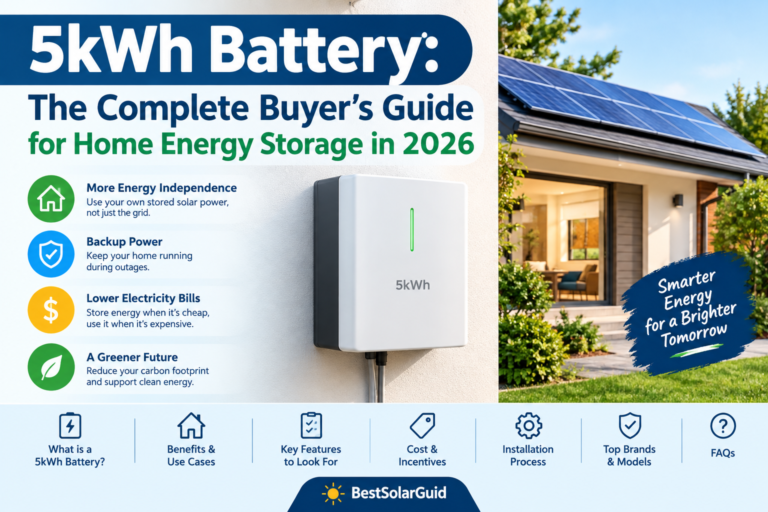
For homeowners considering a smaller residential storage system, our guide to a 5kWh battery explains how much energy this battery size can store, what appliances it can support, and whether it may be suitable for your needs.
Choosing the Right Battery for Your Home
Before comparing specific products, it helps to get clear on what you actually want the system to do, because bills and outages often point toward different sizing decisions.
If you’re comparing battery options, our guide to the best batteries for solar in 2026 can help you understand the different battery types, features, and options available for home energy storage.
If your priority is savings, focus on maximizing self-consumption and shifting usage out of peak pricing windows. If your priority is resilience, focus on keeping specific critical circuits alive during an outage, such as refrigeration, lighting, internet, and medical devices, rather than powering the whole house. If you want both, you’ll likely need a larger system, and it’s worth having your installer walk through both scenarios separately so you’re not overpaying for capacity you won’t use, or underpaying for coverage you’ll wish you had during an outage.
A few other things worth asking your installer about:
- Battery chemistry, since LFP is generally favored for safety and longevity
- Warranty length and expected cycle life
- Whether the system is an integrated all-in-one unit or a modular split system, since the former is simpler to install while the latter is easier to expand or repair later
- Compatibility with your existing or planned solar array
Incentives and Financing in 2026
With the federal residential tax credit gone as of the end of 2025, the incentive landscape now depends much more on where you live. State rebate programs, utility-run incentive schemes, and grid-services payments, where you’re compensated for letting your utility draw on your battery during peak demand, are still very much available in many regions. Some installers also offer leasing arrangements that lower the upfront cost.
Because these programs vary so much by state and even by utility, it’s worth asking any installer you’re considering for a full, itemized breakdown of what you actually qualify for, rather than a general estimate.
Is Solar Battery Storage Worth It in 2026?
For most homeowners already invested in solar, the honest answer is yes, with the caveat that worth it depends on your local electricity rates, how often your grid experiences outages, and how the system is sized for your actual usage. Industry surveys suggest installer demand for pairing storage with solar has grown substantially, which reflects a broader shift: homeowners increasingly see storage not as an optional extra, but as what makes a solar investment complete.
Frequently Asked Questions
1. How much does a home solar battery cost in 2026?
Most residential batteries range from around $8,000 to $15,000 installed, depending on capacity, brand, and whether you choose an integrated all-in-one unit or a modular system. Larger systems built for whole-home backup will run higher.
2. Is solar battery storage worth it without solar panels?
It’s technically possible to install a battery that charges from the grid alone, but the savings and backup benefits are far smaller without solar panels feeding it. Most of the value comes from storing your own free daytime solar generation rather than buying grid power to store.
3. How long do home solar batteries last?
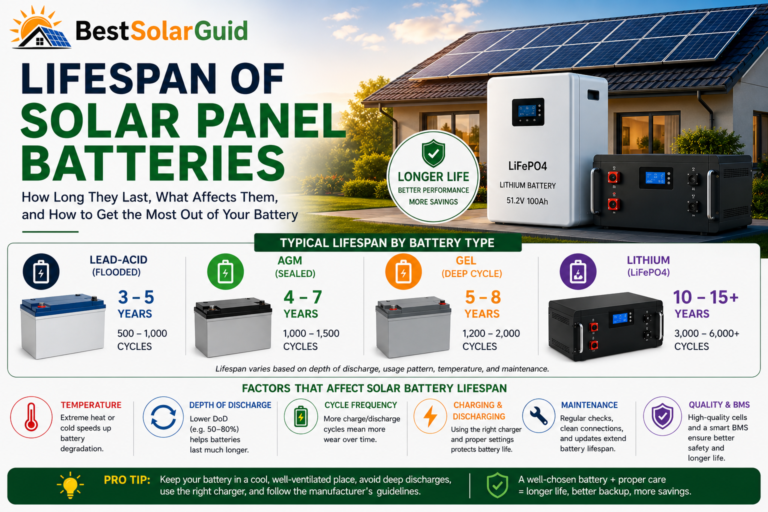
Most modern lithium iron phosphate (LFP) batteries are rated for 10 to 15 years or several thousand charge cycles, whichever comes first. Manufacturer warranties typically reflect this lifespan.
4. Can a solar battery power my whole house during an outage?
It depends on the battery’s size and how it’s configured. Many homeowners choose to back up only critical circuits — refrigeration, lighting, Wi-Fi, medical devices — rather than the entire home, since whole-home backup requires a much larger and more expensive system.
5. Do I still need the grid if I have solar battery storage?
Yes, in almost all residential setups. The grid remains your backup for extended cloudy stretches or when your battery is depleted, unless you invest in a much larger off-grid system, which is uncommon for typical homes.
6. What size battery do I need for my home?
Most households land between 10 and 20 kWh of storage capacity, but the right size depends on your daily energy usage, how many circuits you want backed up, and whether your main goal is bill savings, outage protection, or both.
7. Are there still incentives for solar batteries in 2026?
The federal residential tax credit expired at the end of 2025, but many states and utilities still offer rebates, incentive programs, or payments for letting your utility draw on your battery during peak demand. Availability varies by location, so check with a local installer for what applies to you.
Final Thoughts
Solar panels solve the generation half of the energy equation. Storage solves the timing half, making sure the power you generate is actually available when you need it, whether that’s during an expensive rate window or a blackout. As battery technology keeps improving and grid reliability keeps becoming less predictable, that timing problem is only going to matter more, not less.
If you’re on the fence, the best next step isn’t necessarily to buy a battery today. It’s to get honest about which problem you’re actually trying to solve, bills or outages or both, and size a system around that answer rather than around whatever unit happens to be popular this year.